THE CLASSIC COLLECTION✦Half a dozen boysCLASSIC FREE BOOKS
Half a dozen boys
Anna Chapin Ray
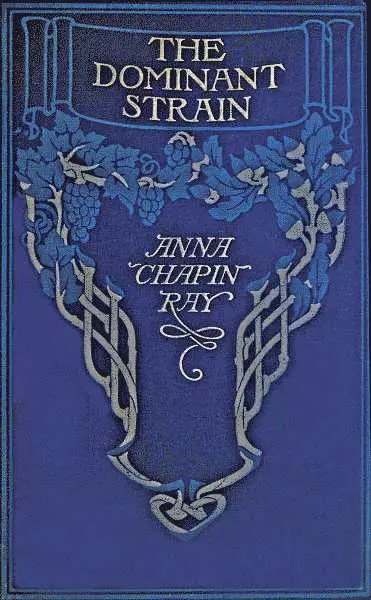
THE CLASSIC COLLECTION · 1903
"The Dominant Strain" by Anna Chapin Ray is a novel written in the early 20th century. It centers around the complex emotional lives of its characters, particularly focusing on Beatrix Dane, who faces a moral dilemma when considering her relationship with Sidney Lorimer. As social expectations and personal desires intertwine, the narrative likely delves into themes of love, loyalty, and the weight of social reputation. At the start of the story, we are introduced to Beatrix, who is engaged in a light yet tense conversation with her friend Sally about Sidney Lorimer, a man of interest to Beatrix. Beatrix grapples with her feelings about him and the implications of their relationship, especially in light of rumors surrounding Lorimer's past behavior. This internal conflict is hinted at when Beatrix expresses her concerns about Lorimer’s character, revealing the underlying tensions that will unfold as the narrative progresses. The intricacies of their circle of friends and social dynamics are established, setting the tone for the exploration of personal consequences and societal expectations throughout the book.
Introduction adapted from the source catalogue; source summaries may be automatically generated.
Free to read · English · 70,657 words · No account needed
MAKE TIME FOR A GOOD BOOK
On by default. Untick to stop anonymous reading totals. Each page counts after 10 seconds in view. How this works.
Anonymous counting is on unless you have switched it off.
"To cut it out, of course," Sally answered unexpectedly. "The patterns never fit, and it is more work to bring them into the shape of any human being than it is to start out with a free hand, in the first place."
But Miss Gannion challenged her.
"Sally, did you ever make a gown?"
"Never; but that doesn't prevent my having theories," Sally replied
airily.
"And I have had practice. I attempted once, when my years were less and my zeal more, to clothe an orphan with the work of my own hands. I thought I would operate free hand, as you call it, and I wish you could have beheld the result. The orphan's own mother would never have recognized her babe in the midst of the strange, polyangular bundle of cloth. I suspect that the same might be said of a good many novelists, and that a judicious trimming of the seams according to some established pattern might improve their work."
Arlt nodded approvingly.
"As usual, Miss Gannion has spoken wisely," he remarked.
"Miss Gannion has only echoed my words," Sally objected.
"Not at all. You said it was harder to work from a pattern; I merely suggested that the results were more satisfactory."
"Well, never mind," Sally returned promptly. "I don't care about that, so long as the vote goes against Bobby."
"And then, this matter of studying," Bobby went on, disdaining her interruption. "Now, when you get hard up for ideas, Arlt, when you actually can't get enough out of your gray matter to fill up your pattern, you go off somewhere and study something. Now, if I--"
"What have you to do with it, Bobby?" Miss Gannion queried.
"I represent literature, of course, just as Arlt represents music. If I were to go off and study something, what would you all think?"
"That it was the best possible thing you could possibly do," Sally
retorted.
Bobby frowned.
"You are so feminine and subjective, Sally. I suppose you can't help it, though. But really--Arlt, for instance, has produced a prize composition, while he is still studying. That's exactly what we used to do in prep. school. Fancy a school for novelists, with night classes for indigent poets! It would be a parallel case; but what would be the effect upon literature?"
Arlt rose deliberately and crossed the room to the empty chair at Miss
Gannion's side.
"All in all," he answered quietly; "from my slight knowledge of the teeming millions who are standing in line before the portals of American literature, I think the establishment of such a school ought to be the first duty of a self-respecting American government."
Your reading position is saved on this browser. Take it to another device with a library code. Reading pages adapt to text, rather than matching a printed edition.
Anna Chapin Ray
Anna Chapin Ray
Anna Chapin Ray
Anna Chapin Ray
BEHIND THE BOOK
This eBook is for the use of anyone anywhere in the United States and most other parts of the world at no cost and with almost no restrictions whatsoever. You may copy it, give it away or re-use it under the terms of the Project Gutenberg License included with this eBook or online at www.gutenberg.org. If you are not located in the United States, you will have to check the laws of the country where you are located before using this eBook. Read the source licence.
The original source file, including credits and licence, is retained by this library. Request an original-format copy at no charge. Please include the book title and Project Gutenberg identifier #29760.
KEEP YOUR CURIOSITY GOING
Coulson Kernahan

Maurice Baring
Frances Wright
Cécile Tormay

Frederic Jesup Stimson

W. H. P. (William Henry Pope) Jarvis