THE CLASSIC COLLECTION✦A dead man’s diaryCLASSIC FREE BOOKS
A dead man’s diary
Coulson Kernahan
THE CLASSIC COLLECTION · 1918
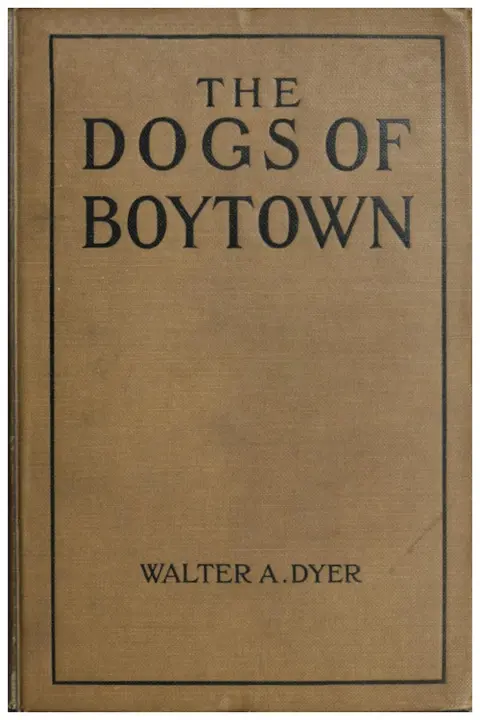
"The Dogs of Boytown" by Walter A. Dyer is a novel written in the early 20th century. The story revolves around two boys, Ernest and Jack Whipple, and their adventures in a fictional Connecticut town known as Boytown, particularly focusing on their experiences with dogs and a unique character named Sam Bumpus. This charming tale captures the essence of boyhood joy and imagination, along with a deep affection for dogs and nature. At the start of the narrative, the author establishes a picturesque autumn scene featuring the boys engaging in a chestnut gathering expedition in the idyllic woods surrounding Boytown. The two boys, explored as curious and adventurous spirits, come across Sam Bumpus, a local dog handler and sharp-witted character, who shares stories of his dogs and insights into the world of hunting. The opening sets a homely and warm tone, highlighting the bond between boys and their dogs, while hinting at themes of friendship, exploration, and the innocent joys of childhood. As the story unfolds, readers can anticipate further interactions between the boys and Bumpus, enriching their love for dogs and the natural world.
Introduction adapted from the source catalogue; source summaries may be automatically generated.
Free to read · English · 68,110 words · No account needed
MAKE TIME FOR A GOOD BOOK
On by default. Untick to stop anonymous reading totals. Each page counts after 10 seconds in view. How this works.
Anonymous counting is on unless you have switched it off.
"'Ere's a different kind of dog entirely," he said. "As good a fighter and watchdog as the Hairedale, but not useful in so many ways. It's an older breed than the Hairedale. I can remember when the bull terrier was a heavier dog, and brindles were just as good as whites, but now they want only this kind in the shows, with a long skull and pure white. Eyes small and shaped like almonds, and set wide apart. That's the kind. The ears have to be cropped in this country to win prizes. Beastly custom. They don't do it in Hengland any more. I'm glad they let the Hairedales' ears alone."
For some time Tom Poultice discoursed learnedly on these two breeds and answered numerous questions.
"What-ho," he exclaimed suddenly. "'Ere's Mr. 'Artshorn coming. Get 'im to tell you about dogs. 'E knows a thing or two 'imself."
A well-dressed gentleman in a gray overcoat and hat, with a gray pointed beard, and carrying a cane, appeared around the end of the kennel house. The boys appeared a little ill at ease.
"Don't be scared of 'im," said Tom. "'E likes boys."
"Well, Tom," said Mr. Hartshorn, stopping now and then to poke his stick through the fence at the dogs that came yelping down their runs to greet him, "how's Molly?"
"Mighty fine, sir," said Tom; "mighty fine."
"Some of your friends?" he inquired, indicating the boys.
"Yes, sir," said Tom. "This is Harry Barton, sir, from Boytown, and these--what did you say your names were?"
"Ernest and Jack Whipple," said Ernest.
"Ah, yes," said Mr. Hartshorn, just as though he had been reading about these boys in the paper. "Glad to meet you, I'm sure. Came up to have a look at the finest dogs in Connecticut, I suppose."
He had a pleasant, friendly face, and though the boys were a little awed by his imposing appearance and courtly manner, they soon lost their shyness and found themselves asking him many questions about dogs.
"Come up to the house," said he at length. "I can explain things better up there, where I have some pictures."
Tom went back to his work and the boys, bidding him good-by, followed Mr. Hartshorn up to the big house. He took them into a room that he said was his den. There was a big desk in it, all littered up with papers, and well filled bookcases around the room.
"Are all these books about dogs?" inquired Harry.
"Well, a good many of them are," said Mr. Hartshorn. "I have about every book on dogs that has been printed, I expect."
Your reading position is saved on this browser. Take it to another device with a library code. Reading pages adapt to text, rather than matching a printed edition.
BEHIND THE BOOK
This eBook is for the use of anyone anywhere in the United States and most other parts of the world at no cost and with almost no restrictions whatsoever. You may copy it, give it away or re-use it under the terms of the Project Gutenberg License included with this eBook or online at www.gutenberg.org. If you are not located in the United States, you will have to check the laws of the country where you are located before using this eBook. Read the source licence.
The original source file, including credits and licence, is retained by this library. Request an original-format copy at no charge. Please include the book title and Project Gutenberg identifier #41444.
KEEP YOUR CURIOSITY GOING
Coulson Kernahan

Maurice Baring
Frances Wright
Cécile Tormay

Frederic Jesup Stimson

W. H. P. (William Henry Pope) Jarvis