THE CLASSIC COLLECTION✦A dead man’s diaryCLASSIC FREE BOOKS
A dead man’s diary
Coulson Kernahan
THE CLASSIC COLLECTION · 1918
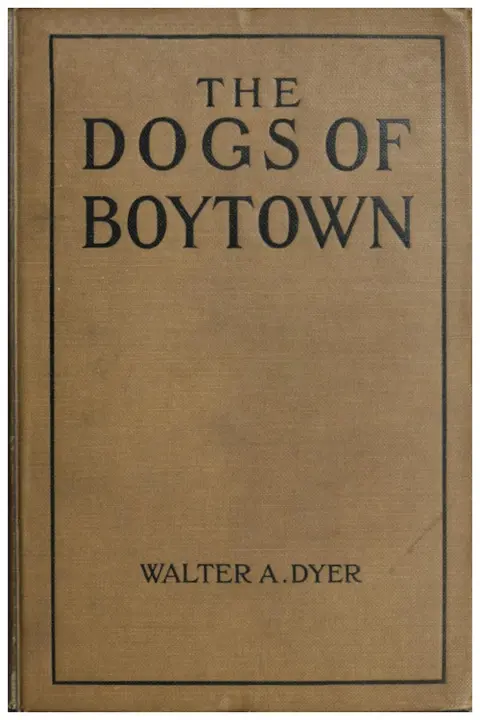
"The Dogs of Boytown" by Walter A. Dyer is a novel written in the early 20th century. The story revolves around two boys, Ernest and Jack Whipple, and their adventures in a fictional Connecticut town known as Boytown, particularly focusing on their experiences with dogs and a unique character named Sam Bumpus. This charming tale captures the essence of boyhood joy and imagination, along with a deep affection for dogs and nature. At the start of the narrative, the author establishes a picturesque autumn scene featuring the boys engaging in a chestnut gathering expedition in the idyllic woods surrounding Boytown. The two boys, explored as curious and adventurous spirits, come across Sam Bumpus, a local dog handler and sharp-witted character, who shares stories of his dogs and insights into the world of hunting. The opening sets a homely and warm tone, highlighting the bond between boys and their dogs, while hinting at themes of friendship, exploration, and the innocent joys of childhood. As the story unfolds, readers can anticipate further interactions between the boys and Bumpus, enriching their love for dogs and the natural world.
Introduction adapted from the source catalogue; source summaries may be automatically generated.
Free to read · English · 68,110 words · No account needed
MAKE TIME FOR A GOOD BOOK
On by default. Untick to stop anonymous reading totals. Each page counts after 10 seconds in view. How this works.
Anonymous counting is on unless you have switched it off.
By February they were very proud of their charges and anxious to show them off. Consequently they welcomed a visit one Saturday morning from Harry Barton, a chum of theirs. Harry appeared unannounced and accompanied by his big, bow-legged English bulldog, Mike. He went directly to the barn, from which issued the voices of the Whipple boys and their dogs, and entered Rome. The unexpected appearance of Mike startled Jack, and he picked Remus hastily up and held him in protecting arms. But Harry only laughed.
"What you 'fraid of?" he inquired. "Mike wouldn't hurt a kitten. He looks ugly and that's what scares tramps away, but he never bit anything. You ought to see the baby walk all over him."
"Come on in, then," invited Ernest.
Mike went slowly up to Romulus and sniffed at him noisily. At first the puppy was frightened, but finding that he was not attacked he made one or two playful little lunges at the bulldog and then stood off and barked shrilly at him, Remus joining in the chorus and struggling to be set down.
"They've got spunk, all right," said Ernest, proudly.
Mike sniffed at Remus also, then yawned in a bored sort of way, waddled out of Rome as though his years and dignity forbade his association with such frivolous company, and thumped down on the floor outside. All three boys laughed.
"Well, what do you think of 'em?" Ernest asked presently. "Some dogs,
eh?"
"Oh, they'll prob'ly be all right when they grow up," said Harry, unwilling to concede too much. "They'll have to grow a lot, though, before they know as much as Mike."
"But a bulldog can't hunt like a setter," said Ernest, flying to the
defense of his breed.
"Who wants to hunt?" demanded Harry. "Hunting isn't all a dog's for, is it? A bulldog's a better watchdog than a setter."
Ernest, not knowing whether this was so or not, made no reply.
"But aren't they cunning, Harry?" asked Jack.
"Oh, sure, they're cunning," said Harry, satisfied that he had scored his point. "Can they shake hands yet?"
"Not yet," said Jack.
"Mike can shake hands," said Harry, "and take the mail from the
postman, and do lots of things."
"But he can't hunt," insisted Ernest, returning to the attack.
"I'd rather have a bulldog than a setter, any day," said Harry. "Why, the bulldog is one of the best kinds of dogs. It's an older kind than the setter. They used them in England for fighting bulls hundreds of years ago. A bulldog is brave and faithful, and he sticks to things. He isn't a flyaway kind of a dog."
Your reading position is saved on this browser. Take it to another device with a library code. Reading pages adapt to text, rather than matching a printed edition.
BEHIND THE BOOK
This eBook is for the use of anyone anywhere in the United States and most other parts of the world at no cost and with almost no restrictions whatsoever. You may copy it, give it away or re-use it under the terms of the Project Gutenberg License included with this eBook or online at www.gutenberg.org. If you are not located in the United States, you will have to check the laws of the country where you are located before using this eBook. Read the source licence.
The original source file, including credits and licence, is retained by this library. Request an original-format copy at no charge. Please include the book title and Project Gutenberg identifier #41444.
KEEP YOUR CURIOSITY GOING
Coulson Kernahan

Maurice Baring
Frances Wright
Cécile Tormay

Frederic Jesup Stimson

W. H. P. (William Henry Pope) Jarvis