First love, and other stories
Ivan Sergeevich Turgenev
THE CLASSIC COLLECTION · 1904
"The Diary of a Superfluous Man and Other Stories" by Ivan Sergeevich Turgenev is a collection of short stories written in the mid-19th century. Centering on themes of existential ennui and societal critique, the titular story introduces Tchulkatúrin, a man confronting his own superfluity and alienation in Russian society. This collection delves into the emotional and psychological landscapes of its characters, reflecting on the depths of human experience and the complexities of love and life. At the start of the titular story, we meet Tchulkatúrin, who begins his diary anticipating his imminent death. He reflects on his past and the feelings of uselessness that have defined his existence. His upbringing in a dysfunctional family—marked by a father’s gambling addiction and a mother’s oppressive virtue—shapes his perceptions of relationships and life. As he revisits the memories of his youth, he grapples with feelings of inadequacy and longing, setting the stage for a profound exploration of identity in a society that seems indifferent to his struggles. Tchulkatúrin's musings reveal the depth of his melancholy, leading readers into a contemplative narrative about what it means to feel superfluous.
Introduction adapted from the source catalogue; source summaries may be automatically generated.
Free to read · English · 79,064 words · No account needed
MAKE TIME FOR A GOOD BOOK
On by default. Untick to stop anonymous reading totals. Each page counts after 10 seconds in view. How this works.
Anonymous counting is on unless you have switched it off.
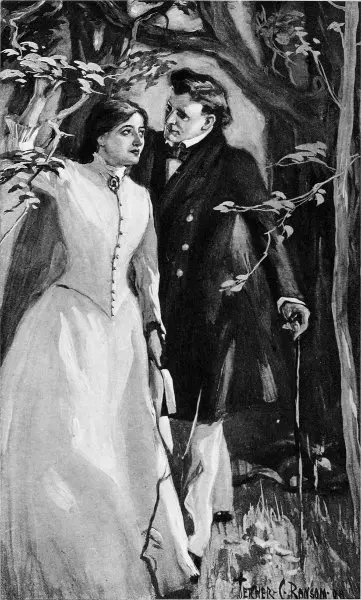
Up to that day, I had not once chanced to be arm in arm with Liza. I walked by her side, treading softly on the green grass. A light breeze seemed to be fluttering around us, between the white boles of the birch-trees, now and then blowing the ribbon of her hat in my face. With an importunate gaze I watched her, until, at last, she turned gaily to me, and we smiled at each other. The birds chirped approvingly overhead, the blue sky peered caressingly through the fine foliage. My head reeled with excess of pleasure. I hasten to remark that Liza was not in the least in love with me. She liked me; in general, she was not shy of any one, but I was not fated to disturb her childish tranquillity. She walked arm in arm with me, as with a brother. She was seventeen years old at the time.... And yet, that same evening, in my presence, there began in her that quiet, inward fermentation, which precedes the conversion of a child into a woman..... I was witness to that change of the whole being, that innocent perplexity, that tremulous pensiveness; I was the first to note that sudden softness of glance, that ringing uncertainty of voice--and, oh, stupid fool! oh, superfluous man! for a whole week I was not ashamed to assume that I, I was the cause of that change!
This is the way it happened.
We strolled for quite a long time, until evening, and chatted very little. I held my peace, like all inexperienced lovers, and she, in all probability, had nothing to say to me; but she seemed to be meditating about something, and shook her head in a queer sort of way, pensively nibbling at a leaf which she had plucked. Sometimes she began to stride forward in such a decided way ... and then suddenly halted, waited for me and gazed about her with eyebrows elevated and an absent-minded smile. On the preceding evening, we had read together "The Prisoner of the Caucasus."[9] With what eagerness had she listened to me, with her face propped on both hands, and her bosom resting against the table! I tried to talk about our reading of the evening before; she blushed, asked me whether I had given the bull-finch any hemp-seed before we started, began to sing loudly some song, then suddenly ceased. The grove ended on one side in a rather steep and lofty cliff; below flowed a small, meandering river, and beyond it, further than the eye could see, stretched endless meadows, now swelling slightly like waves, now spreading out like a table-cloth, here and there intersected with ravines. Liza and I were the first to emerge on the edge of the grove; Bizmyónkoff remained behind with the old lady. We came out, halted, and both of us involuntarily narrowed our eyes: directly opposite us, in the midst of the red-hot mist, the sun was setting, huge and crimson. Half the sky was aglow and flaming; the red rays beat aslant across the meadows, casting a scarlet reflection even on the shady side of the ravine, and lay like fiery lead upon the river, where it was not hidden under overhanging bushes, and seemed to be reposing in the lap of the ravine and the grove. We stood there drenched in the blazing radiance. It is beyond my power to impart all the passionate solemnity of that picture. They say that the colour red appeared to one blind man like the sound of a trumpet; I do not know to what degree that comparison is just; but, actually, there was something challenging in that flaming gold of the evening air, in the crimson glow of sky and earth. I cried out with rapture, and immediately turned to Liza. She was gazing straight at the sun. I remember, the glare of the sunset was reflected in her eyes in tiny, flaming spots. She was startled, profoundly moved. She made no answer to my exclamation, did not stir for a long time, and hung her head.... I stretched out my hand to her; she turned away from me, and suddenly burst into tears. I gazed at her with secret, almost joyful surprise.... Bizmyónkoff's voice rang out a couple of paces from us. Liza hastily wiped her eyes, and with a wavering smile looked at me. The old lady emerged from the grove, leaning on the arm of her fair-haired escort; both of them, in their turn, admired the view. The old lady asked Liza some question, and I remember that I involuntarily shivered when, in reply, her daughter's broken voice, like cracked glass, resounded in reply. In the meanwhile, the sun had set, the glow was beginning to die out. We retraced our steps. I again gave Liza my arm. It was still light in the grove, and I could clearly discern her features. She was embarrassed, and did not raise her eyes. The flush which had spread all over her face did not disappear; she seemed still to be standing in the rays of the setting sun.... Her arm barely touched mine. For a long time I could not start a conversation, so violently was my heart beating. We caught glimpses of the carriage far away, through the trees; the coachman was driving to meet us at a foot-pace over the friable sand of the road.
Your reading position is saved on this browser. Take it to another device with a library code. Reading pages adapt to text, rather than matching a printed edition.
Ivan Sergeevich Turgenev
Ivan Sergeevich Turgenev
Ivan Sergeevich Turgenev
Ivan Sergeevich Turgenev
BEHIND THE BOOK
This eBook is for the use of anyone anywhere in the United States and most other parts of the world at no cost and with almost no restrictions whatsoever. You may copy it, give it away or re-use it under the terms of the Project Gutenberg License included with this eBook or online at www.gutenberg.org. If you are not located in the United States, you will have to check the laws of the country where you are located before using this eBook. Read the source licence.
The original source file, including credits and licence, is retained by this library. Request an original-format copy at no charge. Please include the book title and Project Gutenberg identifier #41201.
KEEP YOUR CURIOSITY GOING
Coulson Kernahan

Maurice Baring
Frances Wright
Cécile Tormay

Frederic Jesup Stimson

W. H. P. (William Henry Pope) Jarvis