
The Lone Wolf Returns
Louis Joseph Vance
THE CLASSIC COLLECTION · 1912
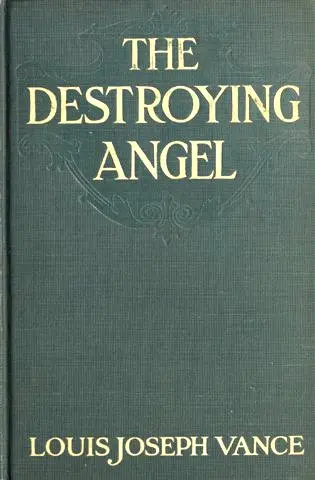
"The Destroying Angel" by Louis Joseph Vance is a novel written in the early 20th century. The story revolves around the central character, Hugh Whitaker, a young man who, upon learning he has only a few months to live, confronts the profound unfairness of fate and contemplates the impending end of his life. Struck by despair, his journey spirals through themes of love, loss, and unexpected connections as he attempts to navigate his remaining time. The opening of the novel introduces Hugh Whitaker in a doctor's office, where he receives the crushing news about his terminal illness. Alongside two consulting specialists, Greyerson and Hartt, Hugh struggles to comprehend the finality of his situation—despite feeling fit and healthy. As he grapples with his emotions, he learns about the consequences of his impending mortality, not only for himself but also for Alice Carstairs, the woman he loves. This initial chapter sets up a narrative that promises to explore complex human emotions, the weight of social expectations, and the intertwining of lives in desperate circumstances, hinting at an unexpected turn as Whitaker's fate begins to alter after a chance meeting.
Introduction adapted from the source catalogue; source summaries may be automatically generated.
Free to read · English · 78,296 words · No account needed
MAKE TIME FOR A GOOD BOOK
On by default. Untick to stop anonymous reading totals. Each page counts after 10 seconds in view. How this works.
Anonymous counting is on unless you have switched it off.
Unless ... He caught eagerly at the thought: he might "die" again--go away once more, and forever; bury himself deep beyond the groping tentacles of civilization; disappear finally, notifying her of his intention, so that she might seek legal freedom from his name. It only needed Max's silence, which could unquestionably be secured, to insure her against the least breath of scandal, the faintest whisper of gossip.... Not that Max really knew anything; but the name of Whitaker, as identified with Hugh Morten, might better be permitted to pass unechoed into oblivion....
And with this very thought in mind he became aware of the echo of that
name in his hearing.
A page, bearing something on a salver, ambled through the lounge, now and again opening his mouth to bleat, dispassionately: "Mista Whitaker, Mista Whitaker!"
The owner of that name experienced a flush of exasperation. What right had the management to cause him to be advertised in every public room of the establishment?... But the next instant his resentment evaporated, when he remembered that he remained Mr. Hugh Morten in the managerial comprehension.
He lifted a finger; the boy swerved toward him, tendered a blue envelope, accepted a gratuity and departed.
It was a cable message: very probably an answer to his to Grace Pettit. Whitaker tore the envelope and unfolded the enclosure, glancing first at the signature to verify his surmise. As he did so, he heard his name a second time.
"Pardon me; this is Mr. Whitaker?"
A man stood beside the little table--one whom Whitaker had indifferently noticed on entering as an equally lonely lounger at another table.
Though he frowned involuntarily with annoyance, he couldn't well deny
his identity.
"Yes," he said shortly, looking the man up and down with a captious eye.
Yet it was hard to find much fault with this invader of his preoccupation. He had the poise and the dress of a gentleman: dignity without aggressiveness, completeness without ostentation. He had a spare, not ungraceful body, a plain, dark face, a humorous mouth, steady eyes: a man easily forgotten or overlooked unless he willed it otherwise.
"My name is Ember," he said quietly. "If you'll permit me--my card." He offered a slip of pasteboard engraved with the name of Martin Ember. "And I'll sit down, because I want to talk to you for a few minutes."
Accordingly he sat down. Whitaker glanced at the card, and questioningly back at Mr. Ember's face.
"I don't know you, but ... What are we to talk about, please?"
The man smiled, not unpleasingly.
"Mrs. Whitaker," he said.
Whitaker stared, frowned, and jumped at a conclusion.
"You represent Mrs. Whitaker?"
Your reading position is saved on this browser. Take it to another device with a library code. Reading pages adapt to text, rather than matching a printed edition.
Louis Joseph Vance
Louis Joseph Vance
Louis Joseph Vance
Louis Joseph Vance
BEHIND THE BOOK
This eBook is for the use of anyone anywhere in the United States and most other parts of the world at no cost and with almost no restrictions whatsoever. You may copy it, give it away or re-use it under the terms of the Project Gutenberg License included with this eBook or online at www.gutenberg.org. If you are not located in the United States, you will have to check the laws of the country where you are located before using this eBook. Read the source licence.
The original source file, including credits and licence, is retained by this library. Request an original-format copy at no charge. Please include the book title and Project Gutenberg identifier #32302.
KEEP YOUR CURIOSITY GOING
Coulson Kernahan

Maurice Baring
Frances Wright
Cécile Tormay

Frederic Jesup Stimson

W. H. P. (William Henry Pope) Jarvis