
The Lone Wolf Returns
Louis Joseph Vance
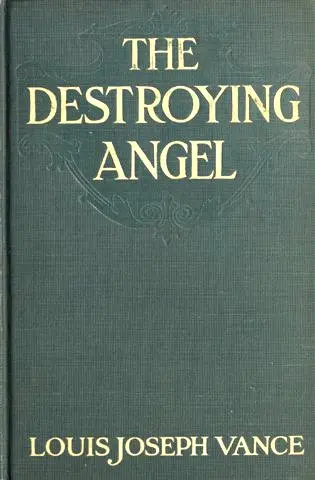
THE CLASSIC COLLECTION · 1912
"The Destroying Angel" by Louis Joseph Vance is a novel written in the early 20th century. The story revolves around the central character, Hugh Whitaker, a young man who, upon learning he has only a few months to live, confronts the profound unfairness of fate and contemplates the impending end of his life. Struck by despair, his journey spirals through themes of love, loss, and unexpected connections as he attempts to navigate his remaining time. The opening of the novel introduces Hugh Whitaker in a doctor's office, where he receives the crushing news about his terminal illness. Alongside two consulting specialists, Greyerson and Hartt, Hugh struggles to comprehend the finality of his situation—despite feeling fit and healthy. As he grapples with his emotions, he learns about the consequences of his impending mortality, not only for himself but also for Alice Carstairs, the woman he loves. This initial chapter sets up a narrative that promises to explore complex human emotions, the weight of social expectations, and the intertwining of lives in desperate circumstances, hinting at an unexpected turn as Whitaker's fate begins to alter after a chance meeting.
Introduction adapted from the source catalogue; source summaries may be automatically generated.
Free to read · English · 78,296 words · No account needed
MAKE TIME FOR A GOOD BOOK
On by default. Untick to stop anonymous reading totals. Each page counts after 10 seconds in view. How this works.
Anonymous counting is on unless you have switched it off.
Drummond laughed quietly. "If that's how you feel," he said, "I can only give you one piece of professional advice."
"What's that?"
"Find your wife."
After a moment of puzzled thought, Whitaker admitted ruefully: "You're
right. There's the rub."
"I'm afraid you won't find it an easy job. I did my best without
uncovering a trace of her."
"You followed up that letter, of course?"
"I did my best; but, my dear fellow, almost anybody with a decent appearance can manage to write a note on Waldorf stationery. I made sure of one thing--the management knew nothing of the writer under either her maiden name or yours."
"Did you try old Thurlow?"
"Her father died within eight weeks from the time you ran away. He left everything to charity, by the way. Unforgiving blighter."
"Well, there's her sister, Mrs. Pettit."
"She heard of the marriage first through me," asserted Drummond. "Your wife had never come near her--nor even sent her a line. She could give me no information whatever."
"You don't think she purposely misled you--?"
"Frankly I don't. She seemed sincerely worried, when we talked the matter over, and spoke in a most convincing way of her fruitless attempts to trace the young woman through a private detective agency."
"Still, she may know now," Whitaker said doubtfully. "She may have heard something since. I'll have a word with her myself."
"Address," observed Drummond, dryly: "the American Embassy, Berlin.... Pettit's got some sort of a minor diplomatic berth over there."
"O the devil!... But, anyway, I can write."
"Think it over," Drummond advised. "Maybe it might be kinder not to."
"Oh, I don't know--"
"You've given me to understand you were pretty comfy on the other side of the globe. Why not let sleeping dogs lie?"
"It's the lie that bothers me--the living lie. It isn't fair to her."
"Rather sudden, this solicitude--what?" Drummond asked with open
sarcasm.
"I daresay it does look that way. But I can't see that it's the decent thing for me to let things slide any longer. I've got to try to find her. She may be ill--destitute--in desperate trouble again--"
Drummond's eyebrows went up whimsically. "You surely don't mean me to infer that your affections are involved?"
This brought Whitaker up standing. "Good heavens--no!" he cried. He moved to a window and stared rudely at the Post Office Building for a time. "I'm going to find her just the same--if she still lives," he announced, turning back.
"Would you know her if you saw her?"
"I don't know." Whitaker frowned with annoyance. "She's six years
older--"
"A woman often develops and changes amazingly between the ages of
eighteen and twenty-four."
Your reading position is saved on this browser. Take it to another device with a library code. Reading pages adapt to text, rather than matching a printed edition.
Louis Joseph Vance
Louis Joseph Vance
Louis Joseph Vance

Louis Joseph Vance
BEHIND THE BOOK
This eBook is for the use of anyone anywhere in the United States and most other parts of the world at no cost and with almost no restrictions whatsoever. You may copy it, give it away or re-use it under the terms of the Project Gutenberg License included with this eBook or online at www.gutenberg.org. If you are not located in the United States, you will have to check the laws of the country where you are located before using this eBook. Read the source licence.
The original source file, including credits and licence, is retained by this library. Request an original-format copy at no charge. Please include the book title and Project Gutenberg identifier #32302.
KEEP YOUR CURIOSITY GOING
Coulson Kernahan

Maurice Baring
Frances Wright
Cécile Tormay

Frederic Jesup Stimson

W. H. P. (William Henry Pope) Jarvis