The Lone Wolf Returns
Louis Joseph Vance
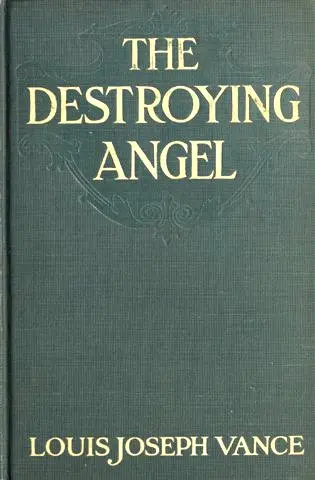
THE CLASSIC COLLECTION · 1912
"The Destroying Angel" by Louis Joseph Vance is a novel written in the early 20th century. The story revolves around the central character, Hugh Whitaker, a young man who, upon learning he has only a few months to live, confronts the profound unfairness of fate and contemplates the impending end of his life. Struck by despair, his journey spirals through themes of love, loss, and unexpected connections as he attempts to navigate his remaining time. The opening of the novel introduces Hugh Whitaker in a doctor's office, where he receives the crushing news about his terminal illness. Alongside two consulting specialists, Greyerson and Hartt, Hugh struggles to comprehend the finality of his situation—despite feeling fit and healthy. As he grapples with his emotions, he learns about the consequences of his impending mortality, not only for himself but also for Alice Carstairs, the woman he loves. This initial chapter sets up a narrative that promises to explore complex human emotions, the weight of social expectations, and the intertwining of lives in desperate circumstances, hinting at an unexpected turn as Whitaker's fate begins to alter after a chance meeting.
Introduction adapted from the source catalogue; source summaries may be automatically generated.
Free to read · English · 78,296 words · No account needed
MAKE TIME FOR A GOOD BOOK
On by default. Untick to stop anonymous reading totals. Each page counts after 10 seconds in view. How this works.
Anonymous counting is on unless you have switched it off.
He suffered a sense of shame only second to her own, to see the dull flush that accompanied her reply. His fingers itched for the throat of Mr. C. W. Morton, chauffeur. Happily a knock at the door distracted him. Opening it no wider than necessary to communicate with the bell-boy, he gave him an order for the kitchen, together with an incentive to speed the service.
Closing the door, he swung round to find that the girl had got to her
feet.
"He won't be long--" Whitaker began vaguely.
"I want to tell you something." She faced him bravely, though he refused the challenge of her tormented eyes. "I ... I have no husband."
He bowed gravely.
"You're so good to me--" she faltered.
"O--nothing! Let's not talk about that now."
"I must talk--you must let me. You're so kind, I've got to tell you.
Won't you listen?"
He had crossed to a window, where he stood staring out. "I'd rather not," he said softly, "but if you prefer--"
"I do prefer," said the voice behind him. "I--I'm Mary Ladislas."
"Yes," said Whitaker.
"I ... I ran away from home last week--five days ago--to get married to our chauffeur, Charles Morton...."
She stammered.
"Please don't go on, if it hurts," he begged without looking round.
"I've got to--I've got to get it over with.... We were at Southampton, at my father's summer home--I mean, that's where I ran away from. He--Charley--drove me over to Greenport and I took the ferry there and came here to wait for him. He went back to New York in the car, promising to join me here as soon as possible...."
"And he didn't come," Whitaker wound up for her, when she faltered.
"No."
"And you wrote and telegraphed, and he didn't answer."
"Yes--"
"How much money of yours did he take with him?" Whitaker pursued.
There was a brief pause of astonishment. "What do you know about that?"
she demanded.
"I know a good deal about that type of man," he said grimly.
"I didn't have any money to speak of, but I had some jewellery--my
mother's--and he was to take that and pawn it for money to get married
with."
"I see."
To his infinite relief the waiter interrupted them. The girl in her turn went to one of the windows, standing with her back to the room, while Whitaker admitted the man with his tray. When they were alone once more, he fixed the place and drew a chair for her.
"Everything's ready," he said--and had the sense not to try to make his
tone too cheerful.
"I hadn't finished what I wanted to tell you," said the girl, coming
back to him.
Your reading position is saved on this browser. Take it to another device with a library code. Reading pages adapt to text, rather than matching a printed edition.
Louis Joseph Vance
Louis Joseph Vance
Louis Joseph Vance
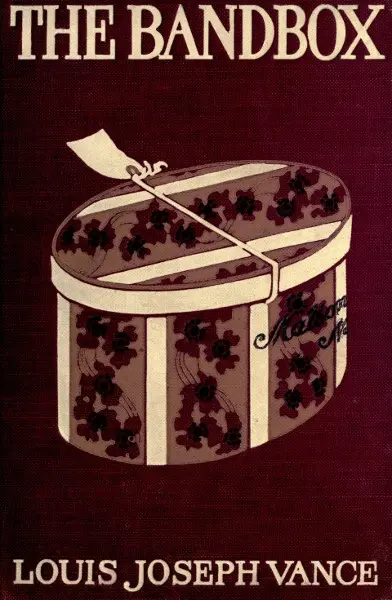
Louis Joseph Vance
BEHIND THE BOOK
This eBook is for the use of anyone anywhere in the United States and most other parts of the world at no cost and with almost no restrictions whatsoever. You may copy it, give it away or re-use it under the terms of the Project Gutenberg License included with this eBook or online at www.gutenberg.org. If you are not located in the United States, you will have to check the laws of the country where you are located before using this eBook. Read the source licence.
The original source file, including credits and licence, is retained by this library. Request an original-format copy at no charge. Please include the book title and Project Gutenberg identifier #32302.
KEEP YOUR CURIOSITY GOING
Coulson Kernahan

Maurice Baring
Frances Wright
Cécile Tormay

Frederic Jesup Stimson

W. H. P. (William Henry Pope) Jarvis