
The Lone Wolf Returns
Louis Joseph Vance
THE CLASSIC COLLECTION · 1912
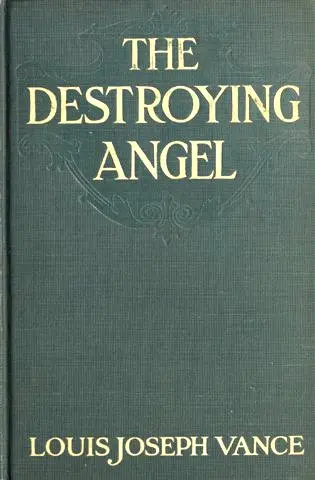
"The Destroying Angel" by Louis Joseph Vance is a novel written in the early 20th century. The story revolves around the central character, Hugh Whitaker, a young man who, upon learning he has only a few months to live, confronts the profound unfairness of fate and contemplates the impending end of his life. Struck by despair, his journey spirals through themes of love, loss, and unexpected connections as he attempts to navigate his remaining time. The opening of the novel introduces Hugh Whitaker in a doctor's office, where he receives the crushing news about his terminal illness. Alongside two consulting specialists, Greyerson and Hartt, Hugh struggles to comprehend the finality of his situation—despite feeling fit and healthy. As he grapples with his emotions, he learns about the consequences of his impending mortality, not only for himself but also for Alice Carstairs, the woman he loves. This initial chapter sets up a narrative that promises to explore complex human emotions, the weight of social expectations, and the intertwining of lives in desperate circumstances, hinting at an unexpected turn as Whitaker's fate begins to alter after a chance meeting.
Introduction adapted from the source catalogue; source summaries may be automatically generated.
Free to read · English · 78,296 words · No account needed
MAKE TIME FOR A GOOD BOOK
On by default. Untick to stop anonymous reading totals. Each page counts after 10 seconds in view. How this works.
Anonymous counting is on unless you have switched it off.
The woman met it fairly and fearlessly, with her head high and her lips touched with a trace of her shadowy, illegible smile. She was dressed for walking, very prettily and perfectly. There were roses in her cheeks: a healthful glow distinguishable even in the tempered light of the hallway. Her self-possession was faultless.
After a moment she inclined her head slightly. "The hall-boys said you were busy on the telephone. I insisted on coming directly up. I wish very much to see you for a few moments. Do you mind?"
"By no means," he said, a little stiffly but quite calmly. "If you will be good enough to come in--"
He stood against the wall to let her pass. For a breath she was too close to him: he felt his pulses quicken faintly to the delicate and indefinite perfume of her person. But it was over in an instant: she had passed into the living-room. He followed, grave, collected, aloof.
"I had to come this morning," she explained, turning. "This afternoon we
have a rehearsal...."
He bowed an acknowledgment. "Won't you sit down?"
"Thank you." Seated, she subjected him to a quick, open appraisal, disarming in its naive honesty.
"Hugh ... aren't you a bit thinner?"
"I believe so." He had a match for that impertinence: "But you, I see, have come off without a blemish."
"I am very well," she admitted, unperturbed. Her glance embraced the room. "You're very comfortable here."
"I have been."
"I hope that doesn't mean I'm in the way."
"To the contrary; but I sail day after to-morrow for Australia."
"Oh? That's very sudden, isn't it? You don't seem to have done any packing. Or perhaps you mean to come back before a great while?"
"I shan't come back, ever."
"Must I believe you made up your mind this morning?"
"I have only just read the announcement of your opening to-morrow
night."
"Then ... I am driving you out of the country?"
Her look was impersonal and curious. He prided himself that he was managing his temper admirably--at least until he discovered that he had, inexplicably, no temper to speak of; that he, in fact, suffered mostly from what seemed to be nothing more than annoyance at being hindered in making the necessary arrangements against his departure.
His shoulders moved negligently. "Not to rant about it," he replied: "I find I am not needed here."
"Oh, dear!" Her lips formed a fugitive, petulant moue: "And it's my
fault?"
"There's no use mincing matters, is there? I am not heartbroken, and if I am bitterly disappointed I don't care to--in fact, I lack the ability--to dramatize it."
"You are taking it well, Hugh," said she, critical.
Your reading position is saved on this browser. Take it to another device with a library code. Reading pages adapt to text, rather than matching a printed edition.
Louis Joseph Vance
Louis Joseph Vance
Louis Joseph Vance

Louis Joseph Vance
BEHIND THE BOOK
This eBook is for the use of anyone anywhere in the United States and most other parts of the world at no cost and with almost no restrictions whatsoever. You may copy it, give it away or re-use it under the terms of the Project Gutenberg License included with this eBook or online at www.gutenberg.org. If you are not located in the United States, you will have to check the laws of the country where you are located before using this eBook. Read the source licence.
The original source file, including credits and licence, is retained by this library. Request an original-format copy at no charge. Please include the book title and Project Gutenberg identifier #32302.
KEEP YOUR CURIOSITY GOING
Coulson Kernahan

Maurice Baring
Frances Wright
Cécile Tormay

Frederic Jesup Stimson

W. H. P. (William Henry Pope) Jarvis