
The Writing of News A Handbook with Chapters on Newspaper Correspondence and Copy Reading
Charles G. (Charles Griffith) Ross
THE CLASSIC COLLECTION · 1880
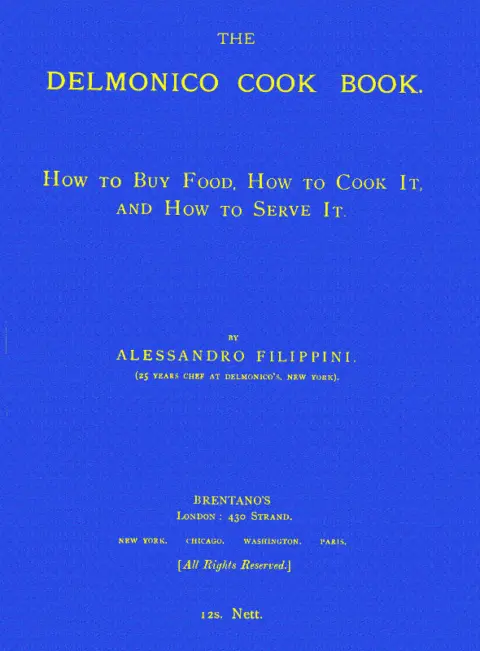
"The Delmonico Cook Book: How to Buy Food, How to Cook It, and How to Serve It" by Alessandro Filippini is a culinary guidebook written in the late 19th century. This comprehensive volume offers insights into the art of gastronomy, emphasizing the importance of selecting quality ingredients, mastering cooking techniques, and serving dishes elegantly. It serves as a resourceful companion for both aspiring cooks and seasoned chefs, providing a depth of knowledge that reflects the sophistication of American dining during that era. At the start of this cook book, the author introduces the pleasures associated with fine dining, highlighting the complexities of meal preparation and presentation. Filippini shares his experience from working at Delmonico's, a renowned restaurant in New York, as he discusses the abundant variety of foods available in the markets and their protagonist roles on the modern American table. The initial chapters focus on essential knowledge, such as choosing fresh ingredients from local markets, understanding seasonal produce, and tips for setting a well-organized dining table, laying the groundwork for the recipes and menus that follow in the subsequent sections.
Introduction adapted from the source catalogue; source summaries may be automatically generated.
Free to read · English · 219,142 words · No account needed
MAKE TIME FOR A GOOD BOOK
On by default. Untick to stop anonymous reading totals. Each page counts after 10 seconds in view. How this works.
Anonymous counting is on unless you have switched it off.
The laws for killing and selling game vary somewhat in the different States, and sometimes in the different counties of the same State. Reference is made principally in regard to the New York City markets. So great are the facilities for forwarding quickly by rail and steamer, that supplies of game are easily obtained from long distances; and birds killed in southern Texas, or other remote places, may be served perfectly fresh on New York tables a few days later. The flight of birds is greatly controlled by the weather. An early or late season, or a wet or dry one, or even a cold wave, may hasten or retard them, and make game plentiful or scarce, fat or poor; but an abundant supply of all kinds of game in its best condition is generally to be had in the months it is in season, as follows:
Ruffed grouse, commonly called partridges, are in season from September
1 to February 1.
Pinnated grouse, commonly called prairie-chickens, from September 1 to
February 1.
Quails, from November 1 to February 1.
Woodcock are in the market from August 1 to February 1, and are fattest
in October.
English snipe appear in the spring, and again in the autumn, when they are in their best condition, and are to be had in smaller quantities during the winter.
Yellow-legged snipe, robin or red-breasted snipe, dowicher and black-breasted or winter snipe, also common snipe, are abundant in the spring, and again from July through October, when they are best.
Upland, grass, or gray plover are in market through the spring and summer months, and are fattest in August and September.
Doe-birds are to be had at about the same time. They are plover of a larger size, and are considered not inferior to any other.
Golden plover, or frost-birds, are plentiful in the spring, and are in fine condition in September and October.
Sora, or Virginia rail, are best in September and October.
Reed-birds, or rice-birds, become very fat in August and September. When found among the reeds of New Jersey they are called reed-birds, and rice-birds when from the wild rice-fields of the South.
Rabbits and hares are in season from November 1 to February 1.
Venison is in market from August 1 to January 1 only, and is good during
that time.
Antelope may be generally had through the autumn and winter months.
Wild pigeons appear in the spring and autumn, but no longer in such immense numbers as formerly. It is only possible to obtain them for market when their “nestings” are near a railroad, which facilitates their quick shipment. The young birds (wild squabs), taken from the nest, make a most delicious broil.
Your reading position is saved on this browser. Take it to another device with a library code. Reading pages adapt to text, rather than matching a printed edition.
BEHIND THE BOOK
This eBook is for the use of anyone anywhere in the United States and most other parts of the world at no cost and with almost no restrictions whatsoever. You may copy it, give it away or re-use it under the terms of the Project Gutenberg License included with this eBook or online at www.gutenberg.org. If you are not located in the United States, you will have to check the laws of the country where you are located before using this eBook. Read the source licence.
The original source file, including credits and licence, is retained by this library. Request an original-format copy at no charge. Please include the book title and Project Gutenberg identifier #60285.
KEEP YOUR CURIOSITY GOING
Charles G. (Charles Griffith) Ross
Hannah Webster Foster

Emily Lawless
Edwin Hamlin Carr

Charles De Lano Hine
Andrew Ure