
The Writing of News A Handbook with Chapters on Newspaper Correspondence and Copy Reading
Charles G. (Charles Griffith) Ross
THE CLASSIC COLLECTION · 1880
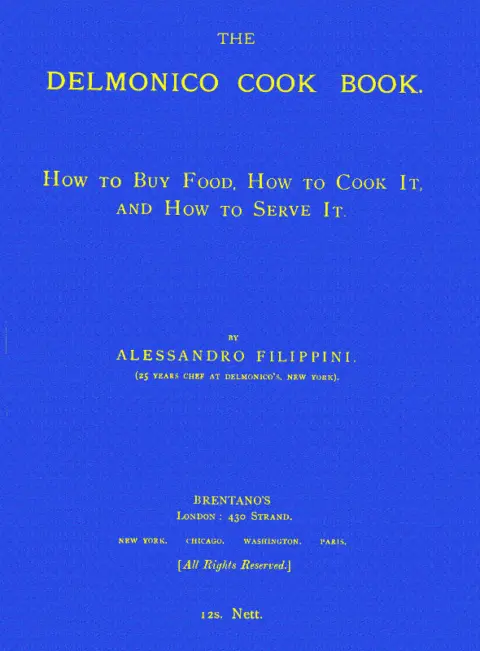
"The Delmonico Cook Book: How to Buy Food, How to Cook It, and How to Serve It" by Alessandro Filippini is a culinary guidebook written in the late 19th century. This comprehensive volume offers insights into the art of gastronomy, emphasizing the importance of selecting quality ingredients, mastering cooking techniques, and serving dishes elegantly. It serves as a resourceful companion for both aspiring cooks and seasoned chefs, providing a depth of knowledge that reflects the sophistication of American dining during that era. At the start of this cook book, the author introduces the pleasures associated with fine dining, highlighting the complexities of meal preparation and presentation. Filippini shares his experience from working at Delmonico's, a renowned restaurant in New York, as he discusses the abundant variety of foods available in the markets and their protagonist roles on the modern American table. The initial chapters focus on essential knowledge, such as choosing fresh ingredients from local markets, understanding seasonal produce, and tips for setting a well-organized dining table, laying the groundwork for the recipes and menus that follow in the subsequent sections.
Introduction adapted from the source catalogue; source summaries may be automatically generated.
Free to read · English · 219,142 words · No account needed
MAKE TIME FOR A GOOD BOOK
On by default. Untick to stop anonymous reading totals. Each page counts after 10 seconds in view. How this works.
Anonymous counting is on unless you have switched it off.
Herbs, such as thyme, sage, sweet basil, borage, dill, lavender, sweet-fennel, sweet-marjoram, rosemary, summer-savory, tansy, etc., may be had green in the summer and fall, and dry during the balance of the year.
Kohl-rabi from May until November.
Knot celery from September until May.
Leeks all the year round.
Lettuce can be had all the year round. In the winter it comes from the hot-houses of Boston, Providence, Long Island, and Jersey, but principally from Providence, as that city for the past few years has made a business of growing lettuce for the New York market. It is best in the fall and spring. It is almost impossible to grow good lettuce in the summer, for, should it head at all, the warm weather would rot it.
Mint can be had nearly all the year round; scarce during December and
January.
Mushrooms can be had all the year round; they are raised principally in cellars and hot-houses on Long Island, and the demand for them increases yearly. The people are gradually getting over the fear they once had of the poisonous toad-stools, of which, by the way, there is no danger now, as the mushrooms are carefully picked and sent to market by men who understand the business. They are scarce during the very warm weather.
Oyster-plant can be had from September until June.
Okra appears all the year round; in the winter and spring it comes from
Havana.
Parsley all the year round.
Onions may be had all the year round.
Green peppers all the year round. In winter we get them from Havana.
Potatoes all the year round. There need be but little fear of a potato-famine. During the past few years, when our own crop has been light, large quantities were imported from England, Ireland, Scotland, and Germany. The first new potatoes come from Bermuda about April 1.
Sweet potatoes from August until June.
Peas from March until November.
Parsnips from September until June.
Pumpkins from September until February.
Romaine salad can be had in the spring and fall.
Radishes all the year round; they are very scarce in hot weather.
Rhubarb from February until July.
Brussels-sprouts from October until April. We import the very finest from France during March and April, but our growers are improving in raising them from year to year, and we hope before long to rival the French.
Kale-sprouts from November until June.
Shallots all the year round. They are green in spring and summer and can be had dry during winter.
Your reading position is saved on this browser. Take it to another device with a library code. Reading pages adapt to text, rather than matching a printed edition.
BEHIND THE BOOK
This eBook is for the use of anyone anywhere in the United States and most other parts of the world at no cost and with almost no restrictions whatsoever. You may copy it, give it away or re-use it under the terms of the Project Gutenberg License included with this eBook or online at www.gutenberg.org. If you are not located in the United States, you will have to check the laws of the country where you are located before using this eBook. Read the source licence.
The original source file, including credits and licence, is retained by this library. Request an original-format copy at no charge. Please include the book title and Project Gutenberg identifier #60285.
KEEP YOUR CURIOSITY GOING
Charles G. (Charles Griffith) Ross
Hannah Webster Foster

Emily Lawless
Edwin Hamlin Carr

Charles De Lano Hine
Andrew Ure