
The story of Betty
Carolyn Wells
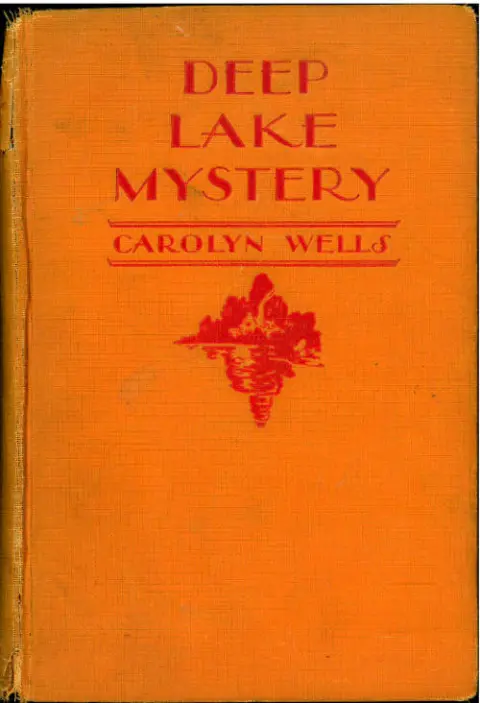
THE CLASSIC COLLECTION · 1928
"The Deep Lake Mystery" by Carolyn Wells is a mystery novel written in the late 1920s. The story unfolds around the unexpected death of Sampson Tracy, whose peculiar demise sets the stage for a complex investigation involving a variety of intriguing characters. The narrative is primarily relayed through the experiences of Keeley Moore, a detective, and his friend, who finds himself drawn into the dark, enigmatic atmosphere surrounding the Tracy household and its eccentric residents. At the start of the novel, the main character recounts his chilling discovery of Sampson Tracy's body, surrounded by bizarre items such as a feather duster and flowers, setting off a chain of events that lead him to Deep Lake. After an invitation from his detective friend Keeley Moore, the protagonist visits the Moores' tranquil summer home, only to be thrust into a web of secrets as they soon learn of Tracy's strange death—initially deemed to be a stroke, but with hints of foul play. As the two friends begin to unravel the hidden dynamics between Tracy, his fiancée Katherine Dallas, and various other individuals with dubious motives, the scenic lake setting quickly becomes a backdrop for a gripping mystery that straddles both societal intrigue and themes of familial loyalty.
Introduction adapted from the source catalogue; source summaries may be automatically generated.
Free to read · English · 69,851 words · No account needed
MAKE TIME FOR A GOOD BOOK
On by default. Untick to stop anonymous reading totals. Each page counts after 10 seconds in view. How this works.
Anonymous counting is on unless you have switched it off.
“Sally Bray may have been Griscom’s accomplice. Isn’t she in love with
him?”
“Is she?” I inquired. “There’s the trouble, Kee, we don’t know enough facts. Is Sally in love with the butler? Is Mrs. Dallas in love with the secretary? Is Harper Ames in love with Mrs. Dallas? Get these things settled for certain, and then try to fit in your theories.”
“That’s so, Gray,” Moore agreed. “And I see Mr. Police Detective March coming our way. I hate to acknowledge it, but he may know more, in his ordinary police way, than we hifalutin, transcendent detectives have, so far, been able to ferret out.”
I glanced out of the window to see the stolid-looking man tramping along
toward our door.
Although he showed little alertness or eagerness, there was a sort of power in the way he carried himself that gave me a feeling of confidence.
He came in as Kee rose to greet him, spoke to the ladies in a preoccupied way, and seated himself comfortably in a big easy chair.
“Well,” he said, “I’ve been to see the Remsen girl.”
“What about her?” Kee asked.
“Nothing, so far. She’s rattled to death, and all upset, of course, but though I think she’s trying to hide something, I’m sure it’s nothing of real importance. I mean, she thinks she knows something about somebody that seems to her of evidential value, but it isn’t.”
“How do you know it isn’t?”
“This way, Mr. Moore. She gets embarrassed at the wrong places.”
“Go on, say more about it.”
“It’s hard to explain so as to make it plausible. But when I ask her about her doings that night, or about her relations with her uncle, or her feeling towards Mrs. Dallas, she’s as unconcerned and un-self-conscious as a child. But when I refer to those waistcoats or that painted pole, she gets queer-like all in a minute.”
“And you gather from that?”
“That she is worried to death about the waistcoats because somebody must have put them in her boathouse to incriminate her, and that scares her. While any talk of the actual murder seems not to disturb her nearly so much.”
“You have imagination, Mr. March,” Moore said, looking at him with a sort of admiration. “Or you couldn’t see all that.”
“No, Mr. Moore,” the policeman looked earnest, “that’s only seeing things as they are. I saw all that in Miss Remsen’s face and attitude. It isn’t imagination a detective needs, it’s ability to read the facts right. It’s the criminal who has to have imagination.”
Your reading position is saved on this browser. Take it to another device with a library code. Reading pages adapt to text, rather than matching a printed edition.
Carolyn Wells

Carolyn Wells & Harry Persons Taber

Carolyn Wells

Carolyn Wells
BEHIND THE BOOK
This eBook is for the use of anyone anywhere in the United States and most other parts of the world at no cost and with almost no restrictions whatsoever. You may copy it, give it away or re-use it under the terms of the Project Gutenberg License included with this eBook or online at www.gutenberg.org. If you are not located in the United States, you will have to check the laws of the country where you are located before using this eBook. Read the source licence.
The original source file, including credits and licence, is retained by this library. Request an original-format copy at no charge. Please include the book title and Project Gutenberg identifier #46064.
KEEP YOUR CURIOSITY GOING
Coulson Kernahan

Maurice Baring
Frances Wright
Cécile Tormay

Frederic Jesup Stimson

W. H. P. (William Henry Pope) Jarvis