
The story of Betty
Carolyn Wells
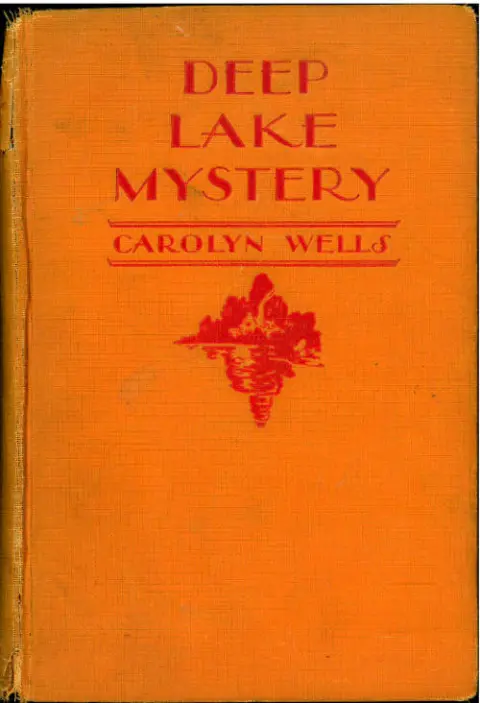
THE CLASSIC COLLECTION · 1928
"The Deep Lake Mystery" by Carolyn Wells is a mystery novel written in the late 1920s. The story unfolds around the unexpected death of Sampson Tracy, whose peculiar demise sets the stage for a complex investigation involving a variety of intriguing characters. The narrative is primarily relayed through the experiences of Keeley Moore, a detective, and his friend, who finds himself drawn into the dark, enigmatic atmosphere surrounding the Tracy household and its eccentric residents. At the start of the novel, the main character recounts his chilling discovery of Sampson Tracy's body, surrounded by bizarre items such as a feather duster and flowers, setting off a chain of events that lead him to Deep Lake. After an invitation from his detective friend Keeley Moore, the protagonist visits the Moores' tranquil summer home, only to be thrust into a web of secrets as they soon learn of Tracy's strange death—initially deemed to be a stroke, but with hints of foul play. As the two friends begin to unravel the hidden dynamics between Tracy, his fiancée Katherine Dallas, and various other individuals with dubious motives, the scenic lake setting quickly becomes a backdrop for a gripping mystery that straddles both societal intrigue and themes of familial loyalty.
Introduction adapted from the source catalogue; source summaries may be automatically generated.
Free to read · English · 69,851 words · No account needed
MAKE TIME FOR A GOOD BOOK
On by default. Untick to stop anonymous reading totals. Each page counts after 10 seconds in view. How this works.
Anonymous counting is on unless you have switched it off.
“Of course he can’t,” I declared. “But you’re going to do the swinging,
yourself.”
“Then I’d better begin. Now let’s marshal our facts. First of all, we have the collection of properties found on the bed. Was that all the work of one hand?”
“Yes,” I said, “but not necessarily the hand of the murderer.”
“That’s right,” and Moore nodded assent. “I’m inclined to think a waggish-minded visitor followed up the murderer and arranged that scenery.”
“Why?” asked Lora, very thoughtfully.
“I can think of no reason,” Kee returned, “except in an effort to direct suspicion away from the real criminal.”
“Who would do that?”
“Only a clever and watchful person, determined to shield the murderer.”
“Set up a hypothetical case,” suggested Maud. “Say, Mrs. Dallas was the
murderer——”
“How absurd,” cried Lora, “why should she kill the man she expected to
marry?”
“That we don’t know,” Maud went on in her calm way. “But there may have been reasons. Suppose Mr. Tracy had learned some secret in Mrs. Dallas’s past——”
“Go on,” Kee said, briefly, as Maud looked at him questioningly.
“I know it sounds melodramatic, but the whole affair is melodramatic, and those clues don’t seem to lead anywhere. Well, suppose Mrs. Dallas did it—killed him, I mean—and suppose somebody saw her who cared for her, Mr. Ames or Mr. Everett, or—or anybody. Mightn’t he trump up all that funny business to make it seem as if she could not have done it?”
“I don’t think you’ve struck it quite right, Maud,” Keeley said, “but I will say there’s a germ of thought in your theory. Granting two people concerned, there’s no reason to think them accomplices, it’s far more likely one is covering up the deeds of the other.”
“All of which is fantastic and not founded on fact,” Lora put in. “It’s only imagination, and one can imagine anything.”
“You have no use for imagination?” I asked her, smiling.
“Yes, when it is admittedly imagination, as in a fairy story or a romance. But imagination must not be used as a basis for argument.”
“She’s right,” Keeley said, slowly. “Lora’s usually right. Now what facts have we, outside the feather-duster lot?”
“The people themselves,” I offered. “The relationships between the people and the motives of the people.”
“That’s more like it,” and Kee gave me a glance of approval. “Take the household first. Who’s the most likely suspect?”
“Mrs. Dallas,” I said, promptly.
“She isn’t in the household.”
“Same as. She has a latchkey, so that makes her practically one of them.”
Your reading position is saved on this browser. Take it to another device with a library code. Reading pages adapt to text, rather than matching a printed edition.
Carolyn Wells

Carolyn Wells & Harry Persons Taber

Carolyn Wells

Carolyn Wells
BEHIND THE BOOK
This eBook is for the use of anyone anywhere in the United States and most other parts of the world at no cost and with almost no restrictions whatsoever. You may copy it, give it away or re-use it under the terms of the Project Gutenberg License included with this eBook or online at www.gutenberg.org. If you are not located in the United States, you will have to check the laws of the country where you are located before using this eBook. Read the source licence.
The original source file, including credits and licence, is retained by this library. Request an original-format copy at no charge. Please include the book title and Project Gutenberg identifier #46064.
KEEP YOUR CURIOSITY GOING
Coulson Kernahan

Maurice Baring
Frances Wright
Cécile Tormay

Frederic Jesup Stimson

W. H. P. (William Henry Pope) Jarvis