
The story of Betty
Carolyn Wells
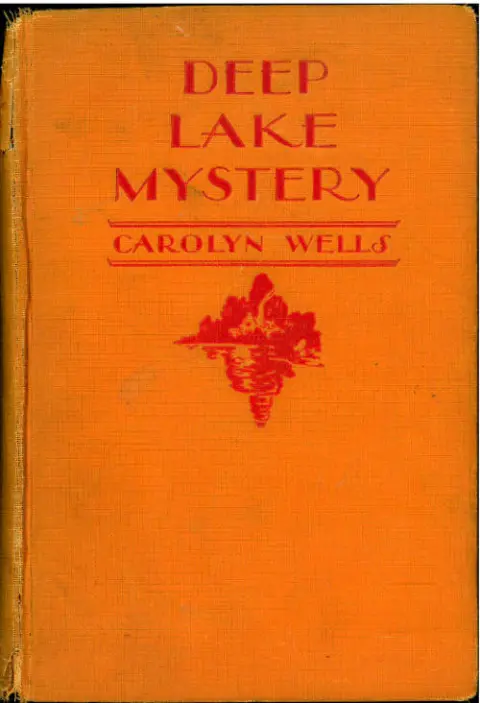
THE CLASSIC COLLECTION · 1928
"The Deep Lake Mystery" by Carolyn Wells is a mystery novel written in the late 1920s. The story unfolds around the unexpected death of Sampson Tracy, whose peculiar demise sets the stage for a complex investigation involving a variety of intriguing characters. The narrative is primarily relayed through the experiences of Keeley Moore, a detective, and his friend, who finds himself drawn into the dark, enigmatic atmosphere surrounding the Tracy household and its eccentric residents. At the start of the novel, the main character recounts his chilling discovery of Sampson Tracy's body, surrounded by bizarre items such as a feather duster and flowers, setting off a chain of events that lead him to Deep Lake. After an invitation from his detective friend Keeley Moore, the protagonist visits the Moores' tranquil summer home, only to be thrust into a web of secrets as they soon learn of Tracy's strange death—initially deemed to be a stroke, but with hints of foul play. As the two friends begin to unravel the hidden dynamics between Tracy, his fiancée Katherine Dallas, and various other individuals with dubious motives, the scenic lake setting quickly becomes a backdrop for a gripping mystery that straddles both societal intrigue and themes of familial loyalty.
Introduction adapted from the source catalogue; source summaries may be automatically generated.
Free to read · English · 69,851 words · No account needed
MAKE TIME FOR A GOOD BOOK
On by default. Untick to stop anonymous reading totals. Each page counts after 10 seconds in view. How this works.
Anonymous counting is on unless you have switched it off.
“Could you dive into that and come up smiling?” asked Kee.
“I could,” Everett said, “but I’d rather not. I know the rocks and all that, but it’s a tricky stunt. Ames could never do it.”
“Unless he’s been hoaxing you all as to his prowess in the water,” Moore
suggested.
“Yes, that might be,” Everett assented, thoughtfully.
Then Moore and I started for home. As we left the house, he proposed we go in a boat, of which there seemed to be plenty and to spare at the dock.
In preference to a canoe, Keeley selected a trim round-bottomed rowboat,
and we started off.
He did the rowing, by choice, and he bent to his oars in silence. I too felt disinclined to talk, and we shot along the water, propelled by his long steady strokes.
I looked about me. The whole scene was a setting for peace and happiness—not for crime. Yet here was black crime, stalking through the landscape, aiming for Pleasure Dome, and clutching in its wicked hand the master of the noble estate.
I looked back at the wonderful view. The great house, built on a gently sloping hill, shone white in the summer sunlight. The densely growing trees, judiciously thinned out or cut into vistas, made a perfect background, and the foreground lake, shimmering now as the sun caught its wavelets, veiled its dangers and treachery beneath a guise of smiling light.
We went on and on and I suddenly realized that we had passed the Moore
bungalow.
“Keeley,” I said, thinking he had forgotten to land, “where are you
going?”
“To the Island,” he replied, and his face wore an inscrutable look, “Come along, Gray, but for Heaven’s sake don’t say anything foolish. Better not open your mouth at all. Better yet, stay in the boat——”
“No,” I cried, “I’m going with you. Don’t be silly, Kee, I sha’n’t make a fool of myself.”
“Well, try not to, anyway,” he said, grimly, and then we made a landing at Alma Remsen’s home.
It was a tidy little dock and trim boathouse that received us, and I realized the aptness of the name “Whistling Reeds.”
For the tall reeds that lined some stretches of its shore were even now whistling faintly in the summer breeze. A stronger wind would indeed make them voiceful.
Back of the reeds were trees, and I had a passing thought that never had I seen so many trees on one island. So dense that they seemed like an impenetrable growth, the path cut through them to the house was not at once discernible.
Your reading position is saved on this browser. Take it to another device with a library code. Reading pages adapt to text, rather than matching a printed edition.
Carolyn Wells

Carolyn Wells & Harry Persons Taber

Carolyn Wells

Carolyn Wells
BEHIND THE BOOK
This eBook is for the use of anyone anywhere in the United States and most other parts of the world at no cost and with almost no restrictions whatsoever. You may copy it, give it away or re-use it under the terms of the Project Gutenberg License included with this eBook or online at www.gutenberg.org. If you are not located in the United States, you will have to check the laws of the country where you are located before using this eBook. Read the source licence.
The original source file, including credits and licence, is retained by this library. Request an original-format copy at no charge. Please include the book title and Project Gutenberg identifier #46064.
KEEP YOUR CURIOSITY GOING
Coulson Kernahan

Maurice Baring
Frances Wright
Cécile Tormay

Frederic Jesup Stimson

W. H. P. (William Henry Pope) Jarvis