
The story of Betty
Carolyn Wells
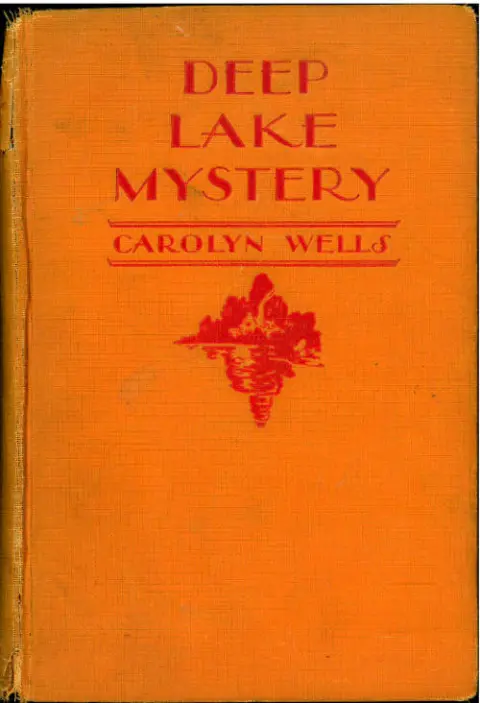
THE CLASSIC COLLECTION · 1928
"The Deep Lake Mystery" by Carolyn Wells is a mystery novel written in the late 1920s. The story unfolds around the unexpected death of Sampson Tracy, whose peculiar demise sets the stage for a complex investigation involving a variety of intriguing characters. The narrative is primarily relayed through the experiences of Keeley Moore, a detective, and his friend, who finds himself drawn into the dark, enigmatic atmosphere surrounding the Tracy household and its eccentric residents. At the start of the novel, the main character recounts his chilling discovery of Sampson Tracy's body, surrounded by bizarre items such as a feather duster and flowers, setting off a chain of events that lead him to Deep Lake. After an invitation from his detective friend Keeley Moore, the protagonist visits the Moores' tranquil summer home, only to be thrust into a web of secrets as they soon learn of Tracy's strange death—initially deemed to be a stroke, but with hints of foul play. As the two friends begin to unravel the hidden dynamics between Tracy, his fiancée Katherine Dallas, and various other individuals with dubious motives, the scenic lake setting quickly becomes a backdrop for a gripping mystery that straddles both societal intrigue and themes of familial loyalty.
Introduction adapted from the source catalogue; source summaries may be automatically generated.
Free to read · English · 69,851 words · No account needed
MAKE TIME FOR A GOOD BOOK
On by default. Untick to stop anonymous reading totals. Each page counts after 10 seconds in view. How this works.
Anonymous counting is on unless you have switched it off.
The girl was frightened, too. She drew her breath quickly, as if fearing she had been indiscreet, but March restored her equanimity by his next words.
“That’s all right, Dora,” he said, “it doesn’t matter what book she had or what music she played. Then she went to bed? She didn’t go out anywhere?”
“Oh, no, sir, it was near ten, then. Miss Remsen never goes out evenings unless to a party and then somebody fetches her or Mother goes with her.”
“Well, you’ve told a straight story, and that’s all we want to know. Now, I’m going to give the house the once over.”
“What’s that, sir?”
“A glance about. You see, Dora, I’m connected with the police and——”
“The police, sir!” she cried, and sank into a chair.
But suddenly she sprang to her feet again, and said, in a low, tense tone, “Will you please go away, sir? Go away, and come when my father or mother shall be here?”
“No, Dora, we can’t do that. You ought to know that the police cannot be told what to do. But rest assured, we mean no harm to your young mistress, and we are hoping to find some clues or evidence that will free her from suspicion.”
Dora looked thoroughly perplexed. She glanced from the window, as if of a mind to call Michael, but he was not in sight.
“And I may as well tell you,” March continued, his iron hand still in a velvet glove, “that you’d better let us have our way, without raising any objection. For you can’t stop us, and you’d only create unpleasantness for yourself.”
Dora seemed to see reason, and she nodded her head in assent.
“What do you want me to do?” she asked, in a subdued voice.
“Go with us and show us the rooms. That’s all. We shall not really disturb anything and it will save Miss Remsen trouble if we can get through before her return.”
So Dora went ahead, with an air of obedience under protest that showed itself in her dragging footsteps and her sombre eyes.
“This is the living room,” she said, indicating the room we already knew.
March stepped inside. He quickly scanned the appointments, but he had seen them before and paid real attention only to the bookcase. This produced nothing of interest, however, and we went on through a cozy little writing room to the dining room, a delightful cheery room hung with chintzes and gay with bowls of flowers.
Your reading position is saved on this browser. Take it to another device with a library code. Reading pages adapt to text, rather than matching a printed edition.
Carolyn Wells

Carolyn Wells & Harry Persons Taber

Carolyn Wells

Carolyn Wells
BEHIND THE BOOK
This eBook is for the use of anyone anywhere in the United States and most other parts of the world at no cost and with almost no restrictions whatsoever. You may copy it, give it away or re-use it under the terms of the Project Gutenberg License included with this eBook or online at www.gutenberg.org. If you are not located in the United States, you will have to check the laws of the country where you are located before using this eBook. Read the source licence.
The original source file, including credits and licence, is retained by this library. Request an original-format copy at no charge. Please include the book title and Project Gutenberg identifier #46064.
KEEP YOUR CURIOSITY GOING
Coulson Kernahan

Maurice Baring
Frances Wright
Cécile Tormay

Frederic Jesup Stimson

W. H. P. (William Henry Pope) Jarvis