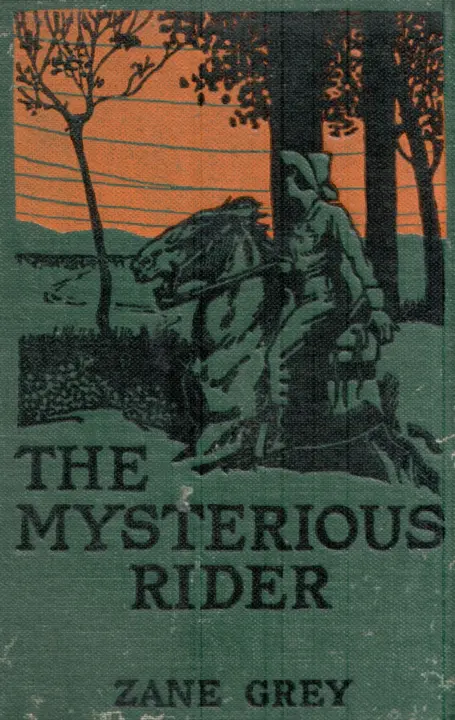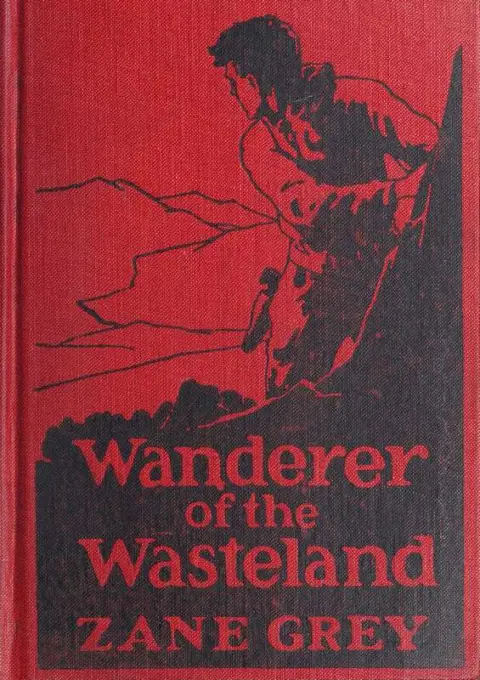
Wanderer of the Wasteland
Zane Grey
THE CLASSIC COLLECTION · 1922
"The Day of the Beast" by Zane Grey is a novel written in the early 20th century. Set shortly after World War I, it explores the emotional and physical struggles of Daren Lane, a soldier returning home from the war, as he grapples with his changed identity and the disillusionment of reintegrating into society. The story delves into his relationships with fellow veterans and the shifting dynamics of his hometown, touching on themes of sacrifice, longing, and the harsh realities of civilian life after war. The opening of the novel introduces Daren Lane as he returns home by ship, accompanied by his fellow veterans Blair Maynard and Red Payson. Their reunion is marked by a bittersweet mix of joy and apprehension as they confront the stark contrast between their dreams of a warm welcome and the reality of a society that has seemingly moved on without them. Lane's own experiences in the war leave him physically and emotionally scarred, and he struggles with the feeling of alienation back home. As he navigates the changes in his relationships, including the poignant transformations in his family and friends, the narrative begins to explore the consequences of war on personal and communal ties, setting the stage for the unfolding story.
Introduction adapted from the source catalogue; source summaries may be automatically generated.
Free to read · English · 88,805 words · No account needed
MAKE TIME FOR A GOOD BOOK
On by default. Untick to stop anonymous reading totals. Each page counts after 10 seconds in view. How this works.
Anonymous counting is on unless you have switched it off.
"Miss Hill, it wasn't fair!" exclaimed Bessy Bell, hotly. "It wasn't fair. Rose is no worse than the other girls. She's not as bad, for she isn't sly and deceitful. There were a dozen girls who lied when they went out. Helen lied. Ruth lied. Gail lied. But Rose told the truth so far as she went. And she wouldn't tell all because she wanted to shield me."
"Why did she want to shield you?"
"Because I wrote the verses."
"You mean you copied them?"
"I composed them," Bessy replied coolly. Her blue eyes fearlessly met
Miss Hill's gaze.
"Bessy Bell!" ejaculated the teacher.
The girl stood before her desk and from the tip of her dainty boot to the crown of her golden hair breathed forth a strange, wilful and rebellious fire.
Miss Hill's lips framed to ask a certain question of Bessy, but she refrained and substituted another.
"Bessy, how old are you?"
"Fifteen last April."
"Have you any intelligent idea of--do you know--Bessy, how did you write those verses?" asked Miss Hill, in bewilderment.
"I know a good deal and I've imagination," replied Bessy, candidly.
"That's evident," returned the teacher. "How long has this note-and verse-writing been going on?"
"For a year, at least, among us."
"Then you caught the habit from girls gone higher up?"
"Certainly."
Bessy's trenchant brevity was not lost upon Miss Hill.
"We've always gotten along--you and I," said Miss Hill, feeling her
way with this strange girl.
"It's because you're kind and square, and I like you."
Something told the teacher she had never been paid a higher
compliment.
"Bessy, how much will you tell me?"
"Miss Hill, I'm in for it and I'll tell you everything, if only you won't punish Rose," replied the girl, impulsively. "Rose's my best friend. Her father's a mean, drunken brute. I'm afraid of what he'll do if he finds out. Rose has a hard time."
"You say Rose is no more guilty than the other girls?"
"Rose Clymer never had an idea of her own. She's just sweet and willing. I hate deceitful girls. Every one of them wrote notes to the boys--the same kind of notes--and some of them tried to write poetry. Most of them had a copy of the piece I wrote. They had great fun over it--getting the boys to guess what girl wrote it. I've written a dozen pieces before this and they've all had them."
"Well, that explains the verses.... Now I read in these notes about
meetings with the boys?"
"That refers to mornings before school, and after school, and evenings when it's nice weather. And the literary society."
Your reading position is saved on this browser. Take it to another device with a library code. Reading pages adapt to text, rather than matching a printed edition.
BEHIND THE BOOK
This eBook is for the use of anyone anywhere in the United States and most other parts of the world at no cost and with almost no restrictions whatsoever. You may copy it, give it away or re-use it under the terms of the Project Gutenberg License included with this eBook or online at www.gutenberg.org. If you are not located in the United States, you will have to check the laws of the country where you are located before using this eBook. Read the source licence.
The original source file, including credits and licence, is retained by this library. Request an original-format copy at no charge. Please include the book title and Project Gutenberg identifier #15673.
KEEP YOUR CURIOSITY GOING
Coulson Kernahan

Maurice Baring
Frances Wright
Cécile Tormay

Frederic Jesup Stimson

W. H. P. (William Henry Pope) Jarvis