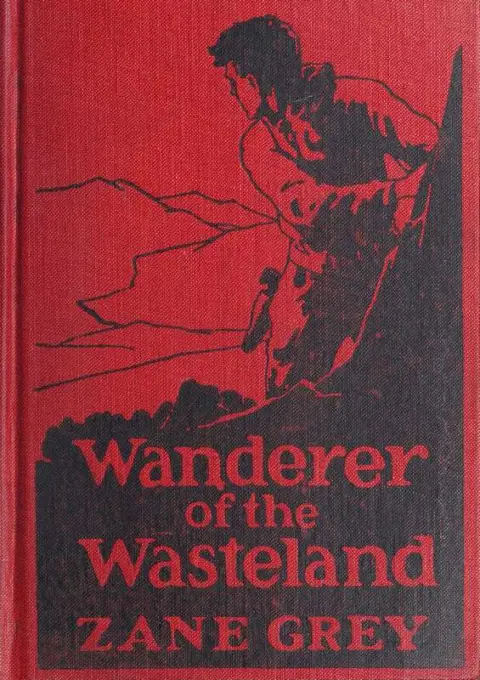
Wanderer of the Wasteland
Zane Grey
THE CLASSIC COLLECTION · 1922
"The Day of the Beast" by Zane Grey is a novel written in the early 20th century. Set shortly after World War I, it explores the emotional and physical struggles of Daren Lane, a soldier returning home from the war, as he grapples with his changed identity and the disillusionment of reintegrating into society. The story delves into his relationships with fellow veterans and the shifting dynamics of his hometown, touching on themes of sacrifice, longing, and the harsh realities of civilian life after war. The opening of the novel introduces Daren Lane as he returns home by ship, accompanied by his fellow veterans Blair Maynard and Red Payson. Their reunion is marked by a bittersweet mix of joy and apprehension as they confront the stark contrast between their dreams of a warm welcome and the reality of a society that has seemingly moved on without them. Lane's own experiences in the war leave him physically and emotionally scarred, and he struggles with the feeling of alienation back home. As he navigates the changes in his relationships, including the poignant transformations in his family and friends, the narrative begins to explore the consequences of war on personal and communal ties, setting the stage for the unfolding story.
Introduction adapted from the source catalogue; source summaries may be automatically generated.
Free to read · English · 88,805 words · No account needed
MAKE TIME FOR A GOOD BOOK
On by default. Untick to stop anonymous reading totals. Each page counts after 10 seconds in view. How this works.
Anonymous counting is on unless you have switched it off.
"Not if I see you first!" muttered Margaret, under her breath, as her
mother walked out.
Presently, following gay talk and laughter down stairs, a bevy of Margaret's friends entered her boudoir.
"Hello, old socks!" was Helen's greeting. "You look punk."
"Marg, where's the doll? Your mother tipped us off," was Elinor's
greeting.
"Where's the eats?" was Flossie Dickerson's greeting. She was a bright-eyed girl, with freckles on her smiling face, and the expression of a daring, vivacious and happy spirit--and acknowledged to be the best dancer and most popular girl in Middleville. Her dress, while not to be compared with her friends' costumes in costliness, yet was extreme in the prevailing style.
"Glad to see you, old dear," was dark-eyed, dark-haired Dorothy Dalrymple's greeting. Her rich color bore no hint of the artificial. She sank down on her knees beside Margaret.
The other girls draped themselves comfortably round the room; and Flossie with a 'Yum Yum' began to dig into a box of candy on Margaret's couch. They all talked at once. "Hear the latest, Marg?"
"Look at Helen's spiffy suit!"
"Oh, money, money, what it will buy!"
"Money'll never buy me, I'll say."
"Marg, who's been fermentin' round lately? Girls, get wise to the
flowers."
"Hot dog! See Marg blush! That comes from being so pale. What are rouge and lip-stick and powder for but to hide truth from our masculine pursuers?"
"Floss, you haven't blushed for a million years."
It was Dorothy Dalrymple who silenced the idle badinage.
"Marg, you rummaging in the past?" she cried.
"Yes, and I love it," replied Margaret. "I haven't looked over this stuff for years. Just to remember the things I did!... Here, Dal, is a picture you once drew of our old teacher, Miss Hill."
Dorothy, whom the girls nicknamed "Dal," gazed at the drawing with
amaze and regret.
"She was a terror," continued Margaret. "But Dal, you never had any reason to draw such a horrible picture of her. You were her pet."
"I wasn't," declared Dorothy.
"Maybe you never knew Miss Hill adored you, Dal," interposed Elinor. "She was always holding you up as a paragon. Not in your lessons--for you were a bonehead--but for deportment you were the class!"
"Dal, you were too good for this earth then, let alone these days,"
said Margaret.
"Miss Hill," mused Elinor, gazing at the caricature. "That's not a bad drawing. I remember Miss Hill never had any use for me. Small wonder. She was an honest-to-God teacher. I think she wanted us to be good.... Wonder how she got along with the kids that came after us."
Your reading position is saved on this browser. Take it to another device with a library code. Reading pages adapt to text, rather than matching a printed edition.
BEHIND THE BOOK
This eBook is for the use of anyone anywhere in the United States and most other parts of the world at no cost and with almost no restrictions whatsoever. You may copy it, give it away or re-use it under the terms of the Project Gutenberg License included with this eBook or online at www.gutenberg.org. If you are not located in the United States, you will have to check the laws of the country where you are located before using this eBook. Read the source licence.
The original source file, including credits and licence, is retained by this library. Request an original-format copy at no charge. Please include the book title and Project Gutenberg identifier #15673.
KEEP YOUR CURIOSITY GOING
Coulson Kernahan

Maurice Baring
Frances Wright
Cécile Tormay

Frederic Jesup Stimson

W. H. P. (William Henry Pope) Jarvis