THE CLASSIC COLLECTION✦An outlaw’s diary: the CommuneCLASSIC FREE BOOKS
An outlaw’s diary: the Commune
Cécile Tormay
THE CLASSIC COLLECTION · 1890
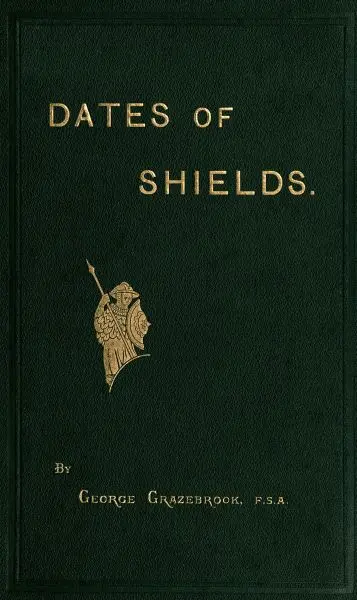
"The Dates of Variously-shaped Shields, with Coincident Dates and Examples" by George Grazebrook is an historical account written in the late 19th century. This work explores the evolution and classification of variously-shaped heraldic shields primarily in England, with a focus on dating them accurately through historical seals, medieval manuscripts, and other contemporary sources. The author aims to provide a structured reference for students and antiquarians interested in the history and development of heraldry. At the start of the text, Grazebrook introduces the topic by emphasizing the lack of comprehensive studies on the dating of shields throughout history. He reflects on the importance of seals as a reliable source of evidence for dating these artifacts and highlights several shapes of shields used from the 11th to the 15th centuries, explaining their materials and design features. The opening portion sets the stage for a detailed examination of shield shapes while outlining the historical context and significance of the research. Grazebrook also expresses his hope for constructive criticism that would enhance the future editions of this work.
Introduction adapted from the source catalogue; source summaries may be automatically generated.
Free to read · English · 23,853 words · No account needed
MAKE TIME FOR A GOOD BOOK
On by default. Untick to stop anonymous reading totals. Each page counts after 10 seconds in view. How this works.
Anonymous counting is on unless you have switched it off.
About 1550 helmets with mantlings, open and rather sparse, and kept high up on the top of the shield, appear. These mantlings are rather flat, so that a good space is left for the crest, which thus stands out distinctly. As a specimen, see Wm. Lambarde's seal, 1552 (Archæologia Cantiana, vol. v, p. 256).
Although a good many seals continue still with the mantlings kept up about the top of the shield (while sometimes a motto, &c., is introduced below), it is observed that a little after this date mantlings gradually creep downwards, perhaps to two-thirds of the depth of the shield. See a seal of the Throckmorton family, 1576 (Visitation of Warwick, 1619, Harl. Soc.); also those of Lord Chancellor Bromley, 1581 (Herald and Genealogist, vol. v, p. 5); John Ogle, 1597 (Mascy Charters, plate C, Historic Society of Lancashire and Cheshire for 1887); and Edward Osborne, 1618 (Herald and Genealogist, vol. iv, p. 241; also Archæologia Cantiana, vol. v, p. 234).
This is the character of many examples occurring down to about the year 1650, when a greater profusion of mantling began to be shown: of this the seal of Sir Edward Nicholas, engraved on p. 45, is a good example; and it is the first instance I have noticed in which the folds of the mantling come out from behind the shield, thus marring its distinctness. Usually, although the volume of foldings increases, they are kept away from it, so as to leave the impression of the shield standing out and quite clear. In this, too, the folds extend higher up on either side of the crest than is usual in earlier examples.
It may be interesting here to note that of the fifty-nine seals attached to the death warrant of Charles I., in 1648-9--following the very accurate engraving in Monumenta Vetusta, vol. ii,--twenty-one show mantlings, eleven are distinctly without, ten are doubtful, and the remaining seventeen seals are quite illegible.
From about 1650 many beautifully cut signets are found--the arms, with helmets, crests, and mantlings, the points of which rise up on either side of the crest, thus filling up that empty space. The seal of the Cordwainers of Oxford, made in 1680, is a favourable example of the date (Arch. Journal, vol. vi, pp. 159 and 279).
About 1680 I have observed tassels sometimes appear as a finish to the lower ends of mantlings, as in the seal of Thomas Bate, engraved on p. 45; also in a signet of 1683, in Miscellanea Genealogica et Heraldica for 1886, p. 143; and elsewhere.
Shields set in frames of scroll-work, without mantlings, were prevalent from the beginning of the seventeenth century. For an example, see a signet of Fetherston, 1638, engraved in the Visitation of Warwick (Harleian Society).
Your reading position is saved on this browser. Take it to another device with a library code. Reading pages adapt to text, rather than matching a printed edition.
BEHIND THE BOOK
This eBook is for the use of anyone anywhere in the United States and most other parts of the world at no cost and with almost no restrictions whatsoever. You may copy it, give it away or re-use it under the terms of the Project Gutenberg License included with this eBook or online at www.gutenberg.org. If you are not located in the United States, you will have to check the laws of the country where you are located before using this eBook. Read the source licence.
The original source file, including credits and licence, is retained by this library. Request an original-format copy at no charge. Please include the book title and Project Gutenberg identifier #47761.
KEEP YOUR CURIOSITY GOING
Cécile Tormay

Moritz Busch
John L. Ransom
Frances Wright
Cécile Tormay

Mabel Potter Daggett