THE CLASSIC COLLECTION✦An outlaw’s diary: the CommuneCLASSIC FREE BOOKS
An outlaw’s diary: the Commune
Cécile Tormay
THE CLASSIC COLLECTION · 1890
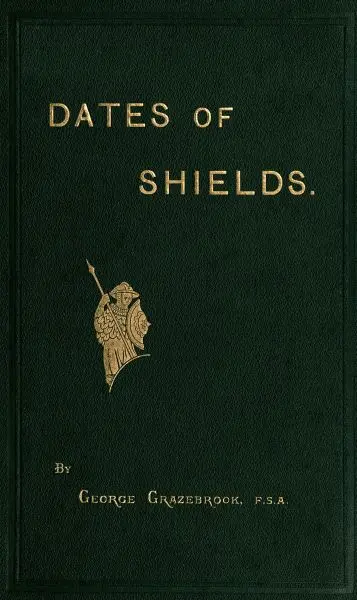
"The Dates of Variously-shaped Shields, with Coincident Dates and Examples" by George Grazebrook is an historical account written in the late 19th century. This work explores the evolution and classification of variously-shaped heraldic shields primarily in England, with a focus on dating them accurately through historical seals, medieval manuscripts, and other contemporary sources. The author aims to provide a structured reference for students and antiquarians interested in the history and development of heraldry. At the start of the text, Grazebrook introduces the topic by emphasizing the lack of comprehensive studies on the dating of shields throughout history. He reflects on the importance of seals as a reliable source of evidence for dating these artifacts and highlights several shapes of shields used from the 11th to the 15th centuries, explaining their materials and design features. The opening portion sets the stage for a detailed examination of shield shapes while outlining the historical context and significance of the research. Grazebrook also expresses his hope for constructive criticism that would enhance the future editions of this work.
Introduction adapted from the source catalogue; source summaries may be automatically generated.
Free to read · English · 23,853 words · No account needed
MAKE TIME FOR A GOOD BOOK
On by default. Untick to stop anonymous reading totals. Each page counts after 10 seconds in view. How this works.
Anonymous counting is on unless you have switched it off.
No. 83--Is a shield with Queen Anne's arms, 1706, engraved in
Willement's Regal Heraldry.
No. 80--May be seen in the monument to Tho. Norreys, 1624, in Rainham Church, Kent (Archæologia Cantiana, vol. vi, p. 295).
A grant of arms, dated 1720, is engraved in Miscell. Genealogica, vol. ii, p. 252, and shews the same shield.
Seals about the year 1718 appear with this same shape, of rather broad proportions, and with French bases rather flattened.
No. 81--In Wright's edition of Peter Heylin's Helps to History,
published 1773, this variation is used, but of rather longer
proportions.
About 1780, seals are noticed to follow the same character, and with angular or French bases, just as we see them prevailing even to the present day.
This shield therefore, with slight variations in the ears, may be found from 1533 to the present day; and the date given in Parker's Glossary was fixed upon insufficient research.
in England are usually of the same shape and size as the seal proper; the pendant cake of wax thus showing two complete impressions, one on each side.
Edward the Confessor and his successors have continuously used them; but among subjects they do not appear before 1130--excepting, perhaps, that remarkable instance of two seals conjoined back to back on the charter of Odo, Bishop of Baieux in 1075. See Archæologia, vol. i, p. 335.
Nobility of the blood royal, their wives and daughters, seem to have used counterseals pretty generally from the middle of the twelfth century. The greater titular nobility also adopted them occasionally during that century; but in the next, and until the Baron's letter (1301), a much larger number occur. Their use, however, was very irregular: many prominent titular nobles neglected them, and, on the other hand, we find many families of only moderate territorial position placing secreta on the back of charter seals. I notice as quite remarkable how many ladies who had come to represent a manor, about the middle of the thirteenth century, when the fashion was at its height, at once beautified or safeguarded their seals with a secretum.
After 1301 such extra sealing almost disappears, but there are some very late instances. Humfrey Earl of Stafford and Perche, 1438, placed on the back of his splendid seal a smaller one--the Stafford arms on a heater shield, within a decoration of three Stafford knots, but without any inscription (Archæologia, vol. xxxviii); and some of those large and pretentious seals mentioned as appearing 1450-1475 were used with small counterseals.
Many ecclesiastical communities used counterseals, also the old Cinque ports and other ancient boroughs. Ancient official departments too, such as the Norwich Staple, 1272-1307: these having begun, of course continued their use as an established form.
Your reading position is saved on this browser. Take it to another device with a library code. Reading pages adapt to text, rather than matching a printed edition.
BEHIND THE BOOK
This eBook is for the use of anyone anywhere in the United States and most other parts of the world at no cost and with almost no restrictions whatsoever. You may copy it, give it away or re-use it under the terms of the Project Gutenberg License included with this eBook or online at www.gutenberg.org. If you are not located in the United States, you will have to check the laws of the country where you are located before using this eBook. Read the source licence.
The original source file, including credits and licence, is retained by this library. Request an original-format copy at no charge. Please include the book title and Project Gutenberg identifier #47761.
KEEP YOUR CURIOSITY GOING
Cécile Tormay

Moritz Busch
John L. Ransom
Frances Wright
Cécile Tormay

Mabel Potter Daggett