THE CLASSIC COLLECTION✦An outlaw’s diary: the CommuneCLASSIC FREE BOOKS
An outlaw’s diary: the Commune
Cécile Tormay
THE CLASSIC COLLECTION · 1890
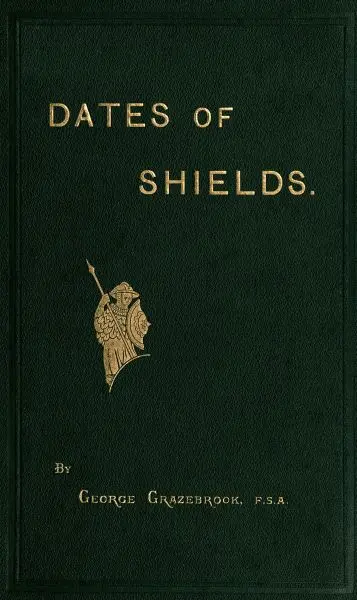
"The Dates of Variously-shaped Shields, with Coincident Dates and Examples" by George Grazebrook is an historical account written in the late 19th century. This work explores the evolution and classification of variously-shaped heraldic shields primarily in England, with a focus on dating them accurately through historical seals, medieval manuscripts, and other contemporary sources. The author aims to provide a structured reference for students and antiquarians interested in the history and development of heraldry. At the start of the text, Grazebrook introduces the topic by emphasizing the lack of comprehensive studies on the dating of shields throughout history. He reflects on the importance of seals as a reliable source of evidence for dating these artifacts and highlights several shapes of shields used from the 11th to the 15th centuries, explaining their materials and design features. The opening portion sets the stage for a detailed examination of shield shapes while outlining the historical context and significance of the research. Grazebrook also expresses his hope for constructive criticism that would enhance the future editions of this work.
Introduction adapted from the source catalogue; source summaries may be automatically generated.
Free to read · English · 23,853 words · No account needed
MAKE TIME FOR A GOOD BOOK
On by default. Untick to stop anonymous reading totals. Each page counts after 10 seconds in view. How this works.
Anonymous counting is on unless you have switched it off.
No. 35--Egg-shaped may be regarded very much as a variation of No. 32, some artists considering it more graceful and better adapted to hold the arms and leave less of the field vacant. The shield of Edward the Black Prince, preserved at Canterbury, and already noticed at p. 30, was of this shape. He died 1376 (Bolton's Elements, p. 67).
But there is a large number of such seals as may be described egg-shaped, with hollowed-out sides, and frequently framed in scrolls; these are classed as cardioid Nos. 42 and 43, the outlines having been altered by scroll work, although sometimes the scrolls are omitted.
These occur in Divi Britannici, by Sir Winston Churchill, 1675;
In monuments of 1684, &c., in Blomefield's Norfolk;
And of 1699, Miscell. Genealogica et Heraldica for December, 1884, p.
185;
Again in 1715, Herald and Genealogist, vol. ii, p. 230; and they are constantly to be found in monumental tablets.
Very frequently the bases of shields with hollowed-out sides are turned either to dexter or sinister, as noticed in seals throughout the eighteenth century; and in some later Jacobean, and in Chippendale book-plates say from 1720 to nearly the end of the century.
No. 36--French shields, so constantly represented in French heraldry, appear also in English grants of arms, 1557, 1561, 1582, 1612.
This is just an ordinary square shield, No. 7, with a pointed French
base.
This shield, however, may be found at much earlier dates--see remarks on Simon de Montacute's seal to the Baron's letter, 1301, on p. 22; also the very curious brass formerly in St. Nicholas' Church, Lynn, to Thomas Waterdeyn, Mayor of Lynn in 1397 and 1404. This shows two shields, No. 36, which bear his merchant's mark, and stand on either side of a tree. He was alive in 1410 (see engraving, Archæologia, vol. xxxix, p. 505).
No. 39.--This curious Italian shield occurs in Gerard Leigh's Accedens
of Armoury, 1562.
Also with curious scroll-work, dated 1589, in a timber house at Norwich, engraved, Archæologia, vol. xvi, p. 194.
In the Great Seal of Charles I., 1640, Sandford's Genealogical
History, p. 516.
In the halfpenny of Charles II., 1660.
In the halfpenny of James II., 1685.
Randle Holme, book i, p. 6, would have us believe this was "the veritable shape of the Christal shield given by the goddess Minerva to Perseus, to enable him to slay the Gorgon Medusa, and which was after dedicated to Pallas," and this conceit may account for a monster's head introduced in the Great Seal of Charles I., 1640.
Your reading position is saved on this browser. Take it to another device with a library code. Reading pages adapt to text, rather than matching a printed edition.
BEHIND THE BOOK
This eBook is for the use of anyone anywhere in the United States and most other parts of the world at no cost and with almost no restrictions whatsoever. You may copy it, give it away or re-use it under the terms of the Project Gutenberg License included with this eBook or online at www.gutenberg.org. If you are not located in the United States, you will have to check the laws of the country where you are located before using this eBook. Read the source licence.
The original source file, including credits and licence, is retained by this library. Request an original-format copy at no charge. Please include the book title and Project Gutenberg identifier #47761.
KEEP YOUR CURIOSITY GOING
Cécile Tormay

Moritz Busch
John L. Ransom
Frances Wright
Cécile Tormay

Mabel Potter Daggett