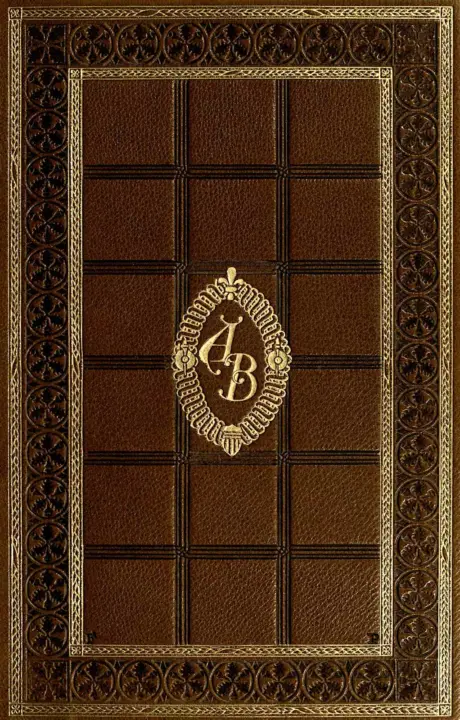
The Collected Works of Ambrose Bierce, Volume 11 Antepenultimata
Ambrose Bierce
THE CLASSIC COLLECTION · 1906
"The Cynic's Word Book" by Ambrose Bierce is a satirical lexicon written in the late 19th century. It presents a collection of definitions that twist and critique conventional meanings, offering a cynical take on language, society, and human nature. Through a unique blend of wit, humor, and sharp observation, the work highlights the absurdities of everyday life, politics, and morality. The opening portion introduces readers to Bierce's distinctive style, showcasing entries that are whimsical yet pointedly critical. For example, he defines terms like "Cynic," suggesting it is someone who sees things as they are rather than as they ought to be. Each entry combines playful wordplay with revealing commentary, illustrating how Bierce uses humor to explore the contradictions and follies of human existence. As the definitions unfold, readers quickly grasp that this work is not just about words, but a deeper reflection on the human condition and societal norms.
Introduction adapted from the source catalogue; source summaries may be automatically generated.
Free to read · English · 32,722 words · No account needed
MAKE TIME FOR A GOOD BOOK
On by default. Untick to stop anonymous reading totals. Each page counts after 10 seconds in view. How this works.
Anonymous counting is on unless you have switched it off.
Spring beckons! All things to the call respond;
The trees are leaving and cashiers abscond.
Phela Orm.
ABSENT, adj. Peculiarly exposed to the tooth of detraction; vilified; hopelessly in the wrong; superseded in the consideration and affection of another.
To men a man is but a mind. Who cares
What face he carries or what form he wears?
But woman's body is the woman. Oh,
Stay thou, my sweetheart, and do never go.
But heed the warning words the sage hath said:
A woman absent is a woman dead.
Jogo Tyree.
ABSENTEE, n. A person with an income who has had the forethought to remove himself from the sphere of exaction.
ABSOLUTE, adj. Independent, irresponsible. An absolute monarchy is one in which the sovereign does as he pleases so long as he pleases the assassins. Not many absolute monarchies are left, most of them having been replaced by limited monarchies, where the sovereigns' power for evil (and for good) is greatly curtailed, and by republics, which are governed by chance.
ABSTAINER, n. A weak person who yields to the temptation of denying himself a pleasure. A Total Abstainer is one who abstains from everything, but abstention, and especially from inactivity in the affairs of others.
Said a man to a crapulent youth: "I thought
You a total abstainer, my son."
"So I am, so I am," said the scapegrace caught--
"But not, sir, a bigoted one."
ABSURDITY, n. A statement or belief manifestly inconsistent with one's
own opinion.
ACADEME, n. An ancient school where morality and philosophy were taught.
ACADEMY, n. [from Academe]. A modern school where football is taught.
ACCIDENT, n. An inevitable occurrence due to the action of immutable
natural laws.
ACCOMPLICE, n. One associated with another in a crime, having guilty knowledge and complicity, as an attorney who defends a criminal, knowing him guilty. This view of the attorney's position in the matter has not hitherto commanded the assent of attorneys, no one having offered them a fee for assenting.
ACCORD, n. Harmony.
ACCORDION, n. An instrument in harmony with the sentiments of an
assassin.
ACCOUNTABILITY, n. The mother of caution.
"My accountability, bear in mind,"
Said the Grand Vizier: "Yes, yes."
Said the Shah: "I do--'t is the only kind
Of ability you possess."
ACCUSE, v. t. To affirm another's guilt or unworth; most commonly as a justification of ourselves for having wronged him.
ACEPHALOUS, adj. In the surprising condition of the Crusader who absently pulled at his forelock some hours after a Saracen scimitar had, unconsciously to him, passed through his neck, as related by the Prince de Joinville.
ACHIEVEMENT, n. The death of endeavor and the birth of disgust.
Your reading position is saved on this browser. Take it to another device with a library code. Reading pages adapt to text, rather than matching a printed edition.
Ambrose Bierce
Ambrose Bierce
Ambrose Bierce
Ambrose Bierce
BEHIND THE BOOK
This eBook is for the use of anyone anywhere in the United States and most other parts of the world at no cost and with almost no restrictions whatsoever. You may copy it, give it away or re-use it under the terms of the Project Gutenberg License included with this eBook or online at www.gutenberg.org. If you are not located in the United States, you will have to check the laws of the country where you are located before using this eBook. Read the source licence.
The original source file, including credits and licence, is retained by this library. Request an original-format copy at no charge. Please include the book title and Project Gutenberg identifier #43951.
KEEP YOUR CURIOSITY GOING

David Patterson (Spirit) Hatch

David Patterson (Spirit) Hatch

David Patterson (Spirit) Hatch

Ralph Waldo Emerson

Maurice Baring

Oscar Wilde & James McNeill Whistler