THE CLASSIC COLLECTION✦An outlaw’s diary: the CommuneCLASSIC FREE BOOKS
An outlaw’s diary: the Commune
Cécile Tormay
THE CLASSIC COLLECTION · 1845
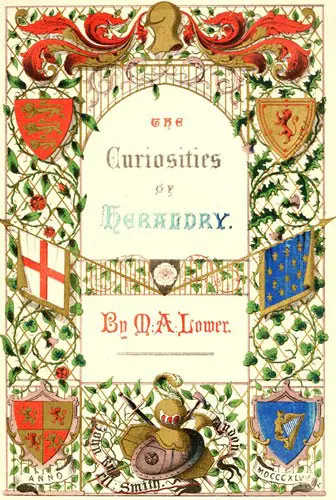
"The Curiosities of Heraldry" by Mark Antony Lower is a historical account written in the mid-19th century. This work delves into the principles and practices of heraldry, a system that denotes family lineage and nobility through intricate symbols and designs. The book aims to shed light on the often-overlooked significance and utility of heraldic study, enlivened by historical anecdotes and examples. The opening of the text presents a preface where Lower establishes the value of heraldry as an essential study for understanding not only genealogy but also the broader historical context of the Middle Ages. He reflects on the misconceptions surrounding heraldry, countering the view that it is merely an outdated collection of symbols. He emphasizes the poetic and practical aspects of heraldry, asserting that it is a rich field worthy of attention. The introduction sets the stage for a detailed exploration of the science of heraldry, hinting at its deep historical roots and its role in the social fabric of medieval society, ultimately preparing the reader for a thorough investigation into the subject throughout the subsequent chapters.
Introduction adapted from the source catalogue; source summaries may be automatically generated.
Free to read · English · 86,967 words · No account needed
MAKE TIME FOR A GOOD BOOK
On by default. Untick to stop anonymous reading totals. Each page counts after 10 seconds in view. How this works.
Anonymous counting is on unless you have switched it off.
The Lords Hungerford used a golden garb, which seems to have been taken from the arms of the Peverells, whose co-heiress married William Lord Hungerford, temp. Henry V. They were 'Azure, three garbs or.'
Edward Lord Hastings, who married the grand-daughter and heiress of the peer just named, bore on his standard the garb with a sickle--another badge of the Hungerfords--united by a golden cord.
John de Willoughby de Eresby, temp. Edward III, used two buckles, which he probably borrowed from the arms of his wife, the heiress of Roceline: 'Gules, crusily and three buckles argent.'
One of the Nevilles, Lords Bergavenny, bore two badges: first, two staples interlaced, one gold, the other silver; and second, a fret gold: these occur on a tomb at Mereworth, co. Kent.[184]
The badge of the Lords Dacre was an escallop united to a ragged staff, as
in the margin.
The family of Parr used a tuft of daisies; and the Percies a silver
crescent:
"The minstrels of thy noble house,
All clad in robes of blue,
With silver crescents on their arms,
Attend in order due."
Hermit of Warkworth.
In the 'Rising of the North Countrie' this badge and the dun bull of the Nevilles are mentioned. Of the latter we are told:
"Lord Westmoreland his ancyent raysde,
The dun bull he rays'd on hye,
And three dogs with golden collars,
Were there set out most royallye."[185]
Mowbray, Duke of Norfolk, used the punning device of lions and mulberry-trees; and Vere, Earl of Oxford, a long-necked silver bottle, with a blue cord, allusive to his hereditary post of lord high chamberlain.
Sometimes these insignia answered the double purpose of the crest and the badge. Some badges, however, as Mr. M. remarks, are not at all suitable for crests. This applies particularly to Knots, which were composed either of silk, or of gold and silver lace, and were antiently a favourite species of badge. The families of Harrington, Wake, Bouchier, Stafford, Heneage, and others, each bore a peculiar knot.
The regal heraldry of this country is peculiarly rich in badges. Mr. Montagu has, with great research, compiled a nearly perfect list of them from William Rufus to James I, to which the reader who desires further information on this subject is referred.[186] Meantime I shall notice a few of the most celebrated.
The broom-plant, or planta-genesta, was introduced by Henry II. From this badge the illustrious line of Plantagenet derived their surname. The story of its origin, be it true or false, is well known.
Your reading position is saved on this browser. Take it to another device with a library code. Reading pages adapt to text, rather than matching a printed edition.
BEHIND THE BOOK
This eBook is for the use of anyone anywhere in the United States and most other parts of the world at no cost and with almost no restrictions whatsoever. You may copy it, give it away or re-use it under the terms of the Project Gutenberg License included with this eBook or online at www.gutenberg.org. If you are not located in the United States, you will have to check the laws of the country where you are located before using this eBook. Read the source licence.
The original source file, including credits and licence, is retained by this library. Request an original-format copy at no charge. Please include the book title and Project Gutenberg identifier #38951.
KEEP YOUR CURIOSITY GOING
Cécile Tormay

Moritz Busch
John L. Ransom
Frances Wright
Cécile Tormay

Mabel Potter Daggett