THE CLASSIC COLLECTION✦An outlaw’s diary: the CommuneCLASSIC FREE BOOKS
An outlaw’s diary: the Commune
Cécile Tormay
THE CLASSIC COLLECTION · 1845
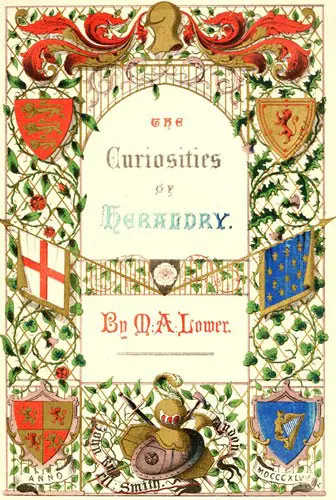
"The Curiosities of Heraldry" by Mark Antony Lower is a historical account written in the mid-19th century. This work delves into the principles and practices of heraldry, a system that denotes family lineage and nobility through intricate symbols and designs. The book aims to shed light on the often-overlooked significance and utility of heraldic study, enlivened by historical anecdotes and examples. The opening of the text presents a preface where Lower establishes the value of heraldry as an essential study for understanding not only genealogy but also the broader historical context of the Middle Ages. He reflects on the misconceptions surrounding heraldry, countering the view that it is merely an outdated collection of symbols. He emphasizes the poetic and practical aspects of heraldry, asserting that it is a rich field worthy of attention. The introduction sets the stage for a detailed exploration of the science of heraldry, hinting at its deep historical roots and its role in the social fabric of medieval society, ultimately preparing the reader for a thorough investigation into the subject throughout the subsequent chapters.
Introduction adapted from the source catalogue; source summaries may be automatically generated.
Free to read · English · 86,967 words · No account needed
MAKE TIME FOR A GOOD BOOK
On by default. Untick to stop anonymous reading totals. Each page counts after 10 seconds in view. How this works.
Anonymous counting is on unless you have switched it off.
There is another species of supporter, the use of which seems to have been almost restricted to the fifteenth and sixteenth centuries, and which is seldom noticed in our books of heraldry. The arms are represented upon a banner, the staff of which is supported by an animal in a rampant, or, more usually, in a sejant, posture. The arms of Sir Roger Fynes, Treasurer of the Household to Henry VI, are thus represented over the great gate of Hurstmonceux castle, built by him. The supporter is the alaunt, or wolf-dog,[178] and the scroll round the pole seems to have contained a motto, which is now illegible.
Some very singular supporters occur in French heraldry. Under the ancien regime the arms of most of the great officers of state were supported by ensigns emblematical of their various duties; for example--
Officers. Supporters.
The Admiral of France bore Two anchors.
Vice-Admiral, One anchor in pale behind the
shield.
Great Huntsman, Two bugles at the dext. and sin. bases of the shield.
Grand Master of Artillery, Two mounted cannons at ditto.
Grand Marshal, At the base of the shield a cloud, from the dexter side of which proceeds a hand holding a sword in pale, and from the sinister, another hand holding a baton of office.
Grand Louvetier, Two wolves' heads at the base (Wolf-hunter,) corners of the shield.
Grand Esquire, Two swords in pale with sashes.
Grand Butler, Two bottles ornamented with the royal arms.
The most singular supporters, perhaps, in the whole circle of heraldry are those of the noble French family of Albret. Two lions couchant, wearing helmets, support the lower part of the shield, and, above, are two eagles, each standing with one foot upon the head of the lion, while with the other he holds the upper part of the escocheon. The French armorists make a distinction between supports and tenans: in this instance the lions are known by the former term, and the eagles by the latter.
Mottoes will form the subject of a short separate chapter: it therefore only remains, in this brief view of extra-scutal insignia, to notice BADGES.
Some families, as has already been observed, have no crests; a still greater number have no mottoes; and supporters belong to an exclusive few. Badges are still more unusual, and in modern times it would perhaps be a matter of difficulty to enumerate twenty families who use them.
Badge, in its ordinary acceptation, signifies the mark or token of any thing; thus we are accustomed to call fetters the badge of slavery, and a plain gold ring the badge of matrimony; and thus in a figurative, or moral sense, Shakspeare says,
Your reading position is saved on this browser. Take it to another device with a library code. Reading pages adapt to text, rather than matching a printed edition.
BEHIND THE BOOK
This eBook is for the use of anyone anywhere in the United States and most other parts of the world at no cost and with almost no restrictions whatsoever. You may copy it, give it away or re-use it under the terms of the Project Gutenberg License included with this eBook or online at www.gutenberg.org. If you are not located in the United States, you will have to check the laws of the country where you are located before using this eBook. Read the source licence.
The original source file, including credits and licence, is retained by this library. Request an original-format copy at no charge. Please include the book title and Project Gutenberg identifier #38951.
KEEP YOUR CURIOSITY GOING
Cécile Tormay

Moritz Busch
John L. Ransom
Frances Wright
Cécile Tormay

Mabel Potter Daggett