THE CLASSIC COLLECTION✦An outlaw’s diary: the CommuneCLASSIC FREE BOOKS
An outlaw’s diary: the Commune
Cécile Tormay
THE CLASSIC COLLECTION · 1845
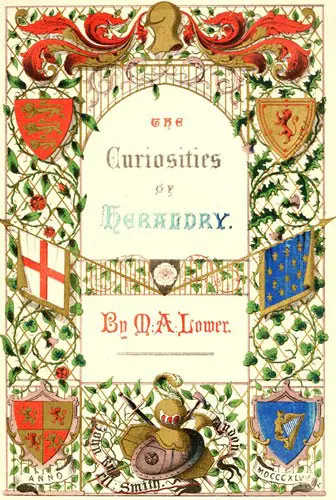
"The Curiosities of Heraldry" by Mark Antony Lower is a historical account written in the mid-19th century. This work delves into the principles and practices of heraldry, a system that denotes family lineage and nobility through intricate symbols and designs. The book aims to shed light on the often-overlooked significance and utility of heraldic study, enlivened by historical anecdotes and examples. The opening of the text presents a preface where Lower establishes the value of heraldry as an essential study for understanding not only genealogy but also the broader historical context of the Middle Ages. He reflects on the misconceptions surrounding heraldry, countering the view that it is merely an outdated collection of symbols. He emphasizes the poetic and practical aspects of heraldry, asserting that it is a rich field worthy of attention. The introduction sets the stage for a detailed exploration of the science of heraldry, hinting at its deep historical roots and its role in the social fabric of medieval society, ultimately preparing the reader for a thorough investigation into the subject throughout the subsequent chapters.
Introduction adapted from the source catalogue; source summaries may be automatically generated.
Free to read · English · 86,967 words · No account needed
MAKE TIME FOR A GOOD BOOK
On by default. Untick to stop anonymous reading totals. Each page counts after 10 seconds in view. How this works.
Anonymous counting is on unless you have switched it off.
PALMER. (Crest.) A demi panther, holding a palm-branch. Motto: "Palma
virtuti."
RIVERS. Two bars dancette. Query: if these were not originally wavy, to represent rivers?
MANSELL. Three maunches.
HAZLERIGG. Three hazel-leaves.
GORING. Three annulets (rings!)
WOLSELEY. (Crest.) A wolf's head.
BURGOYNE. Three birds (martlets), and three talbots (canes).
HAMPSON. Three hemp-breaks.
SWINBURNE. (Crest.) A demi boar.
ASHBURNHAM. (Crest.) An ash tree.
BROOKE. (Crest.) A Brock (O. E. for badger).
BURDETT of Burthwaite. Three birds (martlets).
HEAD. Three unicorns' heads.
OXENDEN. Three oxen.
PARKER of London. A stag's head.
RAMSDEN. Three ram's heads.
COLT. Three colts.
WARRENDER. (Crest.) A rabbit.
FEATHERSTONHAUGH. Three feathers.
SHEFFIELD. Three garbs (sheaves).
CUNLIFFE. Three conies.
WOLFF. (Crest.) A wolf.
BERNARD-MORLAND. Quarters a bear.
COOTE. Three cootes.
HERON. Three herons.
SYKES. Three fountains (sykes, vide p. 126).
FLETCHER. Four arrow-heads.
BEEVOR. (Crest.) A beaver.
HUNTER-BLAIR. Three hunting horns.
MILLER. A cross moline.
CALL. Three trumpets.
GOULD. Or, a griffin segreant.
BARING. A bear's head.
LAMB. Three lambs.
BOUGHEY-FLETCHER. Four arrows.
TROWBRIDGE. An antient bridge.
MILNES. Three windmill-sails.
BALL. A hand-grenade.
BAYNES. Cross bones.
METCALFE. Three calves.
KAY. (Crest.) A griffin's head holding a key.
LETHBRIDGE. A bridge.
HARTWELL. A hart.
SHELLEY. Three whelk shells, as before.
LOCKHART. A heart within a fetter-lock.
FRASER. Three cinquefoils, or rather strawberry-leaves (Fr.
fraises).
CORBET. A corby or raven.
WOOD of Gatton. A tree.
BAIRD. A boar.
COCKERELL. Two cocks.
FLETCHER of Carrow. Four arrow-heads.
SHEAFFE. Three garbs (sheaves).
ANDERSON. A saltier or St. Andrew's cross.
BROKE. (Crest.) A brock or badger.
WYLIE. A [wily] fox.
GRIFFIES-WILLIAMS. Four griffins.
WALLER. Three walnut leaves. (Crest.) A walnut tree.
OAKES. Three oak branches.
TROTTER. (Crest.) A horse!
BROOKE of Colebrook. A brock again.
DALRYMPLE-HORN (Elphinstone). Three bugle-horns.
KEY. Three keys.
FOSTER (Antiently written Forester). Three bugle-horns.
HOLYOAKE-GOODRICKE. (Crest.) An oak tree with a scroll containing the
words "Sacra Quercus."
PAULETT. Three swords. The sword was the distinctive mark of St. Paul.
ROE. (Crest.) A roebuck.
A more thorough acquaintance with English archaisms and provincialisms would probably enable one to detect numerous other bearings corresponding with the surnames of the bearers; but these seventy examples, cited from one branch of our lesser nobility only, are fully sufficient to prove that there is nothing mean or disgraceful in canting or allusive arms.
It would be a matter of little difficulty to fill fifty pages with arms of this description, but a few more, and those of the most remarkable, may be given. The family of Still bear guttee d'eau, drops of water; STILLA, Lat. a drop; Drope, Lord Mayor of London, also bore guttee; and Harbottle bore three drops or. Vere, Earl of Oxford, gave a boar, in Latin VERRES.
Your reading position is saved on this browser. Take it to another device with a library code. Reading pages adapt to text, rather than matching a printed edition.
BEHIND THE BOOK
This eBook is for the use of anyone anywhere in the United States and most other parts of the world at no cost and with almost no restrictions whatsoever. You may copy it, give it away or re-use it under the terms of the Project Gutenberg License included with this eBook or online at www.gutenberg.org. If you are not located in the United States, you will have to check the laws of the country where you are located before using this eBook. Read the source licence.
The original source file, including credits and licence, is retained by this library. Request an original-format copy at no charge. Please include the book title and Project Gutenberg identifier #38951.
KEEP YOUR CURIOSITY GOING
Cécile Tormay

Moritz Busch
John L. Ransom
Frances Wright
Cécile Tormay

Mabel Potter Daggett