THE CLASSIC COLLECTION✦An outlaw’s diary: the CommuneCLASSIC FREE BOOKS
An outlaw’s diary: the Commune
Cécile Tormay
THE CLASSIC COLLECTION · 1845
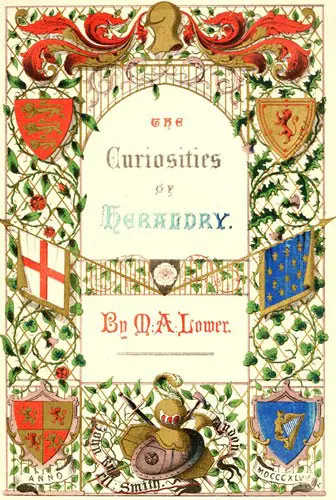
"The Curiosities of Heraldry" by Mark Antony Lower is a historical account written in the mid-19th century. This work delves into the principles and practices of heraldry, a system that denotes family lineage and nobility through intricate symbols and designs. The book aims to shed light on the often-overlooked significance and utility of heraldic study, enlivened by historical anecdotes and examples. The opening of the text presents a preface where Lower establishes the value of heraldry as an essential study for understanding not only genealogy but also the broader historical context of the Middle Ages. He reflects on the misconceptions surrounding heraldry, countering the view that it is merely an outdated collection of symbols. He emphasizes the poetic and practical aspects of heraldry, asserting that it is a rich field worthy of attention. The introduction sets the stage for a detailed exploration of the science of heraldry, hinting at its deep historical roots and its role in the social fabric of medieval society, ultimately preparing the reader for a thorough investigation into the subject throughout the subsequent chapters.
Introduction adapted from the source catalogue; source summaries may be automatically generated.
Free to read · English · 86,967 words · No account needed
MAKE TIME FOR A GOOD BOOK
On by default. Untick to stop anonymous reading totals. Each page counts after 10 seconds in view. How this works.
Anonymous counting is on unless you have switched it off.
In addition to these, I may adduce the following very antient families, whose arms are not traceable to any grant, but have been borne immemorially as antient arms. The Pelhams bear three pelicans, and their crest is a peacock. The puns in both instances, it must be confessed, are very poor; still, few will doubt that puns were intended. The Arundels bear six swallows, in French hirondelles. The Barons D'Aquila, temp. Henry III, bore eagles; the Bourgchiers, water-bowgets; the Heringauds, herrings; Lupus, Earl of Chester, a wolf's head; Shouldham, Abbot of St. Saviour's, shovellers; the Bacons, a boar; the Wingfelds, wings; the Rokewoods, chess-rooks; the Pigots, pick-axes; the Boleynes, bulls' heads; the Shelleys, shells; and an infinity of others.
Dame Julyan Berners was no stranger to such arms, for she distinctly mentions the coat of Peter de Roches, bishop of Winchester, who "baar iij rochys (roaches) after his awne naam." The cross-corded, borne by the roper who became a "nobull man," spoken of by that lady, belongs to the other class of allusive arms, as conveying a hint at his former menial occupation.
That this kind of charges became too common in the early part of the seventeenth century, Dallaway is, perhaps, correct in affirming; but those were punning days, and quaint conceits often took the place of true wit. Camden, the correctness of whose heraldric taste none will presume to question, did not hold arma cantantia in so contemptible a light as some of his successors in office have done; for among the arms granted by him, a list of which is given by Morgan,[155] the following, among others, occur:
DOBELL of Falmer, co. Sussex, Sable, a doe passant between three
bells argent.[156]
BULLOCK of London. Bulls' heads.
FOSTER of London. Bugle-horns.
HAMPSON of Kent. Hemp-breaks.
FISHER of Staffordshire. A Kingfisher.
CONIE of Huntingdonshire. Coneys.
CROWCH.[157] Crosses formee.
LANGHORN. Bugle-horns.
CANNON of Pembrokeshire. Crest. A cannon.
TREHERNE. Three herns.
CROSS of Lincolnshire. A cross-crosslet.
KNIGHTLEY. A lance.[158]
There was a kind of Rebus much in vogue in the fourteenth and following centuries, which, although not regulated by the laws of blazon, possessed somewhat of the heraldric character. Many persons, even those of antient family, who bore regular coats of arms, adopted various figures for the purpose of expressing their names pictorially; for instance, one John Eagleshead gave as his seal an eagle's head, surrounded by the motto,
Your reading position is saved on this browser. Take it to another device with a library code. Reading pages adapt to text, rather than matching a printed edition.
BEHIND THE BOOK
This eBook is for the use of anyone anywhere in the United States and most other parts of the world at no cost and with almost no restrictions whatsoever. You may copy it, give it away or re-use it under the terms of the Project Gutenberg License included with this eBook or online at www.gutenberg.org. If you are not located in the United States, you will have to check the laws of the country where you are located before using this eBook. Read the source licence.
The original source file, including credits and licence, is retained by this library. Request an original-format copy at no charge. Please include the book title and Project Gutenberg identifier #38951.
KEEP YOUR CURIOSITY GOING
Cécile Tormay

Moritz Busch
John L. Ransom
Frances Wright
Cécile Tormay

Mabel Potter Daggett