THE CLASSIC COLLECTION✦An outlaw’s diary: the CommuneCLASSIC FREE BOOKS
An outlaw’s diary: the Commune
Cécile Tormay
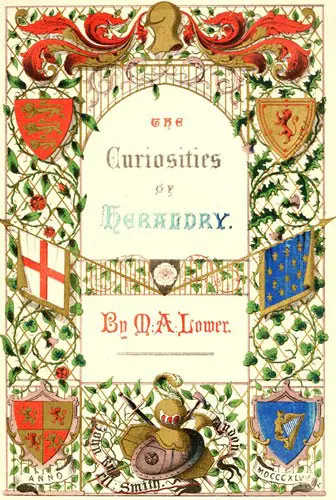
THE CLASSIC COLLECTION · 1845
"The Curiosities of Heraldry" by Mark Antony Lower is a historical account written in the mid-19th century. This work delves into the principles and practices of heraldry, a system that denotes family lineage and nobility through intricate symbols and designs. The book aims to shed light on the often-overlooked significance and utility of heraldic study, enlivened by historical anecdotes and examples. The opening of the text presents a preface where Lower establishes the value of heraldry as an essential study for understanding not only genealogy but also the broader historical context of the Middle Ages. He reflects on the misconceptions surrounding heraldry, countering the view that it is merely an outdated collection of symbols. He emphasizes the poetic and practical aspects of heraldry, asserting that it is a rich field worthy of attention. The introduction sets the stage for a detailed exploration of the science of heraldry, hinting at its deep historical roots and its role in the social fabric of medieval society, ultimately preparing the reader for a thorough investigation into the subject throughout the subsequent chapters.
Introduction adapted from the source catalogue; source summaries may be automatically generated.
Free to read · English · 86,967 words · No account needed
MAKE TIME FOR A GOOD BOOK
On by default. Untick to stop anonymous reading totals. Each page counts after 10 seconds in view. How this works.
Anonymous counting is on unless you have switched it off.
1, It betokeneth strength, bouldenes with hardenes.
2, with Or, a desire to conquere.
3, with Argent, envie revenged.
4, with Azure, to wynne heaven by good dedes.
5, with Sable, hateth the worlde, with werynes thereof.
6, with Verte, bould of corage in youth.
7, with Purpure, strong in dede, juste in worde, &c."
In like manner our author labours through the remaining colours, ascribing to each some wonderful virtue. The irrelevant nature of the observations introduced is occasionally highly diverting. Nature, art, metaphysics, religion, history, are all in turn made to contribute something towards the illustration of the armilogist's theories. In his disquisition on Argent or silver, he remarks, "Being fine it is medicinable." His imaginary friend says, "You digresse now, and meddell with that that apperteineth not to this arte." At this Master Gerard waxes wroth and says, "I marvayle what science arte or misterye it were that an herhaught sholde have none intelligence thereof? were it never so secret or profunde. For, if he have not of all thynges some vnderstanding, as well as of severall languages he is not worthye to be an herhaught. Therefore necessary it is for him to have an universal knowledge in eche thinge."[142]
I can scarcely hope to interest my reader by a display of the symbolical meaning of the colours of heraldry, yet as perchance some one may feel gratified in being able to judge of his or her own character and dispositions by examining the family achievement, I will here, as briefly as possible, set down the result of Master Leigh's philosophy, divested of its verbiage.
GOLD, then, betokens wisdom, justice, riches, and elevation of mind. Compounded with silver, it signifies victory over all infidels, Turks and Saracens; with gules, a disposition to shed one's blood to acquire riches; and with azure, a disposition to keep what one gets. Combined with sable it typifies constancy in all things, particularly in love; with vert, a joyful possession of riches; and with purpure a friendly feeling even towards enemies.
SILVER alone signifies chastity, charity, and a clear conscience; but in
company with
gold--the will 'to reuenge Christ's bluddshed.'
gules--honest boldness.
azure--courtesy and discretion.
sable--abstinence.
vert--virtue (!)
purpure--the favour of the people.
GULES has already been described. AZURE, simple, shows a godly
disposition, and joined with
gold--the joyful possession of wealth.
silver--vigilance in service.
gules--aptitude to reprove villany.
sable--sympathy for suffering.
vert--success in enterprise.
purpure--wisdom in counsel.
SABLE betokens constancy, divine doctrine, and sorrow for loss of friends.
With
gold, it means long life.
silver--fame.
gules, it excites the fear of enemies.
azure, it shows a desire to appease strife.
vert--joy after sorrow.
purpure--a religious disposition till death.
Your reading position is saved on this browser. Take it to another device with a library code. Reading pages adapt to text, rather than matching a printed edition.
BEHIND THE BOOK
This eBook is for the use of anyone anywhere in the United States and most other parts of the world at no cost and with almost no restrictions whatsoever. You may copy it, give it away or re-use it under the terms of the Project Gutenberg License included with this eBook or online at www.gutenberg.org. If you are not located in the United States, you will have to check the laws of the country where you are located before using this eBook. Read the source licence.
The original source file, including credits and licence, is retained by this library. Request an original-format copy at no charge. Please include the book title and Project Gutenberg identifier #38951.
KEEP YOUR CURIOSITY GOING
Cécile Tormay

Moritz Busch
John L. Ransom
Frances Wright
Cécile Tormay

Mabel Potter Daggett