THE CLASSIC COLLECTION✦An outlaw’s diary: the CommuneCLASSIC FREE BOOKS
An outlaw’s diary: the Commune
Cécile Tormay
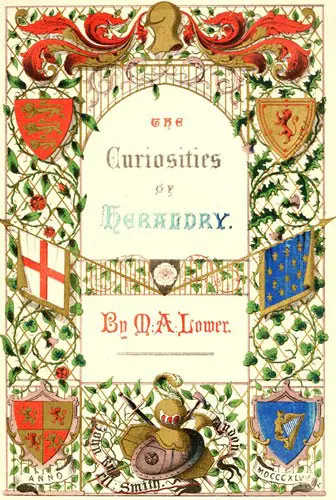
THE CLASSIC COLLECTION · 1845
"The Curiosities of Heraldry" by Mark Antony Lower is a historical account written in the mid-19th century. This work delves into the principles and practices of heraldry, a system that denotes family lineage and nobility through intricate symbols and designs. The book aims to shed light on the often-overlooked significance and utility of heraldic study, enlivened by historical anecdotes and examples. The opening of the text presents a preface where Lower establishes the value of heraldry as an essential study for understanding not only genealogy but also the broader historical context of the Middle Ages. He reflects on the misconceptions surrounding heraldry, countering the view that it is merely an outdated collection of symbols. He emphasizes the poetic and practical aspects of heraldry, asserting that it is a rich field worthy of attention. The introduction sets the stage for a detailed exploration of the science of heraldry, hinting at its deep historical roots and its role in the social fabric of medieval society, ultimately preparing the reader for a thorough investigation into the subject throughout the subsequent chapters.
Introduction adapted from the source catalogue; source summaries may be automatically generated.
Free to read · English · 86,967 words · No account needed
MAKE TIME FOR A GOOD BOOK
On by default. Untick to stop anonymous reading totals. Each page counts after 10 seconds in view. How this works.
Anonymous counting is on unless you have switched it off.
This Patent was examined with the Record in the College of Arms by Charles Townley, York Herald, 29. Apr. 1745.
N. B. There is a mistake in the date, either in the year of Our Lord, or
of the King.
Appendix E.
That the curious relic of brass found at Lewes (alluded to at p. 39[336]), was the sword-pommel of Prince Richard, King of the Romans, was an easy and natural inference from its rounded form, so similar to that observed on ancient swords, and from its being found where that Prince is known to have been engaged in the great battle of 1264. Further examination, however, proves this supposition to be erroneous, and by reference to page 589, in vol. xxv of 'Archaeologia,' it will be seen so closely to resemble, in form, material, workmanship, and heraldic bearings, the two ancient steelyard weights found in Norfolk, and there represented, that its identity with their former use must be at once recognized. The Lewes relic is smaller than the two other weights, and is deficient in the upper part, through which the suspending hook was passed, but, as it now weighs 18-1/2 oz., it was probably, when perfect, a 2 lbs. weight. It is remarkable that all these weights, thus found at distant localities, and all evidently of the same era, the thirteenth century, should bear the arms of the King of the Romans,[337] though in each instance intentionally varied, in order, probably, to signify more readily to the eye the intended amount of each weight when in use. Sandford (Geneal. Hist., p. 95) says that the King of the Romans did not bear the arms of his father, King John, but on the larger Norfolk specimen the three royal lions are exhibited passant, sinisterwise, a remarkable difference, of which only one other similar example is known, on the ancient stamped tiles of Horsted-Keynes Church, co. Sussex, where the Prince's arms, as earl of Cornwall, are also extant. This Prince had a grant of the stanneries and mines of Cornwall, held by service of five knights' fees, (vide Dugdale's Baronage,) and Sandford says that "he got much money by farming the mint," but he would not appear to derive from these sources any peculiar right to stamp with his own arms all the weights of the kingdom. He is also mentioned (Madox, Hist. Exch.) as sitting with others of the king's council in the Court of Exchequer in 14{o} and 54{o} of Henry III: there was an ancient officer of that court, called a Pesour, Ponderator, or Weigher, but the family of Windesore held this office for four generations by hereditary serjeantry, during the reigns of kings John and Henry III. It would seem more probable, therefore, that these weights were stamped with his arms,[338] by the king of the Romans, in the ordinary exercise of his baronial rights, for the common use of his own officers in his widely extended domains, and especially for those of his own personal household, in order efficiently to check the entries and deliveries of the stores of food and forage necessary for the supply of his numerous retinue. The contemporary accounts of his sister, the Princess Eleanor, wife of the great Simon, earl of Leicester, in 1265 (recently published by the Roxburghe Club), show with what minute detail and accuracy such expenses in a large household were regulated, and superintended by the steward of a great personage. The steward of the king of the Romans may have been thus busily employed at Lewes in measuring out with this identical weight their scanty rations to his Cornish troops, until surprised by the hurry of the fatal battle, in which--for human bones were found with the weight near the Castle gateway--he may have continued to clutch it faithfully, even in death. Prince Richard embarked at Yarmouth in 1253, on his way to his coronation as king, at Aix-la-Chapelle, and he went to Cologne in 1267, to marry his German bride, Beatrice. On one of these occasions, when he would have been accompanied by a large suite, or on some other passage through Norfolk, which was a customary route to Germany, the two interesting weights found there may have been accidentally dropped.
Your reading position is saved on this browser. Take it to another device with a library code. Reading pages adapt to text, rather than matching a printed edition.
BEHIND THE BOOK
This eBook is for the use of anyone anywhere in the United States and most other parts of the world at no cost and with almost no restrictions whatsoever. You may copy it, give it away or re-use it under the terms of the Project Gutenberg License included with this eBook or online at www.gutenberg.org. If you are not located in the United States, you will have to check the laws of the country where you are located before using this eBook. Read the source licence.
The original source file, including credits and licence, is retained by this library. Request an original-format copy at no charge. Please include the book title and Project Gutenberg identifier #38951.
KEEP YOUR CURIOSITY GOING
Cécile Tormay

Moritz Busch
John L. Ransom
Frances Wright
Cécile Tormay

Mabel Potter Daggett