THE CLASSIC COLLECTION✦A dead man’s diaryCLASSIC FREE BOOKS
A dead man’s diary
Coulson Kernahan
THE CLASSIC COLLECTION · 1927
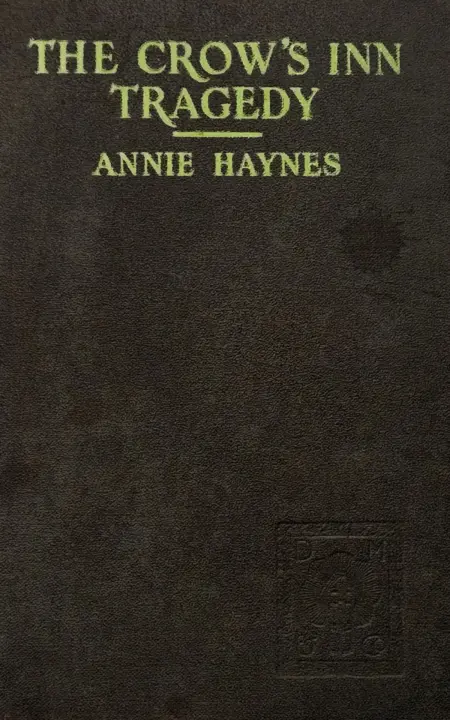
"The Crow's Inn Tragedy" by Annie Haynes is a suspenseful murder mystery novel written in the early 20th century. The narrative revolves around the unsettling events surrounding the death of a respected solicitor, Mr. Luke Bechcombe, whose mysterious demise draws in various characters connected through law, family, and personal struggles. Key figures include the clergyman, Rev. James Collyer, who seeks assistance for his troubled son Tony, and Bechcombe's secretary, Cecily Hoyle, whose interactions with other characters hint at deeper connections and hidden motives. The opening of the novel introduces the somber atmosphere of Messrs. Bechcombe and Turner's law offices, setting the stage for the tension to unfold. Rev. Collyer visits the office to discuss his son’s difficulties after the war, which establishes personal stakes amid the legal framework. Their conversation touches on family dynamics and financial troubles, which are further complicated by a shocking revelation: Bechcombe’s death is discovered to be a murder rather than a natural event. As the narrative progresses, we see a tangled web of relationships, secrets, and motives, which foreshadows the intricate investigation that will follow.
Introduction adapted from the source catalogue; source summaries may be automatically generated.
Free to read · English · 68,421 words · No account needed
MAKE TIME FOR A GOOD BOOK
On by default. Untick to stop anonymous reading totals. Each page counts after 10 seconds in view. How this works.
Anonymous counting is on unless you have switched it off.
“Half-past one, I dare say,” Cecily corrected. “As I came down the passage I heard the door into Mr. Bechcombe's room close rather softly, as I have heard Mr. Bechcombe close it heaps of times. Then just as I passed I heard someone move inside the room distinctly. It was a sound like a chair being moved and catching against something hard—table leg or something of that sort.”
“And you are aware that the doctors say that Mr. Bechcombe's death must have occurred about twelve o'clock?”
“I have heard so. You told me so,” Cecily murmured, then gathering up her courage, “but doctors make mistakes very often.”
“Scarcely over a thing of this kind,” the inspector remarked. “I suppose you realize the inference that will be drawn from your testimony?” he went on.
A little frown came between Cecily's straight eyebrows.
“Inference? No, I don't!” she said bluntly.
“If Mr. Bechcombe died at twelve o'clock, and you heard someone moving about when you came back about half-past one o'clock,” the inspector said very slowly, giving due weight to each word, “the inference is that the person you heard moving about when you came back was the murderer.”
Cecily shivered as she stared at him.
“Oh, no, no, surely it could not have been! I do not believe it
could!”
The inspector made no rejoinder. He glanced at his notebook again.
“Most probably you will be among the first witnesses called at the adjourned inquest on Friday, Miss Hoyle. I think that is all for to-day. Your name and address, please.”
“Cecily Frances Hoyle, Hobart Residence, Windover Square.”
The detective wrote it down.
“I think that is only a temporary address, though, you said, Miss Hoyle. Will you let me have your permanent one, please?”
Cecily hesitated in obvious confusion.
“I—I—that is my only address—the only one I have at present. I came to Mr. Bechcombe straight from school.”
The inspector scratched the side of his nose with his pencil.
“That is rather awkward. It will be necessary that we should be in touch with you for some time. And you might leave Hobart Residence at any moment.”
“Then I could let you know,” Cecily suggested.
“That would not quite do,” the inspector said mildly. “No. Just give me some address from which letters could be forwarded to you. Some relatives, perhaps!”
“I don't know any of my relatives—yet,” Cecily faltered, a streak of red coming in her pale cheeks. “But Miss Cochrane, Morley House, Beesford, Meadshire, would always forward letters.”
The inspector wrote the address down without further comment.
Cecily got up. “If that is all, I think Mrs. Bechcombe wants me,
inspector.”
Your reading position is saved on this browser. Take it to another device with a library code. Reading pages adapt to text, rather than matching a printed edition.
BEHIND THE BOOK
This eBook is for the use of anyone anywhere in the United States and most other parts of the world at no cost and with almost no restrictions whatsoever. You may copy it, give it away or re-use it under the terms of the Project Gutenberg License included with this eBook or online at www.gutenberg.org. If you are not located in the United States, you will have to check the laws of the country where you are located before using this eBook. Read the source licence.
The original source file, including credits and licence, is retained by this library. Request an original-format copy at no charge. Please include the book title and Project Gutenberg identifier #75307.
KEEP YOUR CURIOSITY GOING
Coulson Kernahan

Maurice Baring
Frances Wright
Cécile Tormay

Frederic Jesup Stimson

W. H. P. (William Henry Pope) Jarvis