THE CLASSIC COLLECTION✦Anderby WoldCLASSIC FREE BOOKS
Anderby Wold
Winifred Holtby
THE CLASSIC COLLECTION · 1924
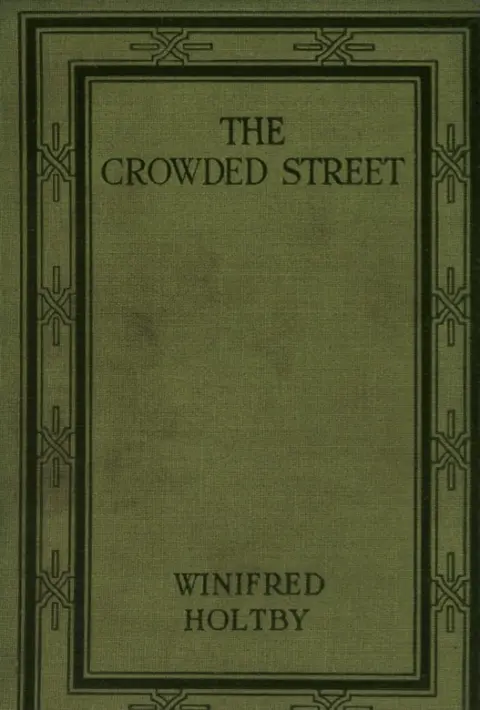
"The Crowded Street" by Winifred Holtby is a novel written in the early 20th century. The story opens with a poignant scene centered around an 11-year-old girl named Muriel Hammond, who struggles with her emotions and self-identity while attending a party. The narrative examines the challenges and pressures faced in her youth, giving insight into the complexities of social interactions and childhood aspirations. At the start of the story, Muriel is at a party that she has long awaited, yet she experiences feelings of shyness and inadequacy. The prose vividly captures her observations and thoughts as she navigates the bustling atmosphere filled with adults and other children. Despite her excitement, Muriel feels overshadowed and anxious, especially about dancing with a boy named Freddy Mason. As the evening unfolds, Muriel's desire to belong clashes with her innate shyness, culminating in an embarrassing moment where she is caught sneaking sweets—a misunderstanding that casts her in a negative light to her peers and more importantly, to her mother. This initial glimpse into Muriel's world sets the stage for her journey of self-discovery and the exploration of her relationships throughout the novel.
Introduction adapted from the source catalogue; source summaries may be automatically generated.
Free to read · English · 99,688 words · No account needed
MAKE TIME FOR A GOOD BOOK
On by default. Untick to stop anonymous reading totals. Each page counts after 10 seconds in view. How this works.
Anonymous counting is on unless you have switched it off.
The humorous twist of his smile, the appeal to her criticism of his friend, the flattery of his attention, soothed Muriel's injured vanity. She giggled. Then with a sudden burst of confidence, she whispered:
"She's like the Day of Judgment, I think. I always remember all my misdoings in her sight. I--I'm terrified of her."
He laughed. "So am I, to tell the honest truth. But she's a ripping sport really, so for goodness' sake don't tell a soul."
They laughed, sharing a secret together, Muriel and Godfrey Neale. With one sentence he had drawn her in to the magic circle of his intimacy. She forgot her double faults and the safety-pin. She began to play to redeem his game against the girl who terrified him.
Her next serve went straight and hard. In her amazement, Delia failed
to return it.
"Fifteen thirty," cried Godfrey. "Well done, partner. Do it again."
She did it again, not once nor twice. For the rest of the set, she played with serious care, keeping out of the way for Godfrey's smashing volleys. The air shimmered with dancing gold. Never before shone grass so green. Never were balls so white. Never was the joy of swift movement so exhilarating.
They won the next game and the next. Delia, half amused at the little Hammond child's spirit, was playing badly.
From the Pavilion, Muriel heard Mrs. Waring's voice:
"Your little daughter plays a good game, Mrs. Hammond. You must be pleased to have her at home now."
"Yes, it is delightful. Naturally I missed her dreadfully," answered
Muriel's mother.
Someone beyond the net was asking, "Shall we play it out or have
sudden death?"
"Sudden death," declared Delia, in the voice of a judge; but Muriel
did not care. Neither death, pestilence, nor famine could affright her
now.
"Game--and set," said Godfrey Neale. "By Jove, Miss Hammond, we must
have some more like that!"
Sunning herself in his smile, she walked back to the Pavilion. Congratulatory smiles met her. For some reason, utterly unguessed by her, she had become a heroine. That Delia's defeat could be sweeter than honey to Marshington never occurred to her. She accepted the glory of the moment as it came.
"I say, Mu"--she had forgotten Connie. She turned upon her now with sudden irritation. But Connie had had no triumph. She was thirsty. She was bored. She thought that Muriel had had enough success--"do you know that your safety-pin's come undone, and you've got your blouse all out behind?"
Muriel fled to the cloak-room.
Your reading position is saved on this browser. Take it to another device with a library code. Reading pages adapt to text, rather than matching a printed edition.
BEHIND THE BOOK
This eBook is for the use of anyone anywhere in the United States and most other parts of the world at no cost and with almost no restrictions whatsoever. You may copy it, give it away or re-use it under the terms of the Project Gutenberg License included with this eBook or online at www.gutenberg.org. If you are not located in the United States, you will have to check the laws of the country where you are located before using this eBook. Read the source licence.
The original source file, including credits and licence, is retained by this library. Request an original-format copy at no charge. Please include the book title and Project Gutenberg identifier #68629.
KEEP YOUR CURIOSITY GOING
Coulson Kernahan

Maurice Baring
Frances Wright
Cécile Tormay

Frederic Jesup Stimson

W. H. P. (William Henry Pope) Jarvis