THE CLASSIC COLLECTION✦Anderby WoldCLASSIC FREE BOOKS
Anderby Wold
Winifred Holtby
THE CLASSIC COLLECTION · 1924
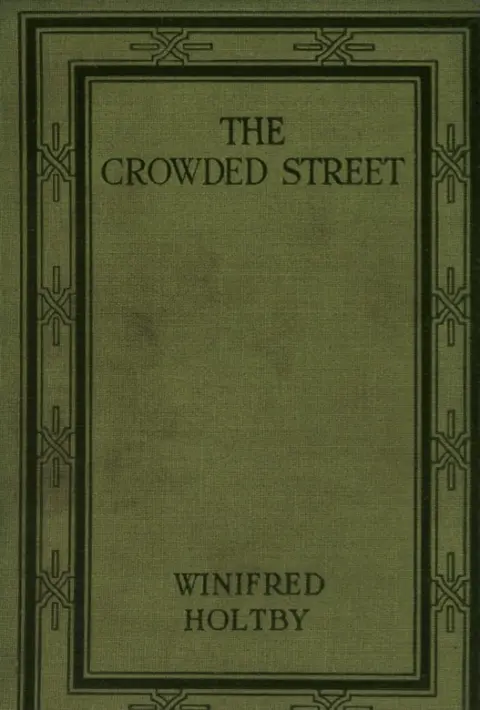
"The Crowded Street" by Winifred Holtby is a novel written in the early 20th century. The story opens with a poignant scene centered around an 11-year-old girl named Muriel Hammond, who struggles with her emotions and self-identity while attending a party. The narrative examines the challenges and pressures faced in her youth, giving insight into the complexities of social interactions and childhood aspirations. At the start of the story, Muriel is at a party that she has long awaited, yet she experiences feelings of shyness and inadequacy. The prose vividly captures her observations and thoughts as she navigates the bustling atmosphere filled with adults and other children. Despite her excitement, Muriel feels overshadowed and anxious, especially about dancing with a boy named Freddy Mason. As the evening unfolds, Muriel's desire to belong clashes with her innate shyness, culminating in an embarrassing moment where she is caught sneaking sweets—a misunderstanding that casts her in a negative light to her peers and more importantly, to her mother. This initial glimpse into Muriel's world sets the stage for her journey of self-discovery and the exploration of her relationships throughout the novel.
Introduction adapted from the source catalogue; source summaries may be automatically generated.
Free to read · English · 99,688 words · No account needed
MAKE TIME FOR A GOOD BOOK
On by default. Untick to stop anonymous reading totals. Each page counts after 10 seconds in view. How this works.
Anonymous counting is on unless you have switched it off.
She had not been in her own bedroom more than five minutes, and was slowly taking off her silk shirt blouse, when her aunt tapped at the door and came in.
"Oh, you're changing?"
"Yes," remarked Muriel, lifting a grey velveteen dress from her
wardrobe. "What is it, Auntie?"
"Oh, I don't know, dear. Nothing in particular. Did you hear anything interesting in the village?"
"Nothing. Does one ever hear anything interesting in Marshington? What was the trouble downstairs, Auntie?"
"Trouble, dear? What trouble do you mean?"
Muriel picked up her dress and pushed it over her head. When she emerged from her temporary eclipse she said "Father and Mother."
"Oh--er--nothing, dear."
Muriel fastened an amethyst brooch carefully into her dress. She was thinking, "I really can't stand this feeling of secret exasperation in the house. I can't stand not talking to someone." Aloud she asked:
"Auntie, have you noticed--Father and Mother seem to get on each other's nerves now, like they never used to do?"
"Oh--I shouldn't say that, you know, Muriel."
"Oh, Auntie, you must have noticed it. What was it now about the
income tax?"
"Oh, well, your father wants to invest some money in your name, to
save super tax--just as a business investment, you know, and your
mother----"
"Thinks that she ought to have it?"
"Well, yes, dear. But you know that wouldn't do. As your father pointed out, it doesn't act somehow if the wife has it."
"Mother doesn't like Father--doing things for me, does she?" Muriel reflected. "Perhaps you've noticed. She doesn't like my doing things for him either."
"Well, dear," Aunt Beatrice sat down in Muriel's arm-chair, eager to clear away doubts and difficulties, her eyes shining with excellent intentions, "you see, your father and mother have always been so very much to one another. Far more than most husbands and wives. Your mother gave up a great deal for your father--my family weren't at all pleased at a Bennet marrying a Hammond. We held a very good position in Market Burton, you know. And your mother has been wonderful, she has never looked back once. But naturally she expects--wants--would like to have the--the first place in your father's consideration."
"Of course," murmured Muriel, "and she is inclined to fear anything that might come between them?"
"Oh, yes, dear. Naturally. Though of course this money----"
"Of course--this money. That's hardly the point, I know. Just a trifle, which of course she will come to see in its true proportion. The real thing is that she does not like the idea of anyone else getting the attention which she naturally expects from Father."
Your reading position is saved on this browser. Take it to another device with a library code. Reading pages adapt to text, rather than matching a printed edition.
BEHIND THE BOOK
This eBook is for the use of anyone anywhere in the United States and most other parts of the world at no cost and with almost no restrictions whatsoever. You may copy it, give it away or re-use it under the terms of the Project Gutenberg License included with this eBook or online at www.gutenberg.org. If you are not located in the United States, you will have to check the laws of the country where you are located before using this eBook. Read the source licence.
The original source file, including credits and licence, is retained by this library. Request an original-format copy at no charge. Please include the book title and Project Gutenberg identifier #68629.
KEEP YOUR CURIOSITY GOING
Coulson Kernahan

Maurice Baring
Frances Wright
Cécile Tormay

Frederic Jesup Stimson

W. H. P. (William Henry Pope) Jarvis