THE CLASSIC COLLECTION✦Anderby WoldCLASSIC FREE BOOKS
Anderby Wold
Winifred Holtby
THE CLASSIC COLLECTION · 1924
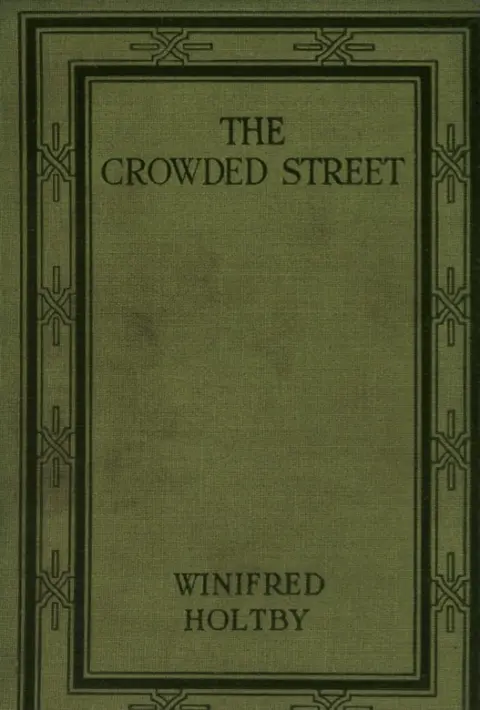
"The Crowded Street" by Winifred Holtby is a novel written in the early 20th century. The story opens with a poignant scene centered around an 11-year-old girl named Muriel Hammond, who struggles with her emotions and self-identity while attending a party. The narrative examines the challenges and pressures faced in her youth, giving insight into the complexities of social interactions and childhood aspirations. At the start of the story, Muriel is at a party that she has long awaited, yet she experiences feelings of shyness and inadequacy. The prose vividly captures her observations and thoughts as she navigates the bustling atmosphere filled with adults and other children. Despite her excitement, Muriel feels overshadowed and anxious, especially about dancing with a boy named Freddy Mason. As the evening unfolds, Muriel's desire to belong clashes with her innate shyness, culminating in an embarrassing moment where she is caught sneaking sweets—a misunderstanding that casts her in a negative light to her peers and more importantly, to her mother. This initial glimpse into Muriel's world sets the stage for her journey of self-discovery and the exploration of her relationships throughout the novel.
Introduction adapted from the source catalogue; source summaries may be automatically generated.
Free to read · English · 99,688 words · No account needed
MAKE TIME FOR A GOOD BOOK
On by default. Untick to stop anonymous reading totals. Each page counts after 10 seconds in view. How this works.
Anonymous counting is on unless you have switched it off.
On this Thursday evening, the colonel and his wife had joined the party. Till now, it had been uproariously successful. The colonel sat pulling at his moustache and smiling quietly, and Lady Grainger's kind little round face beamed all over with pleasure, and Mr. Hammond was on his very best behaviour. He had told her only his most presentable stories, and treated her with the exaggerated gallantry that he sometimes thought fit to show to his wife's friends, and which Lady Grainger found to be "so quaint and old-fashioned and nice."
As for the boys, they needed no entertainment. They were eating dessert now, and Bobby Collins with an intent, serious face, bent over the orange skin that he was carving.
"What is it, Mr. Collins?" asked Muriel. She rather liked these boys, who treated her like a pleasant kind of aunt, and whom even Mrs. Hammond never regarded in the light of anything more intimate than a stepping-stone to the Graingers.
"Pig," replied Bobby comprehensively.
"I beg your pardon?" Young Smithson raised his head from Muriel's other side. "Kindly repeat that word."
"Pig," repeated Bobby obligingly, and continued to play with his
knife.
"Do I understand," shouted Smithson in mock wrath, "that this epithet is intended as an insult to that charming lady?"
"Understand what you like. Aha! I've done it," cried Bobby in triumph.
Smithson rose with dignity and bowed to his hostess. "Pardon me, Mrs. Hammond," he declared with dignity. "But words have just now been said in this room which no gentleman could pass. An insult has been offered to your charming daughter. Ahem! Mr. Collins, in the name of Miss Hammond, I demand satisfaction."
The table was in an uproar. Muriel, blushing but amused, looked along a line of laughing faces to her mother.
"A duel, a duel!" shouted Captain Lowcroft. "Pistols for two and coffee for one on the Hangman's Heath in the morning."
Bobby Collins, very round and solemn, arose and faced Smithson across
Muriel's dark head.
"A plague upon your mornings, sir. I will fight now, with oranges, upon the lawn. And it shall be to the death."
"Outside with you then, for goodness' sake," cried Mrs. Hammond.
"Remember my china!"
They trooped outside together.
The September night was warm and still. A great harvest moon hung low above the elm trees. The windows, carefully curtained by order of the government, left the house mute and dark, but white moonlight lay along the level lawn, and moonlight touched the laughing, running figures.
Your reading position is saved on this browser. Take it to another device with a library code. Reading pages adapt to text, rather than matching a printed edition.
BEHIND THE BOOK
This eBook is for the use of anyone anywhere in the United States and most other parts of the world at no cost and with almost no restrictions whatsoever. You may copy it, give it away or re-use it under the terms of the Project Gutenberg License included with this eBook or online at www.gutenberg.org. If you are not located in the United States, you will have to check the laws of the country where you are located before using this eBook. Read the source licence.
The original source file, including credits and licence, is retained by this library. Request an original-format copy at no charge. Please include the book title and Project Gutenberg identifier #68629.
KEEP YOUR CURIOSITY GOING
Coulson Kernahan

Maurice Baring
Frances Wright
Cécile Tormay

Frederic Jesup Stimson

W. H. P. (William Henry Pope) Jarvis