THE CLASSIC COLLECTION✦Illustrations of taxationCLASSIC FREE BOOKS
Illustrations of taxation
Harriet Martineau
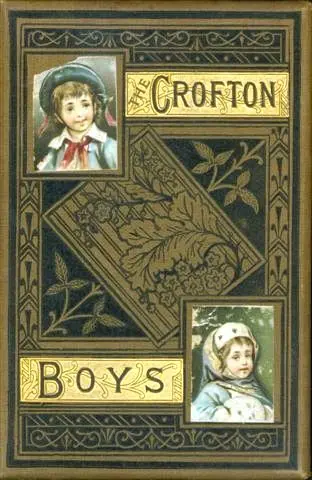
THE CLASSIC COLLECTION · 1875
"The Crofton Boys" by Harriet Martineau is a novel written in the mid-19th century. The story follows a young boy named Hugh Proctor as he navigates his first experiences at a new school—Crofton—where he hopes to find adventure and acceptance among his peers, particularly with his older brother Phil. The early chapters focus on Hugh's home life, setting up his anticipation and anxiety about leaving for school, as well as his interactions with his family, which demonstrate both familial affection and the challenges he faces as the youngest child. The opening of the book introduces us to the Proctor family in London, emphasizing their close-knit home and highlighting young Hugh's longing for adventure and his struggles with learning at home. As the narrative unfolds, Hugh grapples with his feelings about school, dealing with difficulties in adapting to a new environment and the emotions that come from being away from his family. His excitement is tempered with challenges, such as fitting in with the other boys and learning the nuances of school life. This beginning establishes a strong backdrop for themes of childhood, family, and the transition from home to school, offering readers a glimpse into both Hugh's internal conflicts and broader social dynamics.
Introduction adapted from the source catalogue; source summaries may be automatically generated.
Free to read · English · 56,158 words · No account needed
MAKE TIME FOR A GOOD BOOK
On by default. Untick to stop anonymous reading totals. Each page counts after 10 seconds in view. How this works.
Anonymous counting is on unless you have switched it off.
"No," replied Phil. "But I have no doubt it is really Mr. Crabbe who is coming; and that he will be here after Christmas. Why, Hugh, you look just the same as usual!"
"So I am, just the same, except under this thing," pointing to the hoop, or basket, which was placed over his limb, to keep off the weight of the bed-clothes. "I am not hurt anywhere else, except this bruise;" and he showed a black bruise on his arm, such as almost any school-boy can show, almost any day.
"That's nothing," pronounced Phil.
"The other was, though, I can tell you," declared Hugh.
"Was it very, very bad? Worse than you had ever fancied?"
"Oh! yes. I could have screamed myself to death. I did not, though. Did you hear me, did anybody hear me call out?"
"I heard you--just outside the door there--before the doctors came."
"Ah! but not after, not while uncle was here. He cried so! I could not
call out while he was crying so. Where were you when they were doing
it?"
"Just outside the door there. I heard you once--only once; and that was
not much."
"But how came you to be there? It was past bedtime. Had you leave to be
up so late?"
"I did not ask it; and nobody meddled with me."
"Was anybody there with you?"
"Yes, Firth. Dale would not. He was afraid, and he kept away."
"Oh! is not he very sorry?"
"Of course. Nobody can help being sorry."
"Do they all seem sorry? What did they do? What do they say?"
"Oh! they are very sorry; you must know that."
"Anybody more than the rest?"
"Why, some few of them cried; but I don't know that that shows them to be more sorry. It is some people's way to cry--and others not."
Hugh wished much to learn something about Tooke; but, afraid of showing what was in his thoughts, he went off to quite another subject.
"Do you know, Phil," said he, "you would hardly believe it; but I have never been half so miserable as I was the first day or two I came here? I don't care now, half so much, for all the pain, and for being lame, and----Oh! but I can never be a soldier or a sailor--I can never go round the world! I forgot that."
And poor Hugh hid his face in his pillow.
Your reading position is saved on this browser. Take it to another device with a library code. Reading pages adapt to text, rather than matching a printed edition.
Harriet Martineau

Harriet Martineau
Harriet Martineau
Harriet Martineau
BEHIND THE BOOK
This eBook is for the use of anyone anywhere in the United States and most other parts of the world at no cost and with almost no restrictions whatsoever. You may copy it, give it away or re-use it under the terms of the Project Gutenberg License included with this eBook or online at www.gutenberg.org. If you are not located in the United States, you will have to check the laws of the country where you are located before using this eBook. Read the source licence.
The original source file, including credits and licence, is retained by this library. Request an original-format copy at no charge. Please include the book title and Project Gutenberg identifier #22410.
KEEP YOUR CURIOSITY GOING
Coulson Kernahan

Maurice Baring
Frances Wright
Cécile Tormay

Frederic Jesup Stimson

W. H. P. (William Henry Pope) Jarvis