
The lost dirigible
Ralph Henry Barbour
THE CLASSIC COLLECTION · 1905
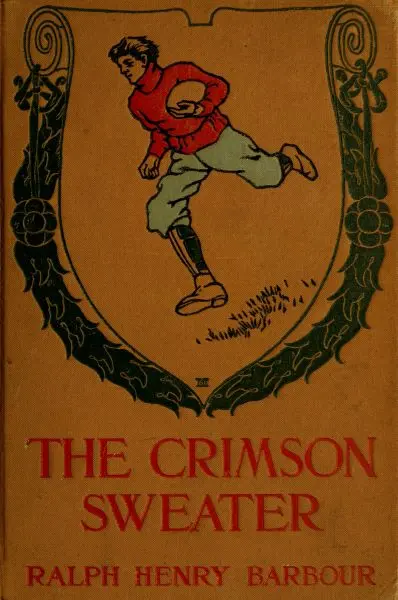
"The Crimson Sweater" by Ralph Henry Barbour is a novel written in the early 20th century. The story centers around Roy Porter, a new student at Ferry Hill School who faces challenges as he navigates the world of boarding school life, including football, friendships, and rivalries. The narrative explores themes of perseverance, loyalty, and the quest for acceptance in a competitive environment. The opening of the book introduces Roy as he experiences his first day at the school, highlighted by an encounter with an older student, Horace Burlen. This interaction sets the stage for the rivalries and social dynamics at Ferry Hill, with Roy's crimson sweater becoming a symbol of his connection to his older brother at Harvard. As Roy settles into school life, he participates in football practice while grappling with feelings of homesickness and the desire to prove himself. He meets various classmates, including Chub Eaton, who becomes a supportive friend amidst the tumult and uncertainty of his new surroundings. Overall, the beginning of the novel establishes an engaging foundation for Roy's character development and challenges ahead.
Introduction adapted from the source catalogue; source summaries may be automatically generated.
Free to read · English · 74,647 words · No account needed
MAKE TIME FOR A GOOD BOOK
On by default. Untick to stop anonymous reading totals. Each page counts after 10 seconds in view. How this works.
Anonymous counting is on unless you have switched it off.
"It was mighty mean of you to keep the whole thing to yourself, though," he said. "You might have let me in on it."
Roy had to explain the impossibility of doing so, but Chub was disconsolate until, an hour or so later, a boat was seen leaving the Hammond landing. Then the entire camp went to the end of the island and watched in silent enjoyment the approach of the Hammond boat. It held four fellows, and it didn't head straight for the island; evidently they weren't quite certain what had become of their boats. They passed the end of the island, each fellow apparently trying to look unconcerned, waved to the group on the point and kept on toward the other shore. But when the Inner Beach was in sight and the boats revealed to view they stopped rowing, talked a minute among themselves and then turned and rowed slowly toward the beach. The campers walked dignifiedly around to meet them.
It was a sheepish-looking quartette that beached their boat and advanced toward the group. The leader was Schonberg. Beside him was a tall, good-looking fellow whom Roy rightfully guessed to be "Jim." Schonberg spoke first.
"Hello, you fellows," he said sadly. "You're mighty smart, aren't you?"
"So-so," answered Horace amiably.
"I s'pose we can have our boats?" asked Schonberg.
"Help yourself," answered Horace with a grin.
Schonberg saw the grin, strove to look unconscious and finally grinned back. That broke the ice. Ferry Hill howled its enjoyment and the three ambassadors joined in, though with less spontaneity.
"Come on up, you fellows," said Chub. "Let's chin."
So they came up and sat down at the edge of the bushes.
"It's one on us," said Schonberg, "isn't it, Jim?"
Jim laughed, plucked a blade of grass, stuck it in the corner of his mouth and said he guessed it was.
"What I'd like to know, though," he added puzzledly, "is how the dickens
you did it."
"Ask this fellow," suggested Chub, nodding toward Roy.
The ambassadors looked inquiringly at Roy. Roy explained. The
ambassadors opened their eyes, looked blankly incredulous and finally
convinced.
"Well, I'll be blowed!" muttered Jim. "That's what Joyce meant when he
asked about my cold!"
"What do you think of that?" exclaimed Schonberg. The other two shook their heads, plainly at a loss for words to adequately express just what they did think. Then there were a lot of questions, which Roy answered cheerfully, and finally Schonberg got up.
"Well, you did us to a turn," he said frankly. "As for you, Porter, you--" he hesitated; then--"you ought to come to Hammond!" he finished, evidently bestowing the highest praise he could think of.
Your reading position is saved on this browser. Take it to another device with a library code. Reading pages adapt to text, rather than matching a printed edition.
Ralph Henry Barbour
Ralph Henry Barbour

Ralph Henry Barbour

Ralph Henry Barbour
BEHIND THE BOOK
This eBook is for the use of anyone anywhere in the United States and most other parts of the world at no cost and with almost no restrictions whatsoever. You may copy it, give it away or re-use it under the terms of the Project Gutenberg License included with this eBook or online at www.gutenberg.org. If you are not located in the United States, you will have to check the laws of the country where you are located before using this eBook. Read the source licence.
The original source file, including credits and licence, is retained by this library. Request an original-format copy at no charge. Please include the book title and Project Gutenberg identifier #33425.
KEEP YOUR CURIOSITY GOING
Coulson Kernahan

Maurice Baring
Frances Wright
Cécile Tormay

Frederic Jesup Stimson

W. H. P. (William Henry Pope) Jarvis