
The lost dirigible
Ralph Henry Barbour
THE CLASSIC COLLECTION · 1905
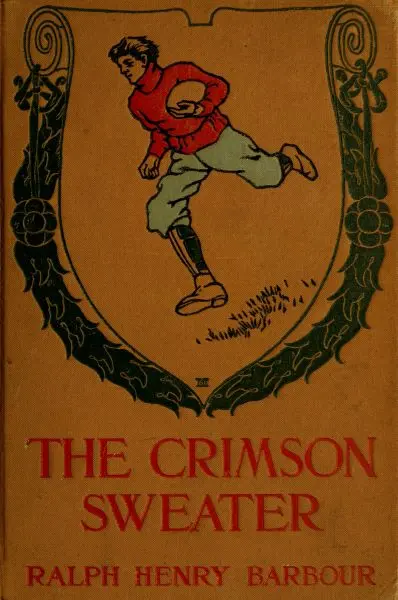
"The Crimson Sweater" by Ralph Henry Barbour is a novel written in the early 20th century. The story centers around Roy Porter, a new student at Ferry Hill School who faces challenges as he navigates the world of boarding school life, including football, friendships, and rivalries. The narrative explores themes of perseverance, loyalty, and the quest for acceptance in a competitive environment. The opening of the book introduces Roy as he experiences his first day at the school, highlighted by an encounter with an older student, Horace Burlen. This interaction sets the stage for the rivalries and social dynamics at Ferry Hill, with Roy's crimson sweater becoming a symbol of his connection to his older brother at Harvard. As Roy settles into school life, he participates in football practice while grappling with feelings of homesickness and the desire to prove himself. He meets various classmates, including Chub Eaton, who becomes a supportive friend amidst the tumult and uncertainty of his new surroundings. Overall, the beginning of the novel establishes an engaging foundation for Roy's character development and challenges ahead.
Introduction adapted from the source catalogue; source summaries may be automatically generated.
Free to read · English · 74,647 words · No account needed
MAKE TIME FOR A GOOD BOOK
On by default. Untick to stop anonymous reading totals. Each page counts after 10 seconds in view. How this works.
Anonymous counting is on unless you have switched it off.
This outburst was so unexpected and excruciating that Roy gave back before it. But as though satisfied with the dismay he had caused the parrot broke out into a shrill burst of laughter and waddled toward the girl, who had now transferred her attention to the rescued rabbit.
"I--I didn't know he was in the box," stammered Roy.
"No, I don't suppose you did," answered the girl grudgingly. "Boys are so stupid! You might have killed him! Come here, Methuselah, and tell me all about it. Did the wicked boy frighten you most to death? Did he? Well, he was a wicked thing, so he was."
The parrot closed his beak carefully about one of her fingers and was lifted to her arm, where he sat in ruffled dignity and stared at Roy with malevolent gaze. The rescued rabbit lay meanwhile, a palpitating bunch of white, in the girl's other hand. Presently, having examined him carefully for damages and found none, she stepped to one of the boxes and deposited him on a litter of straw and cabbage leaves.
"I've had such horrid luck with the babies," she said confidently, her indignation apparently forgotten. "There were three at first. Then one died of rheumatism--at least, I'm almost sure it was rheumatism,--and one was killed by a rat and now only poor little Angel is left. I call him Angel," she explained, turning to her audience, "because he is so white. Don't you think it is a very appropriate name?"
Roy nodded silently. Like the parrot, he had had his temper a bit ruffled; the girl's remarks had not been especially complimentary. If she guessed his feelings she showed no signs of it. Instead,
"You're a new boy, aren't you?" she asked.
"Yes," answered Roy.
"What's your name?"
"Roy Porter."
"Mine's Harry--I mean Harriet Emery; they call me Harry. Harriet's a
beast of a name, isn't it?"
Roy hesitated, somewhat taken back.
"Oh, you needn't mind being polite," continued the girl. "I hate polite people--I mean the kind that say things they don't mean just to be nice to you. Harriet is a beast of a name; I don't care if I was named for Aunt Harriet Beverly. I hate it, don't you? Oh, I forgot! You're one of the polite sort!"
"No, I'm not," answered Roy, laughing. "I don't like Harriet any better than you do. But I like Harry."
"Do you?" she asked eagerly. "Honest? Hope to die?"
"Hope to die," echoed Roy gravely.
"Then you may call me Harry."
"Thanks. Is Doctor Emery your father?"
"Yes. Only they don't call him Doctor Emery--the boys, I mean."
"Don't they? What do they call him?"
Your reading position is saved on this browser. Take it to another device with a library code. Reading pages adapt to text, rather than matching a printed edition.
Ralph Henry Barbour
Ralph Henry Barbour

Ralph Henry Barbour

Ralph Henry Barbour
BEHIND THE BOOK
This eBook is for the use of anyone anywhere in the United States and most other parts of the world at no cost and with almost no restrictions whatsoever. You may copy it, give it away or re-use it under the terms of the Project Gutenberg License included with this eBook or online at www.gutenberg.org. If you are not located in the United States, you will have to check the laws of the country where you are located before using this eBook. Read the source licence.
The original source file, including credits and licence, is retained by this library. Request an original-format copy at no charge. Please include the book title and Project Gutenberg identifier #33425.
KEEP YOUR CURIOSITY GOING
Coulson Kernahan

Maurice Baring
Frances Wright
Cécile Tormay

Frederic Jesup Stimson

W. H. P. (William Henry Pope) Jarvis