THE CLASSIC COLLECTION✦Birds in Legend, Fable and FolkloreCLASSIC FREE BOOKS
Birds in Legend, Fable and Folklore
Ernest Ingersoll
THE CLASSIC COLLECTION · 1885
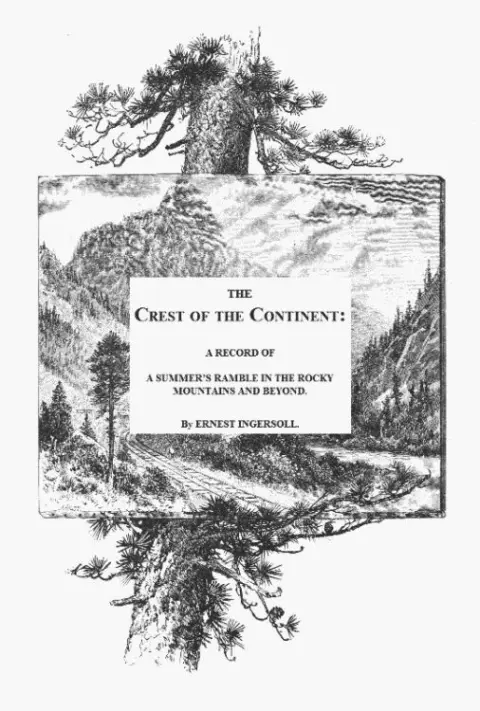
"The Crest of the Continent: A Summer's Ramble in the Rocky Mountains and Beyond" by Ernest Ingersoll is a travel narrative written in the late 19th century. The book captures the author's personal experiences and observations during an adventurous journey through the Rocky Mountains, offering a vivid portrayal of the scenery, wildlife, and human interactions in the region. Through its delightful prose, the work touches on themes of exploration, nature, and the quest for solace beyond the confines of civilization. At the start of this lively account, the author expresses a sense of awe and excitement as he first glimpses the majestic Rocky Mountains, describing their ethereal appearance against the skyline. The narrative introduces a group of friends and companions, including a musician, artist, and a photographer, who have charismatically banded together to embark on a memorable expedition in a specially chartered train. The opening sets the stage for an exploration of Denver and its surroundings, detailing aspects of the city that underline its rapid development and rich resources, while fostering an atmosphere of camaraderie and adventure as the group prepares to delve deeper into the mountainous beauty that lies ahead.
Introduction adapted from the source catalogue; source summaries may be automatically generated.
Free to read · English · 134,359 words · No account needed
MAKE TIME FOR A GOOD BOOK
On by default. Untick to stop anonymous reading totals. Each page counts after 10 seconds in view. How this works.
Anonymous counting is on unless you have switched it off.
It was old traveled ground, for the major part of the distance between El Moro and Cañon City, on the Arkansas, forty miles above Pueblo; and as we were anxious to save all the time we could for the new regions in the west, where we were sure the most romantic experiences awaited, we decided for another night-run, disadvantageous as they were, compared with day journeys. The next morning after our visit to El Moro, therefore, found us at anchor in Cañon City.
"What is there to see about Cañon City?" Oh, quantities of things. Here is a list of what its Record keeps "set up" as its "advantages, natural and otherwise:"
"Soda springs, iron springs, hot soda baths, wide streets, excellent town site, immense water power, exhaustless coal fields, good water works, best building stone, splendid lime rock, iron mines, mica mines, lead mines, silver mines, oil wells, irrigating ditches, abundance of shade trees, peaches, plums, pears, apples, walnuts, grapes, vegetables, grain, flowers, bees, fifteen thousand dollar school house, twenty thousand dollar court house, Masonic temple, city government, low taxes, streets sprinkled, seven churches, theatre hall, first-class dentists, two newspapers, excellent physicians, good teachers, brick and stone stores, excellent society, protection from cold winds, immense stocks of goods, railroad communication, good ranches, stock ranges, excellent hotels, military college, and kindergarten."
Most of these items describe themselves, but others are worth mention. Right at the mouth of the Grand Cañon, which suggested the name, this site early attracted to a permanent home many of the earliest wanderers whom the famous Pike's Peak immigration of 1859 brought to the country. Half a century before them, though, Major Zebulon Pike had made a station for part of his troops on this spot, whence he reconnoitered the surrounding mountains.
Basing their calculations upon the fact that their settlement, which from the first was called Cañon City, was the last place to which the big emigration and freight wagons could come from the plains, the pioneers had large hopes of their town as the one entrepôt and supply-point for the mountains. Merchants came here and crammed great sheds with stocks of goods sold at wholesale, while forwarders were busy in organizing ox-trains to carry supplies into the mountains.
Your reading position is saved on this browser. Take it to another device with a library code. Reading pages adapt to text, rather than matching a printed edition.
Ernest Ingersoll
Ernest Ingersoll
Ernest Ingersoll
Ernest Ingersoll
BEHIND THE BOOK
This eBook is for the use of anyone anywhere in the United States and most other parts of the world at no cost and with almost no restrictions whatsoever. You may copy it, give it away or re-use it under the terms of the Project Gutenberg License included with this eBook or online at www.gutenberg.org. If you are not located in the United States, you will have to check the laws of the country where you are located before using this eBook. Read the source licence.
The original source file, including credits and licence, is retained by this library. Request an original-format copy at no charge. Please include the book title and Project Gutenberg identifier #43020.
KEEP YOUR CURIOSITY GOING
Wilfrid Scawen Blunt
Wilfrid Scawen Blunt

E. W. (Edgar Watson) Howe
Francis Greenleaf Allinson & Anne C. E. (Anne Crosby Emery) Allinson
Cyrenus Cole

John Martineau