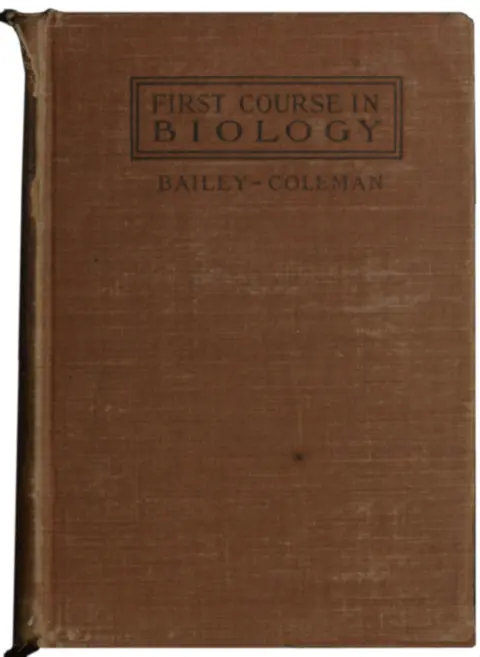
First course in biology
L. H. (Liberty Hyde) Bailey & Walter Moore Coleman

THE CLASSIC COLLECTION · 1911
"The Country-Life Movement in the United States" by L.H. Bailey is a historical account written in the early 20th century. The book explores the evolution and significance of the country-life movement, highlighting its aim to enhance rural civilization to match the advancements of urban life. It distinguishes the movement from the “back-to-the-land” agitation, emphasizing a focus on improving conditions for those already living in rural areas rather than just a call for urbanites to move to the countryside. The opening of the book introduces the country-life movement as a grassroots effort aimed at addressing the disparities between rural and urban life in America. It begins by clearly differentiating this movement from the back-to-the-land movement, noting that the former is not merely about relocating people from cities to the countryside but is concerned with the existing rural populace's needs and aspirations. Bailey outlines the importance of rural civilization and emphasizes that while agriculture is foundational, broader social, educational, and economic reforms are essential for achieving a modern and effective rural society. Overall, the introduction sets the stage for a deeper exploration of the complex challenges facing rural America and the potential solutions that could lead to sustainable prosperity and improved quality of life in the countryside.
Introduction adapted from the source catalogue; source summaries may be automatically generated.
Free to read · English · 38,389 words · No account needed
MAKE TIME FOR A GOOD BOOK
On by default. Untick to stop anonymous reading totals. Each page counts after 10 seconds in view. How this works.
Anonymous counting is on unless you have switched it off.
Nature of the fair, 165--Features to be eliminated, 167--Constructive program, 167--The financial support, 168--An educational basis, 169--Ask every person to prove up, 171--Sports, contests, and pageants, 173--Premiums, 174--It is time to begin, 175--The fair ground, 176--My plea, 177.
These subjects have a history, 180--They are not party-politics subjects, 182--The soil is the greatest of all resources, 183--The soil crust, 185--No man has a right to plunder the soil, 188--Ownership vs. conservation, 190--The philosophy of saving, 192--The conservation of food, 194--The best husbandry is not in the new regions, 196--Another philosophy of agriculture, 197--The obligation of the farmer, 198--The obligation of the conservation movement, 200.
The open country must solve its own problems, 201--Profitable farming is not a sufficient object in life, 202--New country professions, 203--The personal resources, 204--The meaning of the environment, 205--Historic monuments, 208--Improvement societies, 209--Entertainment, 211 (Music spirit, 212; drama, 213)--The business of farming, 217.
The country-life movement is the working out of the desire to make rural civilization as effective and satisfying as other civilization.
It is not an organized movement proceeding from one center or even expressing one set of ideas. It is a world-motive to even up society as between country and city; for it is generally understood that country life has not reached as high development within its sphere as city life has reached within its sphere.
We call it a new subject. As a "movement," or a recognized set of problems needing attention, it may possibly be called new; but in reality it is new only to those who have recently discovered it.
It is not a back-to-the-land movement.
The country-life movement must be sharply distinguished from the present popular back-to-the-land agitation. The latter is primarily a city or town impulse, expressing the desire of townspeople to escape, or of cities to find relief, or of real estate dealers to sell land; and in part it is the result of the doubtful propaganda to decrease the cost of living by sending more persons to the land, on the mostly mistaken assumption that more products will thereby be secured for the world's markets.
The back-to-the-land agitation is not necessarily to be discouraged, yet we are not to expect more of it than it can accomplish; but whatever the outward movement to the land may be, the effort to effectualize rural society, for the people who now comprise this society, is one of the fundamental problems now before the people.
The country-life and back-to-the-land movements are not only little related, but in many ways they are distinctly antagonistic.
This book.
Your reading position is saved on this browser. Take it to another device with a library code. Reading pages adapt to text, rather than matching a printed edition.
L. H. (Liberty Hyde) Bailey & Walter Moore Coleman
L. H. (Liberty Hyde) Bailey
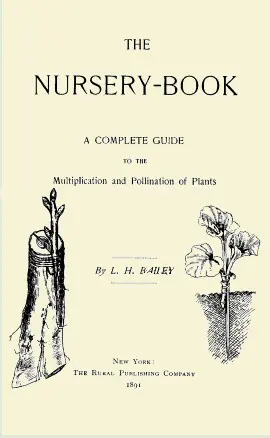
L. H. (Liberty Hyde) Bailey
L. H. (Liberty Hyde) Bailey
BEHIND THE BOOK
This eBook is for the use of anyone anywhere in the United States and most other parts of the world at no cost and with almost no restrictions whatsoever. You may copy it, give it away or re-use it under the terms of the Project Gutenberg License included with this eBook or online at www.gutenberg.org. If you are not located in the United States, you will have to check the laws of the country where you are located before using this eBook. Read the source licence.
The original source file, including credits and licence, is retained by this library. Request an original-format copy at no charge. Please include the book title and Project Gutenberg identifier #40197.
KEEP YOUR CURIOSITY GOING
Cécile Tormay

Moritz Busch
John L. Ransom
Frances Wright
Cécile Tormay

Mabel Potter Daggett