THE CLASSIC COLLECTION✦Crab, shrimp, and lobster loreCLASSIC FREE BOOKS
Crab, shrimp, and lobster lore
William Barry Lord
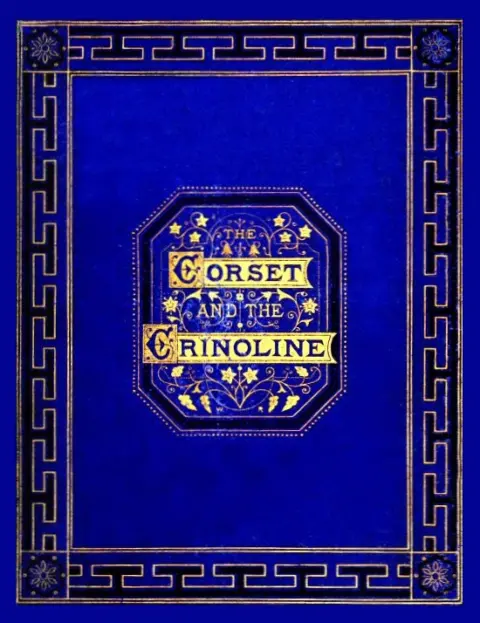
THE CLASSIC COLLECTION · 1868
"The Corset and the Crinoline" by W. B. L. is a historical account written in the late 19th century. This volume explores the intricate relationship between fashion, specifically corsetry and crinolines, and their influence on female beauty ideals throughout history. The text delves into the various customs, styles, and societal implications tied to these garments, shedding light on women's pursuit of an aesthetically pleasing silhouette. The opening of the book introduces the reader to the historical context of corsets, tracing their origins to ancient practices across different cultures, including savage tribes and renowned civilizations such as Egypt and India. It discusses not only the physical creation of corsets but also the societal pressures placed on women to conform to a defined waistline, emphasizing the importance of aesthetics over health. The text hints at a broader examination of fashion trends that have evolved over time, making it clear that the book will serve as a comprehensive guide to the evolution of women's attire and the pervasive corset debate that accompanies it.
Introduction adapted from the source catalogue; source summaries may be automatically generated.
Free to read · English · 43,849 words · No account needed
MAKE TIME FOR A GOOD BOOK
On by default. Untick to stop anonymous reading totals. Each page counts after 10 seconds in view. How this works.
Anonymous counting is on unless you have switched it off.
Java, earth-eating in, 13.
Jonson (Ben), his remarks on stays, 123.
Jumpers and Garibaldis, 130.
King Charles I. of England, fashions of the court of, 103.
King George III., fashion in the reign of, 135.
King James and his fondness for dress, 89, 90.
King Louis XV. of France, fashion in the reign of, 109.
Kirtle, the, 46.
Ladies of Old France, 41.
Lady Morton, diminutive waist of, 166.
Lady Triamore, daughter of the King of the Fairies, 45.
Lady's-maid, accomplishments of a, 123.
Launfal, poem of, 45.
Lawn ruffs of Queen Bess, 82, 87.
Laws, sumptuary, relating to dress, 90.
Letter from a lady, who habitually laces with extreme tightness, in praise of the practice, 182-184.
Letters from ladies who have been subjected to tight-lacing, 155-164.
Louis XIV. of France, court of, 98.
Louis XIV. of France, the court of, high-heeled shoes, slender waists, and fancy costumes, fashionable at, 98.
Louise de Lorraine, fête dress of, 97.
Louise de Lorraine, strange freaks of, 92, 97.
Marie d'Anjou, costume of, 54.
Marie de Medici and the costumes of her time, 97.
Marie Stuart, costume of, 159.
Medical evidence in favour of stays, 134, 135.
Medical man, letter from, in favour of moderately tight
lacing, 154, 155.
Minet back corset described, 213.
Mitra used by the Grecian ladies, 33.
Mode of adding stability to the front-fastening corset, 209.
Mortality among the female sex not on the increase, 195.
Old authors, their remarks on stays, 194.
Peplus, the, 33.
Proportions of the figure and size of waist considered, 193.
Puritanism, its effect on fashion, 104.
Queen Anne, fashions during the reign of, 110.
Queen Catherine de Medici and Queen Elizabeth of England, 72, 75.
Queen Elizabeth's collection of false hair, 87, 88.
Queen newspaper, letter from, on small waists, 165-168.
Redresseur corset of Vienna, 210.
Remarks on the changes of fashion, 143.
Remarks on the flimsy materials used in making some modern
corsets, 210.
Revival of the taste for small waists in Old France, 41.
Roman baths, 34, 35.
Royal standard of fashionable slenderness, 72.
Scotland, small waists admired in, in olden times, 50.
Scriptural references, 29.
Selby, Mrs., the invention of, reviewed, 217.
Self-measurement, remarks concerning, 209.
Short waists and long trains, 129.
Siamese dress, the, 98.
Side-arms of the Elizabethan period, 91.
Snake-toed shoes, long sleeves, and high-heeled slippers, 59.
Starching, the art of, 82.
Statistics, extraordinary, of the corset trade, 195.
Statue, a fashionably dressed, 180.
Stays, formidable kind of, in use in 1776, 129.
Stays, the general use of the word after 1600 in England, 124.
Stays worn habitually by gentlemen, 135.
Strophium, the use of, by the ladies of Rome, 33.
Stubs, Philip, on the ruff, 87-89.
Stubs, his indignation, 88, 89.
Taper waists and figure-training in Ancient Rome, 38.
Terentius, strictures and remarks of, 30.
Thirteenth century, the small waists of, 42.
Thomson's glove-fitting corsets, 204, 205.
Tight corsets, letter in praise of, 182, 183.
Tight corsets needed for short waists, 190.
Tight-lacing revived, 130.
Toilet of a Roman lady of fashion, 34-36.
United States of America, belles of the, 153.
Venice, fashions of the ladies of, 82, 87.
Your reading position is saved on this browser. Take it to another device with a library code. Reading pages adapt to text, rather than matching a printed edition.
BEHIND THE BOOK
This eBook is for the use of anyone anywhere in the United States and most other parts of the world at no cost and with almost no restrictions whatsoever. You may copy it, give it away or re-use it under the terms of the Project Gutenberg License included with this eBook or online at www.gutenberg.org. If you are not located in the United States, you will have to check the laws of the country where you are located before using this eBook. Read the source licence.
The original source file, including credits and licence, is retained by this library. Request an original-format copy at no charge. Please include the book title and Project Gutenberg identifier #53267.
KEEP YOUR CURIOSITY GOING
Cécile Tormay

Moritz Busch
John L. Ransom
Frances Wright
Cécile Tormay

Mabel Potter Daggett