THE CLASSIC COLLECTION✦Crab, shrimp, and lobster loreCLASSIC FREE BOOKS
Crab, shrimp, and lobster lore
William Barry Lord
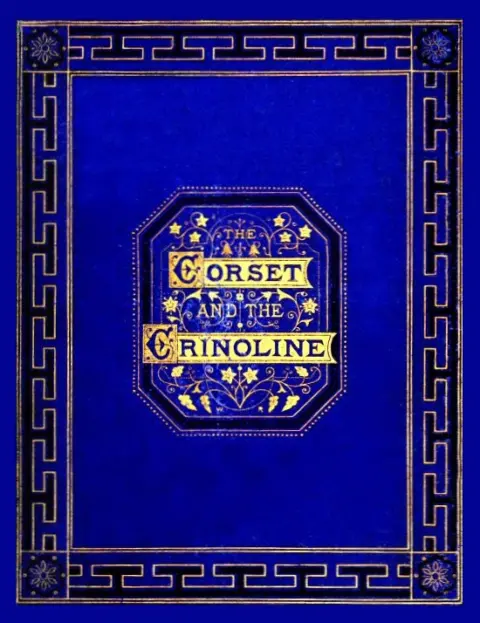
THE CLASSIC COLLECTION · 1868
"The Corset and the Crinoline" by W. B. L. is a historical account written in the late 19th century. This volume explores the intricate relationship between fashion, specifically corsetry and crinolines, and their influence on female beauty ideals throughout history. The text delves into the various customs, styles, and societal implications tied to these garments, shedding light on women's pursuit of an aesthetically pleasing silhouette. The opening of the book introduces the reader to the historical context of corsets, tracing their origins to ancient practices across different cultures, including savage tribes and renowned civilizations such as Egypt and India. It discusses not only the physical creation of corsets but also the societal pressures placed on women to conform to a defined waistline, emphasizing the importance of aesthetics over health. The text hints at a broader examination of fashion trends that have evolved over time, making it clear that the book will serve as a comprehensive guide to the evolution of women's attire and the pervasive corset debate that accompanies it.
Introduction adapted from the source catalogue; source summaries may be automatically generated.
Free to read · English · 43,849 words · No account needed
MAKE TIME FOR A GOOD BOOK
On by default. Untick to stop anonymous reading totals. Each page counts after 10 seconds in view. How this works.
Anonymous counting is on unless you have switched it off.
"Your homely face, Flippanta, you disguise
With patches numerous as Argus' eyes;
I own that patching's requisite for you,
For more we're pleased the less your face we view;
Yet I advise, since my advice you ask,
Wear but one patch, and be that patch a mask."
The fashions set by the court of Louis were eagerly seized on by the whole of Europe. The flowing curls, lace cuffs, and profuse embroidery in use at the court of Charles of England were all borrowed from France, but the general licence and laxity of the period for some short time showed itself in the dress of the ladies, whilst fickleness and love of change, accompanied by thoughtless luxury and profusion, prevailed. The following complaint of a lady's serving-man, dated 1631, will show that the Puritans were not without reason in condemning the extravagances of the time:--
"Here is a catalogue as tedious as a taylor's bill of all the devices which I am commanded to provide (videlicet):--
"Chains, coronets, pendants, bracelets, and earrings, Pins, girdles, spangles, embroidaries, and rings, Shadomes, rebatacs, ribbands, ruffs, cuffs, falls, Scarfs, feathers, fans, maskes, muffes, laces, cauls, Thin tiffanies, cobweb lawn, and fardingales, Sweet sals, vyles, wimples, glasses, crumping pins, Pots of ointment, combs, with poking-sticks, and bodkins, Coyfes, gorgets, fringes, rowels, fillets, and hair laces, Silks, damasks, velvets, tinsels, cloth of gold, Of tissues with colours a hundredfold, But in her tyres so new-fangled is she That which doth with her humour now agree, To-morrow she dislikes; now doth she swear That a losse body is the neatest weare, But ere an hour be gone she will protest A strait gown graces her proportion best.
"Now calls she for a boisterous fardingale,
Then to her hips she'll have her garments fall.
Now doth she praise a sleeve that's long and wide,
Yet by and by that fashion doth deride;
Sometimes she applauds a pavement-sweeping train,
And presently dispraiseth it again;
Now she commands a shallow band so small
That it may seem scarce any band at all;
But now a new fancy doth she reele,
And calls for one as big as a coach-wheele;
She'll weare a flowry coronet to-day,
The symbol of her beauty's sad decay;
To-morrow she a waving plume will try,
The emblem of all female levitie;
Now in her hat, then in her hair is drest,
Now of all fashions she thinks change the best."
Your reading position is saved on this browser. Take it to another device with a library code. Reading pages adapt to text, rather than matching a printed edition.
BEHIND THE BOOK
This eBook is for the use of anyone anywhere in the United States and most other parts of the world at no cost and with almost no restrictions whatsoever. You may copy it, give it away or re-use it under the terms of the Project Gutenberg License included with this eBook or online at www.gutenberg.org. If you are not located in the United States, you will have to check the laws of the country where you are located before using this eBook. Read the source licence.
The original source file, including credits and licence, is retained by this library. Request an original-format copy at no charge. Please include the book title and Project Gutenberg identifier #53267.
KEEP YOUR CURIOSITY GOING
Cécile Tormay

Moritz Busch
John L. Ransom
Frances Wright
Cécile Tormay

Mabel Potter Daggett