
‘Midst the Wild Carpathians
Mór Jókai
THE CLASSIC COLLECTION · 1901
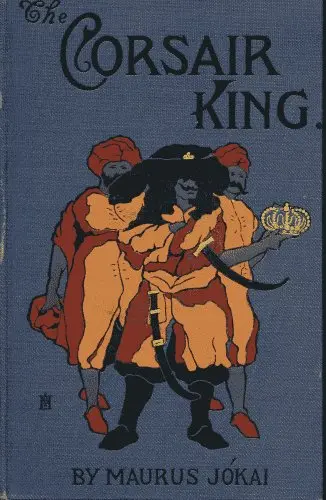
"The Corsair King" by Mór Jókai is a novel written in the late 19th century. The story revolves around Robert Barthelemy, a daring pirate who rises to infamy on the high seas. The narrative encompasses themes of adventure, treachery, and the personal yearning for love and vengeance, all anchored in the turbulent life of piracy amidst shifting allegiances and brutal encounters. At the start of the novel, the crew of a brigantine, led by Captain Rolls, faces dire straits after a storm and a subsequent pirate attack. The scene unfolds with tension as the captain addresses his crew about their recent decisions due to the storm, particularly the grim choice made concerning sick crew members and cargo. As the fight erupts with the notorious pirate Barthelemy and his crew, we see the complexities of loyalty, valor, and survival in a harsh world. The opening introduces not only the immediate dangers of piracy but also hints at Barthelemy's deeper personal motives, setting the stage for his journey from corsair to a man seeking retribution for his lost loved ones.
Introduction adapted from the source catalogue; source summaries may be automatically generated.
Free to read · English · 25,528 words · No account needed
MAKE TIME FOR A GOOD BOOK
On by default. Untick to stop anonymous reading totals. Each page counts after 10 seconds in view. How this works.
Anonymous counting is on unless you have switched it off.
With a terrible imprecation, Barthelemy flung into the air a handful of ashes which he had clutched and, as they floated slowly down upon his head, he sank on his knees and, sobbing convulsively, kissed the threshold.
"My God, my God, if it was Thy will to punish me, why didst Thou not dash me against a cliff during the raging of a tempest, why didst Thou not let me perish by arms, by hunger? Why didst Thou not make me mount the scaffold? Why didst Thou permit Thy angels to atone for my crimes?"
He sobbed bitterly, while the ashes he had scattered to bear witness to his vow, drifted slowly down upon his head.
A traveller, driving his mule before him, came through the path leading from the forest. Barthelemy barred his way. The man started at sight of the fierce-looking stranger and began to appeal to his patron saint.
"Whence do you come?" asked the pirate.
"From La Vega. I bring good news. The insurgents are conquered and already hang along the coast."
"Bad news for me! Have none of them escaped?"
"A few hundred took refuge in a captured ship and fled to Africa."
"I thank you. You can go on."
The messenger continued his journey, shaking his head; he could not understand why any one should regret that the rebels were conquered, or rejoice because a number of them had escaped.
"What has happened to you, captain?" asked Moody, when Barthelemy returned to the ship. "You are as pale as a corpse."
"Nothing," replied his commander in a hollow tone. "Only my heart has
died in my breast."
The pirates asked no further questions. They knew all. Whenever any one of them left the band, the others kept watch from a distance. They had seen Barthelemy sitting despairingly beside the ruins of the hut, and all shrank in timid silence from the pallid man.
Barthelemy shut himself up in his cabin and, taking a chart, began to study the course to Africa. His face was gloomy, but ever and anon his eyes flashed fiercely. Suddenly he heard a knock at the door and angrily opened it.
"Who is disturbing me, now?"
"I, captain," replied Scudamore. "We need your judgment."
"Go until to-morrow. I will grant no favors to-day."
"I want no favors from you, only the execution of the law. Three members of the band took advantage of the time during which we were on shore to desert and take refuge in the interior of the island. But I sleep with my eyes open and, though I have but two of them, can watch the whole hundred men."
"And me also?"
Your reading position is saved on this browser. Take it to another device with a library code. Reading pages adapt to text, rather than matching a printed edition.
Mór Jókai
Mór Jókai

Mór Jókai
Mór Jókai
BEHIND THE BOOK
This eBook is for the use of anyone anywhere in the United States and most other parts of the world at no cost and with almost no restrictions whatsoever. You may copy it, give it away or re-use it under the terms of the Project Gutenberg License included with this eBook or online at www.gutenberg.org. If you are not located in the United States, you will have to check the laws of the country where you are located before using this eBook. Read the source licence.
The original source file, including credits and licence, is retained by this library. Request an original-format copy at no charge. Please include the book title and Project Gutenberg identifier #26865.
KEEP YOUR CURIOSITY GOING
Coulson Kernahan

Maurice Baring
Frances Wright
Cécile Tormay

Frederic Jesup Stimson

W. H. P. (William Henry Pope) Jarvis