
‘Midst the Wild Carpathians
Mór Jókai
THE CLASSIC COLLECTION · 1901
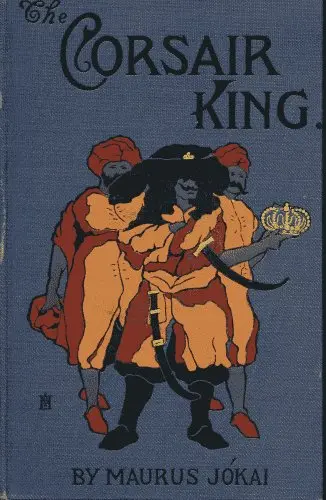
"The Corsair King" by Mór Jókai is a novel written in the late 19th century. The story revolves around Robert Barthelemy, a daring pirate who rises to infamy on the high seas. The narrative encompasses themes of adventure, treachery, and the personal yearning for love and vengeance, all anchored in the turbulent life of piracy amidst shifting allegiances and brutal encounters. At the start of the novel, the crew of a brigantine, led by Captain Rolls, faces dire straits after a storm and a subsequent pirate attack. The scene unfolds with tension as the captain addresses his crew about their recent decisions due to the storm, particularly the grim choice made concerning sick crew members and cargo. As the fight erupts with the notorious pirate Barthelemy and his crew, we see the complexities of loyalty, valor, and survival in a harsh world. The opening introduces not only the immediate dangers of piracy but also hints at Barthelemy's deeper personal motives, setting the stage for his journey from corsair to a man seeking retribution for his lost loved ones.
Introduction adapted from the source catalogue; source summaries may be automatically generated.
Free to read · English · 25,528 words · No account needed
MAKE TIME FOR A GOOD BOOK
On by default. Untick to stop anonymous reading totals. Each page counts after 10 seconds in view. How this works.
Anonymous counting is on unless you have switched it off.
At last two ships of war pursued the Sea Devil. William now hoped confidently for liberation. The foe had eighty guns and two hundred men, while the pirate had thirty guns and a crew of sixty.
When the pirates perceived that they could not fly, they boldly attacked one of the frigates and, at the first fire, sent a red hot ball into the enemy's powder magazine. The vessel was instantly blown into the air, her companion set sail and, with cowardly haste, fled from the pirates.
"So that is the fate of honest folk!" thought William, as the pirates' shouts of victory echoed around him, and turning to his next neighbor, he said:
"Give me a drink from your calabash."
The man was Skyrme.
"All right, my lad!" shouted the Hercules, giving the youth a hearty slap on the shoulder, "I knew this would be the end."
As he spoke he drew the young man to the captain and, before the eyes of the whole ship's company, he wrote in the black book the name: Robert Barthelemy.
Sisters, betrothed bride, and grandmother had wept till their hearts were relieved. The hour had passed, William had returned. He could not give his family a single shilling, though his ship was full of treasure. But it was all stolen property, and William could bring nothing stained with crime beneath the roof where his dear ones dwelt--poor, but pure in heart.
The gray-haired grandmother kissed and blessed him, her tears falling on his head, the girls went with him to the shore and, while Julietta clung about his neck, the others lingered behind, in order not to disturb the sweet mysterious whispers of the lovers.
"When shall you return?" asked the girl.
"When I can make you happy."
"Your love alone can do that. You need not sail the sea for my happiness, it could be gained by seeing you always at my side."
"That is what children think. I wish we could never outgrow the belief. But--in the hands of the poor everything is poor, even happiness."
The young girl shook her head.
Meanwhile they reached a copse which concealed the shore, and here the
young man stopped.
"Don't go any farther; my companions are rough sailors, I do not wish them to disturb our parting. Turn back now. Our grandmother is expecting you."
The two sisters, with many kisses, embraces, and tears, turned back, but Julietta still clung to her departing lover, whispering in stifled tones.
"Take me with you."
The youth trembled from head to foot and gazed with a blanched face at the young girl, who still clasped him in a convulsive embrace.
Your reading position is saved on this browser. Take it to another device with a library code. Reading pages adapt to text, rather than matching a printed edition.
Mór Jókai
Mór Jókai

Mór Jókai
Mór Jókai
BEHIND THE BOOK
This eBook is for the use of anyone anywhere in the United States and most other parts of the world at no cost and with almost no restrictions whatsoever. You may copy it, give it away or re-use it under the terms of the Project Gutenberg License included with this eBook or online at www.gutenberg.org. If you are not located in the United States, you will have to check the laws of the country where you are located before using this eBook. Read the source licence.
The original source file, including credits and licence, is retained by this library. Request an original-format copy at no charge. Please include the book title and Project Gutenberg identifier #26865.
KEEP YOUR CURIOSITY GOING
Coulson Kernahan

Maurice Baring
Frances Wright
Cécile Tormay

Frederic Jesup Stimson

W. H. P. (William Henry Pope) Jarvis