THE CLASSIC COLLECTION✦The Bishop’s purseCLASSIC FREE BOOKS
The Bishop’s purse
Cleveland Moffett & Oliver Herford
THE CLASSIC COLLECTION · 1916
"The Conquest of America: A Romance of Disaster and Victory, U.S.A., 1921 A.D." by Cleveland Moffett is a fictional narrative that was written during the early 20th century. This gripping tale explores the hypothetical scenario of a major German invasion of the United States in the aftermath of World War I, drawing on themes of military preparedness and national identity. The narrative centers around James E. Langston, a war correspondent for the "London Times," who experiences the turbulent events and catastrophic military failures firsthand, offering readers a lens through which to understand the dire consequences of unpreparedness. At the start of this narrative, the reader is introduced to James E. Langston, who is stationed in Panama and discusses the imminent threat posed by a potentially aggressive Japan, highlighting the United States' lack of military readiness. In a dramatic twist, the Panama Canal is destroyed, signaling the beginning of hostilities with Germany, who seizes the moment to launch a surprise invasion of America. The chaos escalates as German forces invade Long Island, overwhelming American defenses and prompting fears of a full-scale occupation of New York City. The opening chapters set a tense tone, portraying the emotional and strategic dilemmas faced by both military leaders and ordinary citizens as they grapple with the sudden realization of their vulnerability.
Introduction adapted from the source catalogue; source summaries may be automatically generated.
Free to read · English · 65,782 words · No account needed
MAKE TIME FOR A GOOD BOOK
On by default. Untick to stop anonymous reading totals. Each page counts after 10 seconds in view. How this works.
Anonymous counting is on unless you have switched it off.
Captain J. Franklin McFadden, First Lieutenant George C. Thayer, Second Lieutenant John Conyngham Stevens, First Sergeant Thomas Cadwalader, Second Sergeant (Quartermaster) Benjamin West Frazier, Third Sergeant George Joyce Sewell, William B. Churchman, Richard M. Philler, F. Wilson Prichett, Clarence H. Clark, Joseph W. Lewis, Edward D. Page, Richard Tilghman, Edward D. Toland, Jr., McCall Keating, Robert P. Frazier, Alexander Cadwalader, Morris W. Stroud, George Brooke, 3d, Charles Poultney Davis, Saunders L. Meade, Cooper Howell, C. W. Henry, Edmund Thayer, Harry C. Yarrow, Jr., Alexander C. Yarnall, Louis Rodman Page, Jr., George Gordon Meade, Pierson Pierce, Andrew Porter, Richard H. R. Toland, John B. Thayer, West Frazier, John Frazer, P. P. Chrystie, Albert L. Smith, William W. Bodine, Henry D. Beylard, Effingham Buckley Morris, Austin G. Maury, John P. Hollingsworth, Rulon Miller, Harold M. Willcox, Charles Wharton, Howard York, Robert Gilpin Irvin, J. Keating Willcox, William Watkins, Jr., Harry Ingersoll, Russell Thayer, Fitz Eugene Dixon, Percy C. Madeira, Jr., Marmaduke Tilden, Jr., H. Harrison Smith, C. Howard Clark, Jr., Richard McCall Elliot, Jr., George Harrison Frazier, Jr., Oliver Eton Cromwell, Richard Harte, D. Reeves Henry, Henry H. Houston, Charles J. Ingersoll.
It grieved me when I visited the quaint little house on Arch Street with its gabled window and wooden blinds, where Betsey Ross made the first flag of the United States of America, to find a German banner in place of the accustomed thirteen white stars on their square of blue. And again, when I stood beside Benjamin Franklin’s grave in Christ Church Cemetery, I was shocked to see a German flag marking this honoured resting-place. “Benjamin and Deborah, 1790,” was the deeply graven words and, beside them under a kindly elm, the battered headstone of their little four-year-old son, “Francis F.--A delight to all who knew him.” Then a German flag!
I began to wonder why we had not learned a lesson from England’s lamentable showing in 1915. What good did all our wealth do us now? It would be taken from us--had not the Germans already levied an indemnity of four hundred millions upon Philadelphia? And seized the Baldwin locomotive works, the greatest in the world, employing 16,000 men? And the Cramp shipbuilding yards? And the terminus at Point Breeze down the river of the great Standard Oil Company’s pipe line with enormous oil supplies?
Your reading position is saved on this browser. Take it to another device with a library code. Reading pages adapt to text, rather than matching a printed edition.
Cleveland Moffett & Oliver Herford

Cleveland Moffett
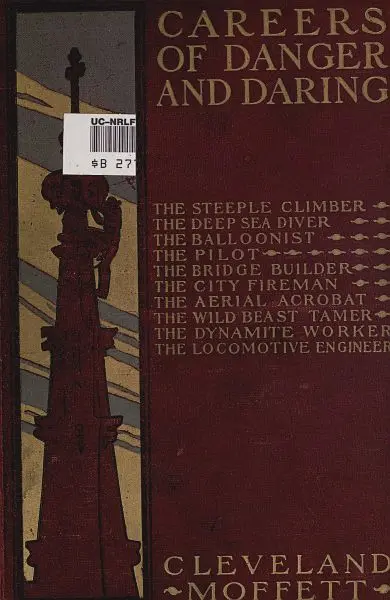
Cleveland Moffett
Cleveland Moffett
BEHIND THE BOOK
This eBook is for the use of anyone anywhere in the United States and most other parts of the world at no cost and with almost no restrictions whatsoever. You may copy it, give it away or re-use it under the terms of the Project Gutenberg License included with this eBook or online at www.gutenberg.org. If you are not located in the United States, you will have to check the laws of the country where you are located before using this eBook. Read the source licence.
The original source file, including credits and licence, is retained by this library. Request an original-format copy at no charge. Please include the book title and Project Gutenberg identifier #8684.
KEEP YOUR CURIOSITY GOING
Cécile Tormay

Moritz Busch
Coulson Kernahan
John L. Ransom

Maurice Baring
Frances Wright