THE CLASSIC COLLECTION✦The Bishop’s purseCLASSIC FREE BOOKS
The Bishop’s purse
Cleveland Moffett & Oliver Herford
THE CLASSIC COLLECTION · 1916
"The Conquest of America: A Romance of Disaster and Victory, U.S.A., 1921 A.D." by Cleveland Moffett is a fictional narrative that was written during the early 20th century. This gripping tale explores the hypothetical scenario of a major German invasion of the United States in the aftermath of World War I, drawing on themes of military preparedness and national identity. The narrative centers around James E. Langston, a war correspondent for the "London Times," who experiences the turbulent events and catastrophic military failures firsthand, offering readers a lens through which to understand the dire consequences of unpreparedness. At the start of this narrative, the reader is introduced to James E. Langston, who is stationed in Panama and discusses the imminent threat posed by a potentially aggressive Japan, highlighting the United States' lack of military readiness. In a dramatic twist, the Panama Canal is destroyed, signaling the beginning of hostilities with Germany, who seizes the moment to launch a surprise invasion of America. The chaos escalates as German forces invade Long Island, overwhelming American defenses and prompting fears of a full-scale occupation of New York City. The opening chapters set a tense tone, portraying the emotional and strategic dilemmas faced by both military leaders and ordinary citizens as they grapple with the sudden realization of their vulnerability.
Introduction adapted from the source catalogue; source summaries may be automatically generated.
Free to read · English · 65,782 words · No account needed
MAKE TIME FOR A GOOD BOOK
On by default. Untick to stop anonymous reading totals. Each page counts after 10 seconds in view. How this works.
Anonymous counting is on unless you have switched it off.
I visited aviation centers where these machines were delivered for tests, and found the places swarming with armies of men training and inspecting and testing the aeroplanes.
Among aviators busy at this work were: Charles F. Willard, J. A. D. McCurdy, Walter R. Brookins, Frank T. Coffyn, Harry N. Atwood, Oscar Allen Brindley, Leonard Warren Bonney, Charles C. Witmer, Harold H. Brown, John D. Cooper, Harold Kantner, Clifford L. Webster, John H. Worden, Anthony Jannus, Roy Knabenshue, Earl S. Dougherty, J. L. Callan, T. T. Maroney, R. E. McMillen, Beckwith Havens, DeLloyd Thompson, Sidney F. Beckwith, George A. Gray, Victor Carlstrom, Chauncey M. Vought, W. C. Robinson, Charles F. Niles, Frank H. Burnside, Theodore C. Macaulay, Art Smith, Howard M. Rinehart, Albert Sigmund Heinrich, P. C. Millman, Robert Fowler.
In the balloon training camps, I noticed some old-time balloonists, including: J. C. McCoy, A. Leo Stevens, Frank P. Lahm, Thomas S. Baldwin, A. Holland Forbes, Charles J. Glidden, Charles Walsh, Carl G. Fisher, Wm. F. Whitehouse, George B. Harrison, Jay B. Benton, J. Walter Flagg, John Watts, Roy F. Donaldson, Ralph H. Upson, R. A. D. Preston and Warren Rasor.
Five days before the battle the hundred great carriers began delivering their deadly loads on the heights of Arlington, south of the Potomac, each aeroplane making three trips from Niagara Falls every twenty-four hours, which meant that on the morning of November 5, 1921, when the German legions came within range of Leonard Wood’s field artillery, there were 5,000 tons of liquid chlorine ready to be hurled down from the aerial fleet. And it was estimated that the carriers would continue to deliver a thousand tons a day from Grand Island as long as the deadly stuff was needed.
The actual work of dropping these chlorine bombs upon the enemy was entrusted to another fleet of smaller aeroplanes gathered from all parts of the country, most of them belonging to members of the Aero Club of America who not only gave their machines but, in many cases, offered their services as pilots or gunners for the impending air battle.
“What is the prospect?” I asked Henry Woodhouse, chief organiser of these aeroplane forces, on the day before the fight.
He was white and worn after days of overwork, but he spoke hopefully.
“We have chlorine enough,” he said, “but we need more attacking aeroplanes. We’ve only about forty squadrons with twelve aeroplanes to a squadron and most of our pilots have never worked in big air manoeuvres. It’s a great pity. Ah, look there! If they were all like Bolling’s squadron!”
Your reading position is saved on this browser. Take it to another device with a library code. Reading pages adapt to text, rather than matching a printed edition.
Cleveland Moffett & Oliver Herford

Cleveland Moffett
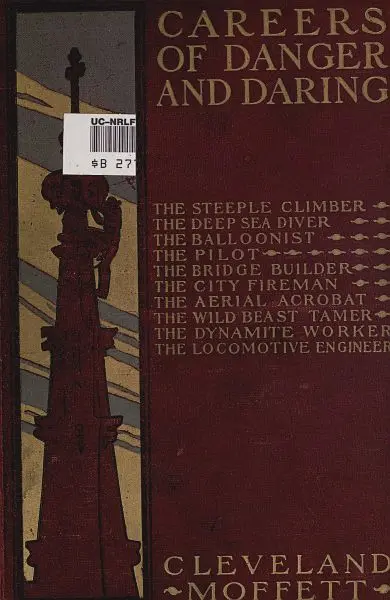
Cleveland Moffett
Cleveland Moffett
BEHIND THE BOOK
This eBook is for the use of anyone anywhere in the United States and most other parts of the world at no cost and with almost no restrictions whatsoever. You may copy it, give it away or re-use it under the terms of the Project Gutenberg License included with this eBook or online at www.gutenberg.org. If you are not located in the United States, you will have to check the laws of the country where you are located before using this eBook. Read the source licence.
The original source file, including credits and licence, is retained by this library. Request an original-format copy at no charge. Please include the book title and Project Gutenberg identifier #8684.
KEEP YOUR CURIOSITY GOING
Cécile Tormay

Moritz Busch
Coulson Kernahan
John L. Ransom

Maurice Baring
Frances Wright