The gospel of freedom
Robert Herrick
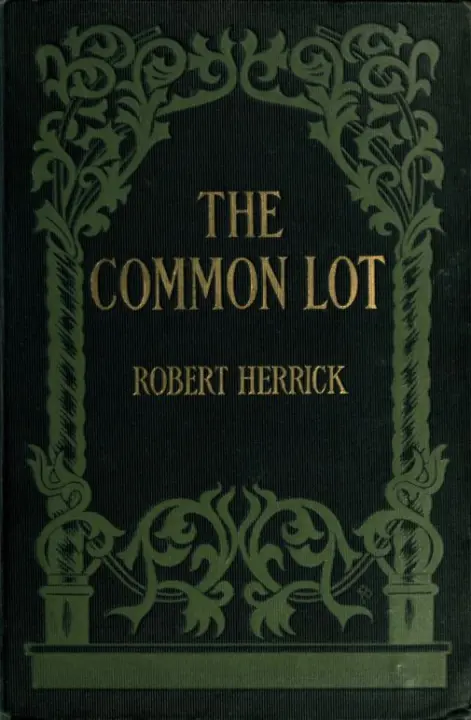
THE CLASSIC COLLECTION · 1904
"The Common Lot" by Robert Herrick is a novel written in the early 20th century. The story begins at the funeral of Powers Jackson, a self-made industrialist, and follows his nephew, Jackson Hart, as he navigates the impact of his uncle's death and the unexpected consequences of the will that reveals his uncle's philanthropic intentions. The narrative offers a glimpse into the complexities of human relationships, class struggles, and moral dilemmas. At the start of the novel, the atmosphere is somber as mourners gather to pay their respects to Powers Jackson. Among them are Jackson Hart and a young woman named Helen Spellman, both grappling with their feelings about the deceased. As the funeral proceedings unfold, the young architect reflects on his complicated relationship with his late uncle, who had both supported and governed his life choices. Soon after, the reading of the will shocks Jackson, revealing that most of his uncle's fortune is earmarked for a school for working-class children, leaving him with a modest inheritance. This turn of events catalyzes Jackson's inner turmoil and sets the stage for his struggle to redefine his identity and ambitions in a city fueled by wealth and ambition.
Introduction adapted from the source catalogue; source summaries may be automatically generated.
Free to read · English · 105,227 words · No account needed
MAKE TIME FOR A GOOD BOOK
On by default. Untick to stop anonymous reading totals. Each page counts after 10 seconds in view. How this works.
Anonymous counting is on unless you have switched it off.
She noticed that Jackson, who was seated between Mrs. Stewart and Mrs. Phillips, was drinking a good deal of champagne. She thought that he was finding the dinner as intolerably dull as she found it, for he rarely drank champagne. When the women gathered in the drawing-room for coffee, the topic of the Crawfords' disaster had reached the anecdotal stage.
"Poor Linda! Do you remember how she hated Chicago? She's been living at Cannes this season, hasn't she? I suppose she'll come straight home now. Does she own that place in the Berkshires?"
"No, everything was in his name."
"He was one of the kind who would keep everything in his own hands."
"Even that ranch doesn't belong to Ted, I hear."
"My, what a tragedy it is!"
There seemed to be no end to the talk about the lost money. Helen sat limply in her chair. The leaden dulness of the dinner-talk, the dead propriety and conventionality of the service, the dishes, the guests, had never before so whelmed her spirit as they did to-night. These good people were stung into unusual animation because a man had died leaving his family not poor, but within sight of poverty. For poverty is the deadliest spectre to haunt the merchant class at their lying down and at their uprising.
When the men came in, murmuring among themselves fragments of the same topic, Helen felt as though she might shriek out or laugh hysterically, and as soon as she could she clutched her husband, just as he was sitting down beside Mrs. Pemberton.
"Take me away, Francis. It's awful," she whispered.
"What's the matter?" he asked in quick concern. "Don't you feel well?"
"Yes, yes, I am all right. No, I am tired. My head aches. Can't we leave? I shall do something silly--come!"
As they got into their carriage, he demanded, "What was the matter?"
"Nothing,--just the awful dulness of it,--such people,--such talk, talk, talk about poor Mr. Crawford's money!"
"I thought the crowd was all right," he grumbled. "The best out here--what was the matter? Your nerves must be wrong."
"Yes, my nerves are wrong," she assented.
Then they were silent, and from the heat, fatigue, and champagne he relapsed into a doze on the way home. But when they reached the house he woke up briskly enough and began to talk of the dinner again:--
"Nell, Mrs. Phillips was speaking to me to-night about Venetia. She's worried to death over the girl. The men say pretty rough things about her, you know. Little fool! She'd better marry Lane if he wants her still, and keep quiet."
Your reading position is saved on this browser. Take it to another device with a library code. Reading pages adapt to text, rather than matching a printed edition.
Robert Herrick

Robert Herrick

Robert Herrick
Robert Herrick
BEHIND THE BOOK
This eBook is for the use of anyone anywhere in the United States and most other parts of the world at no cost and with almost no restrictions whatsoever. You may copy it, give it away or re-use it under the terms of the Project Gutenberg License included with this eBook or online at www.gutenberg.org. If you are not located in the United States, you will have to check the laws of the country where you are located before using this eBook. Read the source licence.
The original source file, including credits and licence, is retained by this library. Request an original-format copy at no charge. Please include the book title and Project Gutenberg identifier #57830.
KEEP YOUR CURIOSITY GOING
Coulson Kernahan

Maurice Baring
Frances Wright
Cécile Tormay

Frederic Jesup Stimson

W. H. P. (William Henry Pope) Jarvis