
Uncanny Stories
May Sinclair
THE CLASSIC COLLECTION · 1913
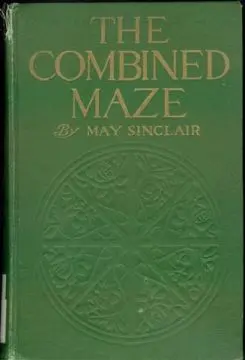
"The Combined Maze" by May Sinclair is a novel written in the early 20th century. The story follows John Randall Fulleymore Ransome, affectionately known as Ranny, an ambitious young man wrestling with the constraints of his familial, societal, and personal expectations in Wandsworth, London. As a clerk confined to a dull routine, Ranny yearns for athletic prowess and a more vivid life, grappling with feelings for his friend Winny Dymond, who embodies the excitement he craves. At the start of the narrative, we are introduced to Ranny's background, touching upon his birth under unfortunate circumstances and his struggles against the legacy of his father's ineptness and alcoholism. Despite this, Ranny remains driven by a passion for physical fitness and the thrill of competition, a stark contrast to his mundane life. The opening details his fascination with the Polytechnic Gymnasium, a place that symbolizes his aspirations. The dynamic of his relationships is highlighted through his interactions with friends like Fred Booty and the elusive Winny, whose presence ignites a mixture of tenderness and complexity within him, setting the stage for further themes of adventure, youthful vigor, and the contrast between societal expectations and personal desires.
Introduction adapted from the source catalogue; source summaries may be automatically generated.
Free to read · English · 101,074 words · No account needed
MAKE TIME FOR A GOOD BOOK
On by default. Untick to stop anonymous reading totals. Each page counts after 10 seconds in view. How this works.
Anonymous counting is on unless you have switched it off.
"Think of all those little empty houses, Ranny, and the people that'll come and live in them. It seems somehow so beautiful their coming and finding them and getting things for them; and at the same time it seems somehow sad." She paused.
"I don't mean that you're sad, Ranny. You know what I mean."
He did. He had felt it too, the beauty and the sadness, but he couldn't have put it into words. It was the sadness and the beauty of life.
It was queer, he thought, how Winny felt as he did about most things in
life.
But Winny's joy over the house was nothing to her joy over the garden, the garden that Ranny had made, and over the little tree that he had planted. It was the most beautiful and wonderful tree in the whole world. For in her eyes everything that Ranny did and that he made was beautiful and wonderful. It could not be otherwise: because she loved him.
And oh! she had the most intense appreciation of Granville, of the name and of the personality. She took it all in. Trust Winny.
And as they stood in the gateway at parting, he told her of the system by which in twenty, no, in not much more than nineteen years' time Granville would be his own.
"Why, Ranny, it sounds almost too good to be true!"
"I know it does. That's why sometimes I think I'll be had over it yet. I say to myself Granville looks jolly innocent, but he'll score off me, you bet, before he's done."
"He does look innocent," said Winny.
He did. (And how Winny took it in!)
"That's what tickles me," said Ranny. "Sometimes, when I come home of a evening and find him still sittin' there, cockin' his little eyes as if he was goin' to have a game with me, it comes over me that he's up to something, and--what do you think I do?"
"I don't know, Ranny." She almost whispered it.
"I burst out laughin' in his face."
"How can you?" She was treating Granville as he did, exactly as if it
was alive.
"Well--you see how comical he is."
"Yes. I see it." (Of course she saw it.) "Still--there's something about
him all the same."
There was something about everything that was Ranny's, something that touched her, something that made her love it, because she loved him. Winny couldn't have burst out laughing in its face.
"I'm glad I came," she said. "Because now I can see you."
He misunderstood. "I hope you will, Winky--very often."
"I mean--see you when you're not there."
Your reading position is saved on this browser. Take it to another device with a library code. Reading pages adapt to text, rather than matching a printed edition.
May Sinclair

May Sinclair

May Sinclair

May Sinclair
BEHIND THE BOOK
This eBook is for the use of anyone anywhere in the United States and most other parts of the world at no cost and with almost no restrictions whatsoever. You may copy it, give it away or re-use it under the terms of the Project Gutenberg License included with this eBook or online at www.gutenberg.org. If you are not located in the United States, you will have to check the laws of the country where you are located before using this eBook. Read the source licence.
The original source file, including credits and licence, is retained by this library. Request an original-format copy at no charge. Please include the book title and Project Gutenberg identifier #28461.
KEEP YOUR CURIOSITY GOING
Coulson Kernahan

Maurice Baring
Frances Wright
Cécile Tormay

Frederic Jesup Stimson

W. H. P. (William Henry Pope) Jarvis