THE CLASSIC COLLECTION✦My diaries, being a personal narrative of events 1888-1914, Part 2 (1900-1914)CLASSIC FREE BOOKS
My diaries, being a personal narrative of events 1888-1914, Part 2 (1900-1914)
Wilfrid Scawen Blunt
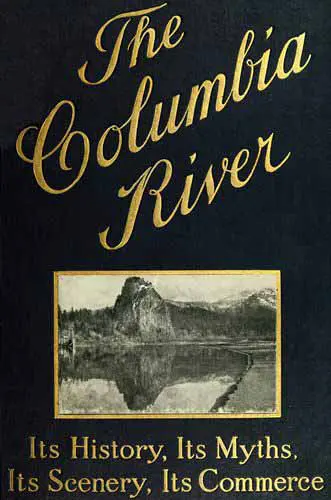
THE CLASSIC COLLECTION · 1909
"The Columbia River: Its History, Its Myths, Its Scenery, Its Commerce" by William Denison Lyman is a historical account written in the early 20th century. The work focuses on the Columbia River, aiming to encapsulate its geographical wonder as well as the rich tapestry of its history and myths, particularly those related to the Native American tribes of the region. The author, a professor of history, presents a picturesque narrative intended for general readers rather than specialists, illuminating both the natural beauty and the heroic past associated with this significant waterway. At the start of the book, the reader is introduced to the geological and mythical background of the Columbia River and its surroundings. The opening chapter discusses the physical formation of the river, shaped by forces like volcanic action and glaciation, and shares various Native American creation myths associated with the region. One notable myth is that of Wishpoosh, a giant beaver whose actions led to the creation of the river and its surrounding tribes. The chapter paints a vivid picture of the Columbia Basin's diverse landscapes, from its majestic mountains to fertile valleys, interconnecting them with the powerful narratives of the indigenous peoples who have long inhabited this beautiful region.
Introduction adapted from the source catalogue; source summaries may be automatically generated.
Free to read · English · 117,418 words · No account needed
MAKE TIME FOR A GOOD BOOK
On by default. Untick to stop anonymous reading totals. Each page counts after 10 seconds in view. How this works.
Anonymous counting is on unless you have switched it off.
Pacific Fur Co., organisation of, 89;
its dissolution, 125
Paha Cliffs, 336
Pakenham, British envoy, and his course in regard to Oregon, 199-200
Pambrun, Pierre, instructed Indians in Catholic faith, 137
Parker, Rev. Samuel, in Oregon to investigate condition of Indians, 145;
his traits, 146;
book, 146
Pasco, lands around, 326;
prospects of, 327
Patriot, Illinois, report of the Indians looking for "Book of Life,"
137
Peacock, ship of Wilkes Expedition lost on Columbia Bar, 165
Pearce, E. D., connection with discovery of gold in Idaho, 252
Pearson, express rider, rides to notify Stevens of Great Yakima War,
219-220
Pendleton, its industries and some of its citizens, 319-320
Peoria party of immigrants, 163
Perez, voyage of, 51
Perkins, Rev. H. K. W., mission at The Dalles, 142
Peupeumoxmox, Indian chief in war of 1855, 213;
leads force to Walla Walla, 214;
killed, 221
Polk, President, management of Oregon Question, 199-200
Poppleton, Irene Lincoln, article in Oregon Historical Quarterly, 237
Portland developed by discovery of gold in California, 251;
location, 381;
transportation facilities, 382;
commerce, 382-383;
buildings, 384;
artistic character of, 385;
Historical Society, 385-386
Potter, T. J., steamer on Columbia, 248
Priest Rapids, character of, 322;
origin of name, 322;
power for pumping, 324
Provisional Government, origin of, 190-192;
organisation of, 193;
officers of, 194;
state house for, 194
Provost, J. B., at restoration of Astoria, 125; agent of United States for receiving Astoria from Great Britain, 182; describes Columbia Bar, 182-183
Pullman, site of State College, 315
Raccoon, British man-of-war at Astoria, 124
Railroad Creek, scenery about, 309-310
Rainier, Mt., origin of name, 32
Rector, Wm., road across Cascade Mountains, 176
Revelstoke, character as a junction, 292
Rock Island Rapids, 321
Roosevelt, Theodore, view of Calhoun's policy in regard to Oregon, 198; reference to Columbia River, 246
Rooster Rock, appearance of, 349-350;
River below, 375
Rosalia, monument of Steptoe, 315
Ross, Alexander, adventure in Yakima country, 126-127;
narration of profits in fur-trade, 131;
on blowing up of Tonquin, 203
Ruckle and Olmstead put steamer on Columbia, 236
Russia, entrance upon American exploration, 50-51
Sacajawea, with Lewis and Clark party, 75;
sees the whale, 85;
finds her brother, Cameahwait, 78
St. Helens, Mt., origin of, in Indian myth, 22-24
St. Joe River, its beauties, 297
St. Peter's Dome, 346
Salmon River, Lewis and Clark party at the head of, 79
Saltese, Coeur d'Alene chief, 226
San Jose, ship connected with Indian story, 42
Scott, Harvey, character and influence as an editor, 386
Sea-otter, importance in the fur-trade, 100
Senorita, steamer on Columbia, 236
Shakspere, his location of Caliban and Ariel in the Far West, 47
Shaw, Col. B. F., battle of Grande Ronde, 222
Shepard, Rev. Cyrus, missionary to Indians, 141
Sheridan, battle at Cascades, 22
Shoshone Indians, meeting with Lewis and Clark party, 76-78
Shuswap Indians, story of, 284-285
Sierra Nevada, the steamship, its cargo of treasure, 239
Simpson, S. L., extract from poem of, 380
Smith, Rev. A. B., minister to Oregon Indians, 151;
at Kamiah, 152
Smith, J. C., connection with gold mines in Idaho, 253
Your reading position is saved on this browser. Take it to another device with a library code. Reading pages adapt to text, rather than matching a printed edition.
BEHIND THE BOOK
This eBook is for the use of anyone anywhere in the United States and most other parts of the world at no cost and with almost no restrictions whatsoever. You may copy it, give it away or re-use it under the terms of the Project Gutenberg License included with this eBook or online at www.gutenberg.org. If you are not located in the United States, you will have to check the laws of the country where you are located before using this eBook. Read the source licence.
The original source file, including credits and licence, is retained by this library. Request an original-format copy at no charge. Please include the book title and Project Gutenberg identifier #39388.
KEEP YOUR CURIOSITY GOING
Wilfrid Scawen Blunt
Wilfrid Scawen Blunt

E. W. (Edgar Watson) Howe
Cécile Tormay

Moritz Busch
John L. Ransom