THE CLASSIC COLLECTION✦My diaries, being a personal narrative of events 1888-1914, Part 2 (1900-1914)CLASSIC FREE BOOKS
My diaries, being a personal narrative of events 1888-1914, Part 2 (1900-1914)
Wilfrid Scawen Blunt
THE CLASSIC COLLECTION · 1909
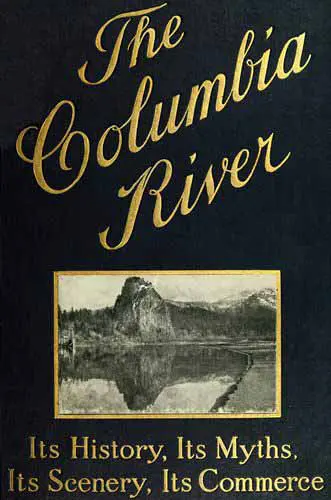
"The Columbia River: Its History, Its Myths, Its Scenery, Its Commerce" by William Denison Lyman is a historical account written in the early 20th century. The work focuses on the Columbia River, aiming to encapsulate its geographical wonder as well as the rich tapestry of its history and myths, particularly those related to the Native American tribes of the region. The author, a professor of history, presents a picturesque narrative intended for general readers rather than specialists, illuminating both the natural beauty and the heroic past associated with this significant waterway. At the start of the book, the reader is introduced to the geological and mythical background of the Columbia River and its surroundings. The opening chapter discusses the physical formation of the river, shaped by forces like volcanic action and glaciation, and shares various Native American creation myths associated with the region. One notable myth is that of Wishpoosh, a giant beaver whose actions led to the creation of the river and its surrounding tribes. The chapter paints a vivid picture of the Columbia Basin's diverse landscapes, from its majestic mountains to fertile valleys, interconnecting them with the powerful narratives of the indigenous peoples who have long inhabited this beautiful region.
Introduction adapted from the source catalogue; source summaries may be automatically generated.
Free to read · English · 117,418 words · No account needed
MAKE TIME FOR A GOOD BOOK
On by default. Untick to stop anonymous reading totals. Each page counts after 10 seconds in view. How this works.
Anonymous counting is on unless you have switched it off.
As we have seen, the American home-builders had outmatched the English fur-traders in the struggle for possession. On the 3d of March, 1853, Washington Territory, embracing the present States of Washington and Idaho, with parts of Wyoming and Montana, was created by Act of Congress, and Isaac I. Stevens was appointed governor. This remarkable man entered with tremendous energy upon his task of organising the chaos of his great domain. The Indian problem was obviously the most dangerous and pressing one. There were at that time two remarkable chiefs of the mid-Columbia region, natural successors of Philip, Pontiac, Black Hawk, and Tecumseh, possessing those Indian traits of mingled nobleness and treachery which have made the best specimens of the race such interesting objects of study. These Indians were Kamiakin of the Yakimas, and Peupeumoxmox of the Walla Wallas.
In 1855 the great war broke out almost simultaneously at different points. There were six widely scattered regions especially concerned. Four of these, the Cascades, the Yakima Valley, the Walla Walla, and the Grande Ronde, were on or adjacent to the River. The others were the Rogue River region and Puget Sound. So wide was the area of this war that intelligent co-operation among the Indians proved impracticable. This, in fact, was the thing that saved the whites. For there were probably not less than four thousand Indians on the war-path, and if they had co-operated, the smaller settlements, possibly all in the country except those in the Willamette Valley, might have been annihilated.
The first efforts of Governor Stevens were to secure treaties with the Indians. Having negotiated several treaties in 1854 with the Puget Sound Indians, the governor passed over the Cascade Mountains to Walla Walla in May, 1855. There during the latter part of May and first part of June, he held a great council with representatives of seventeen tribes. Lieutenant Kip, U. S. A., has preserved a vivid account of this great gathering, one of the most important ever held in the annals of Indian history. According to Lieutenant Kip, there were but about fifty men in the escort of the daring governor, and if he had been a man sensible to fear he might well have been startled when there came an army of twenty-five hundred Nez Perces under Halhaltlossot, known as Lawyer by the whites. Two days later three hundred Cayuses, those worst of the Columbia River Indians, surly and scowling, led by Five Crows and Young Chief, made their appearance. Two days later a force of two thousand Yakimas, Umatillas, and Walla Wallas came in sight under Kamiakin and Peupeumoxmox. The council was soon organised. Governor Stevens and General Palmer, the latter the Indian Agent for Oregon, set forth their plan of reservations, all their speeches being translated and retranslated until they had filtered down among the general mass of the Indians. Then there must be a great "wawa," or discussion by the Indians. It soon became apparent that there were two bitterly contesting parties. One was a large faction of Nez Perces led by Lawyer, who favoured the whites. The other faction of the Nez Perces, with all the remaining tribes, were set against any treaty. With remarkable skill and patience, Governor Stevens, with the powerful assistance of Lawyer, had brought the Indians to a point of general agreement to the creation of a system of reservations. But suddenly there was a commotion. Into the midst of the council there burst the old chief Looking Glass (Apashwahayikt), second only to Lawyer in influence among the Nez Perces. He had made a desperate ride of three hundred miles in seven days, following a buffalo hunt and a raid against the Blackfeet, and as he now burst into the midst, there dangled from his belt the scalps of several slaughtered Blackfeet. As quoted in Hazard Stevens's Life of Governor Stevens, he began his harangue thus: "My people, what have you done? While I was gone you sold my country. I have come home and there is not left me a place on which to pitch my lodge. Go home to your lodges. I will talk with you." Lieutenant Kip declares that though he could understand nothing of the speech of Looking Glass to his own tribe, which followed, the effect was tremendous. All the evidence showed that Looking Glass was a veritable Demosthenes. The work of Governor Stevens was all undone.
Your reading position is saved on this browser. Take it to another device with a library code. Reading pages adapt to text, rather than matching a printed edition.
BEHIND THE BOOK
This eBook is for the use of anyone anywhere in the United States and most other parts of the world at no cost and with almost no restrictions whatsoever. You may copy it, give it away or re-use it under the terms of the Project Gutenberg License included with this eBook or online at www.gutenberg.org. If you are not located in the United States, you will have to check the laws of the country where you are located before using this eBook. Read the source licence.
The original source file, including credits and licence, is retained by this library. Request an original-format copy at no charge. Please include the book title and Project Gutenberg identifier #39388.
KEEP YOUR CURIOSITY GOING
Wilfrid Scawen Blunt
Wilfrid Scawen Blunt

E. W. (Edgar Watson) Howe
Cécile Tormay

Moritz Busch
John L. Ransom