THE CLASSIC COLLECTION✦Daniel BooneCLASSIC FREE BOOKS
Daniel Boone
Reuben Gold Thwaites
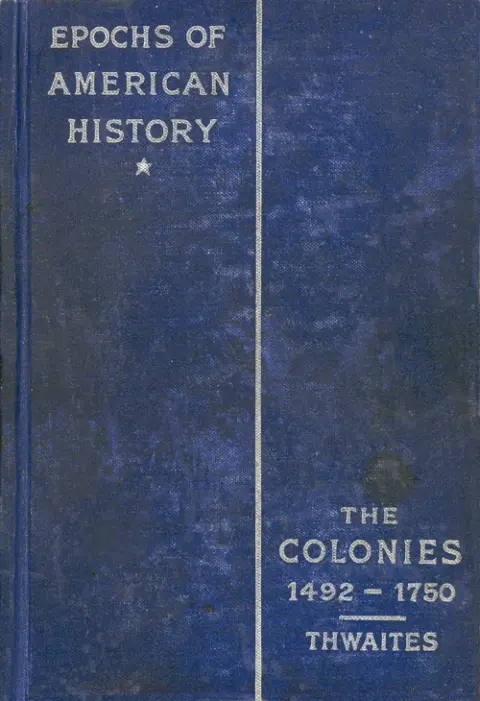
THE CLASSIC COLLECTION · 1891
"The Colonies, 1492-1750" by Reuben Gold Thwaites is a historical account written in the late 19th century. The book explores the early history of the American colonies, detailing the establishment, development, and interactions of various European settlers with the indigenous populations from 1492 up to the mid-18th century. It aims to provide readers with a concise yet comprehensive understanding of the pivotal events and factors that shaped colonial America. At the start of the book, Thwaites sets the stage for understanding the American colonies by introducing key geographical features and the native races inhabiting the land at the time of European contact. He discusses the various theories regarding the origins of Native Americans and outlines the physical characteristics of North America that influenced colonization efforts. The relationships between the indigenous people and European settlers are also highlighted, emphasizing the initial encounters of curiosity and mistrust that would evolve into complex dynamics of trade, conflict, and cultural exchange throughout the colonial period.
Introduction adapted from the source catalogue; source summaries may be automatically generated.
Free to read · English · 90,060 words · No account needed
MAKE TIME FOR A GOOD BOOK
On by default. Untick to stop anonymous reading totals. Each page counts after 10 seconds in view. How this works.
Anonymous counting is on unless you have switched it off.
Penn, William, secures grant of Delaware, 210;
interested in New Jersey, 212, 213, 215;
secures grant of Pennsylvania, 215;
his government, 216;
relations with Indians, 216, 217;
boundary disputes with Maryland, 86;
on American climate, 220;
supported by aristocrats, 224;
introduces physicians, 225;
imports Germans, 230;
plan for colonial union, 270;
death, 217;
his heirs resist taxation of their lands, 273, 274.
--, Admiral Sir William, father of foregoing, 215, 240.
Pennsylvania, settlements, 208, 209, 215;
geography, 219;
social classes, 222-224;
occupations, 224, 225;
trade and commerce, 225, 226;
life and manners, 227-229;
education, 229;
religion, 108, 229, 230;
crime and pauperism, 231;
political conditions, 232, 280, 281;
annexation of Delaware, 210, 216;
development, 216, 217;
witchcraft delusion, 192;
boundary disputes, 86, 268;
disagreement between governor and assembly, 273, 274;
Indian affairs, 170, 277;
paper money, 278;
characteristics, 217;
influence of Virgina ideas, 280;
population (1700), 221, 222, (1750) 265, 266.
Pequod Indians, uprising of, 136, 137, 140-142.
Philadelphia, first medical school, 184;
commerce, 185, 226;
first insane hospital, 231;
arrival of Scotch, 269;
characteristics, 228.
Philip II., king of Spain, 34.
Philip's War, in New England, 169-172, 188.
Phipps, Sir William, governor of Massachusetts, 177, 275, 276;
captures Port Royal, 254.
Pilgrims, their staying qualities, 43;
in Holland, 115-117;
voyage of "Mayflower," 117, 118;
settlement of Plymouth, 118-120;
land-grant on the Hudson, 197.
Piracy, English, on Spanish commerce, 94;
in New York, 206, 207;
in the West Indies, 239, 240;
in Virginia, 273;
in Rhode Island, 276.
Plantation, as a political unit, 56, 73.
Plymouth, England, seat of Plymouth Company, 41, 66, 113, 150, 152.
Plymouth Colony, settled, 116-120, 144;
development, 120-124;
characteristics, 123, 124, 139;
marriages in, 132;
Williams at, 132;
fur-trade on the Connecticut, 140;
in the Gorton case, 160;
treatment of Quakers, 166;
receives royal commissioners, 169;
Indian affairs, 170-172;
joins the confederation, 156;
rule of Andros, 175;
shipbuilding, 185;
merged in Massachusetts, 124, 176;
lesson of the colony, 53.
Plymouth Company, chartered, 66;
Baltimore a councillor, 81;
southern boundary, 82;
relations with New Englanders, 120, 122, 124;
sends out Popham colony, 113;
reorganizes, 114;
grant to Massachusetts Bay Company, 125;
grant to Brook and Say and Sele, 141;
surrenders its charter, 131, 150, 152.
Pokanoket Indians, relations with Plymouth, 121, 170.
Poor whites, genesis of, 74, 100, 110.
Popham, George, heads the Popham colony, 113.
--, Sir John, interest in American colonization, 66, 113.
Population, of Indian tribes, 9-11, 15;
excess of, in Europe, 50, 53, 65;
of Virginia (1650-1670), 76, (1697) 81;
of the South generally (1688), 97;
of Pennsylvania and Delaware (1700), 221, 222;
of the Jerseys (1700), 221;
of New York (1674), 205, (1690) 253, (1700) 220, 221;
of Connecticut (1636), 141;
of Rhode Island (1638), 147;
of Plymouth (1643), 121;
of Massachusetts (1634), 129;
of New England generally (1690), 253, (1700) 180;
of the English colonies generally (1700-1750), 265, 266;
of New France (1690), 253.
Portage paths, situation and importance of, 4;
Indian villages on, 13.
Port Royal, Nova Scotia, founded, 36, 48;
captured by English, 242, 243, 252, 254, 278.
--, S. C., founded by Huguenots, 33, 93;
destroyed by Spanish, 93, 94.
Portsmouth, N. H., founded, 152, 153;
Tory element at, 189.
--, R. I., founded, 147;
declaration, 147, 148;
chartered, 149.
Portuguese, early explorations of, 24, 25, 27;
Alexander's bull of partition and the, 24;
fishing colony at Newfoundland, 26, 37, 241;
South American colonies of the, 44;
colonial policy of, 48;
over-population, 50;
trade with New England, 185.
Presbyterians, in England, 115;
in Scotland, 115, 132, 161;
on the Continent, 115;
in Virginia, 108;
in Massachusetts, 161, 162;
in Pennsylvania and Delaware, 221;
in middle colonies generally, 230;
in the Shenandoah valley, 269.
Providence, R. I., founded, 133, 146;
religious disturbances at, 148, 159;
union with Rhode Island, 147;
the compact, 147;
chartered, 148, 149;
population (1638), 147.
--, Md., former name for Annapolis, 98.
Pueblo Indians, status, 8;
visited by Spaniards, 29, 30;
Spanish missions among, 31, 32.
Your reading position is saved on this browser. Take it to another device with a library code. Reading pages adapt to text, rather than matching a printed edition.
Reuben Gold Thwaites
Reuben Gold Thwaites
Reuben Gold Thwaites
BEHIND THE BOOK
This eBook is for the use of anyone anywhere in the United States and most other parts of the world at no cost and with almost no restrictions whatsoever. You may copy it, give it away or re-use it under the terms of the Project Gutenberg License included with this eBook or online at www.gutenberg.org. If you are not located in the United States, you will have to check the laws of the country where you are located before using this eBook. Read the source licence.
The original source file, including credits and licence, is retained by this library. Request an original-format copy at no charge. Please include the book title and Project Gutenberg identifier #42701.
KEEP YOUR CURIOSITY GOING
Cécile Tormay

Moritz Busch
John L. Ransom
Frances Wright
Cécile Tormay

Mabel Potter Daggett