THE CLASSIC COLLECTION✦Daniel BooneCLASSIC FREE BOOKS
Daniel Boone
Reuben Gold Thwaites
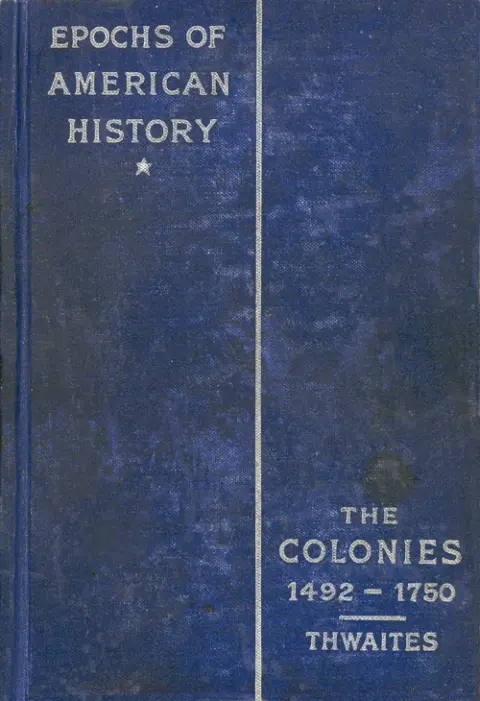
THE CLASSIC COLLECTION · 1891
"The Colonies, 1492-1750" by Reuben Gold Thwaites is a historical account written in the late 19th century. The book explores the early history of the American colonies, detailing the establishment, development, and interactions of various European settlers with the indigenous populations from 1492 up to the mid-18th century. It aims to provide readers with a concise yet comprehensive understanding of the pivotal events and factors that shaped colonial America. At the start of the book, Thwaites sets the stage for understanding the American colonies by introducing key geographical features and the native races inhabiting the land at the time of European contact. He discusses the various theories regarding the origins of Native Americans and outlines the physical characteristics of North America that influenced colonization efforts. The relationships between the indigenous people and European settlers are also highlighted, emphasizing the initial encounters of curiosity and mistrust that would evolve into complex dynamics of trade, conflict, and cultural exchange throughout the colonial period.
Introduction adapted from the source catalogue; source summaries may be automatically generated.
Free to read · English · 90,060 words · No account needed
MAKE TIME FOR A GOOD BOOK
On by default. Untick to stop anonymous reading totals. Each page counts after 10 seconds in view. How this works.
Anonymous counting is on unless you have switched it off.
Lake Superior, early fur-trade on, 18;
in Champlain's time, 247;
visited by Radisson and Grosseilliers, 247, 248;
early French settlement on, 253.
La Salle, Chevalier, explorations of, 248.
Laud, Archbishop, represses dissent in Massachusetts, 131;
in prison, 158.
Leeward Islands, English colonies on, 237, 238.
Leisler, Jacob, heads a revolution in New York, 206.
Leon, Ponce de, explores Florida, 27.
Léry, Baron de, colonizing attempt of, 35.
Locke, John, his constitution for the Carolinas, 58, 90, 91, 93, 95.
London Company, chartered, 66, 113;
settles Virginia, 69-74, 81;
criticised by James I., 74;
grant to the Pilgrims, 116, 117;
charter annulled, 74.
Long Island, Block's visit, 196;
Walloon settlement, 198;
conflicts between Dutch and English, 163, 202;
Connecticut wins a part, 163;
religion on, 229, 230;
crime on, 231.
Long Parliament, the, Virginia under, 76;
Navigation Act of, 105;
relation to Massachusetts, 132.
Louis XIV., king of France, his colonial policy, 49, 251-253.
Louisburg, captured by the English, 255, 278.
Ludwell, Philip, governor of South Carolina, 94;
and of reunited Carolina, 94.
Lutherans, in middle colonies, 230.
Louisiana, early French settlement of, 248.
Lower California, early Spanish exploration of, 28, 29, 31.
Maine, De Monts' colony, 36;
visited by Gosnold and Pring, 41;
Gorges' proprietorship, 150, 151, 173;
characteristics, 150;
not in the New England Confederation, 157, 158;
absorbed by Massachusetts, 152, 173, 174;
Indian uprising, 172, 188;
rule of Andros, 175;
in King William's War, 177, 254;
river system, 179;
commerce, 185;
agriculture 186;
education, 188;
population (1700) 180, (1754) 265;
boundary established, 268.
Maldonado, Lorenzo Ferret de, on the Pacific coast, 28.
Manhattan Island, Block's visit, 196;
early settlement, 197, 198.
See New York City.
Marquette, Father Jacques, on Mississippi River, 26, 248.
Martha's Vineyard, Indian missionary efforts at, 170.
Maryland, origin of name, 82;
settlement, 76, 81-84;
landed estates, 58;
judiciary, 60;
during English Revolution, 84, 85;
development, 86, 87;
becomes a royal province, 61, 87;
Claiborne's quarrel, 76, 77;
geography, 96;
character of colonists, 97;
its capital, 98;
occupations, 102;
religion, 102, 108;
commerce, 103, 104;
tobacco-raising, 103;
William and Mary's College, 103;
witchcraft trials, 192;
boundary disputes, 209, 217, 268;
settlers patronize Pennsylvania mills, 225;
represented in colonial congress, 270;
Indian affairs, 83, 86, 277;
influence of Virginia ideas on, 280;
political spirit, 280;
population (1688) 97, (1763) 266.
Mason, Charles, runs "Mason and Dixon line," 268.
--, John, colonizing efforts in New Hampshire, 125, 150, 152, 153, 277.
--, Capt. John, in Pequod War, 137, 142.
Massachusetts, settlement, 124-127, 144;
suffrage qualifications, 61, 62, 167;
social distinctions, 59;
Harvard College founded, 80;
internal dissensions, 129-132;
religious troubles, 132-136, 146, 152;
interest in Pequod War, 136, 137;
laws, 137-139;
characteristics, 139, 140;
the Watertown protest, 62;
emigration to Connecticut, 140-142;
emigration to Rhode Island, 147;
interest in the Gorton case, 160, 164;
absorbs New Hampshire, 152, 153, 173;
absorbs Plymouth, 124, 176;
annexes land in Connecticut and Maine, 173;
influence in the Confederation, 155-157, 164;
independent attitude towards England, 158, 159, 161;
jealousy of King Charles, 173;
under the royal commissioners, 167, 168;
charter annulled, 131, 132, 169, 174, 175;
becomes a royal province, 175;
rule of Andros, 175, 176;
the Presbyterian movement, 162;
attitude in war with New Netherlands, 163, 164;
disputes Connecticut ship-toll, 164;
repression of Quakers, 165, 166, 169;
Philip's War, 170-172, 188;
absorbs Acadia, 176;
new charter, 176, 177;
population, (1700) 180, (1754) 265;
slavery, 182, 272, 275;
iron mining, 184;
manufactures, 184;
fisheries, 184;
shipbuilding and commerce, 185;
agriculture, 186;
witchcraft delusion, 190-192;
boundary disputes, 267, 268;
represented in second colonial congress, 270;
Phipps's term, 275, 276;
Bellomont's term, 207, 276;
loses New Hampshire, 277;
paper money, 278, 279.
Massachusetts Bay, visited by Roberval, 33;
early settlements on, 122, 124, 127.
-- Company, chartered, 125;
removes to America, 126, 127;
charter annulled, 131, 132, 169, 174, 175.
Massasoit, head-chief of Pokanokets, 121, 170.
Mather, Cotton, in witchcraft trials, 191, 192.
--, Increase, influence in Massachusetts politics, 176, 177.
Your reading position is saved on this browser. Take it to another device with a library code. Reading pages adapt to text, rather than matching a printed edition.
Reuben Gold Thwaites
Reuben Gold Thwaites
Reuben Gold Thwaites
BEHIND THE BOOK
This eBook is for the use of anyone anywhere in the United States and most other parts of the world at no cost and with almost no restrictions whatsoever. You may copy it, give it away or re-use it under the terms of the Project Gutenberg License included with this eBook or online at www.gutenberg.org. If you are not located in the United States, you will have to check the laws of the country where you are located before using this eBook. Read the source licence.
The original source file, including credits and licence, is retained by this library. Request an original-format copy at no charge. Please include the book title and Project Gutenberg identifier #42701.
KEEP YOUR CURIOSITY GOING
Cécile Tormay

Moritz Busch
John L. Ransom
Frances Wright
Cécile Tormay

Mabel Potter Daggett