THE CLASSIC COLLECTION✦Sunshine and snowCLASSIC FREE BOOKS
Sunshine and snow
Harold Bindloss
THE CLASSIC COLLECTION · 1915
"The Coast of Adventure" by Harold Bindloss is a novel written in the early 20th century. The story begins in the Spanish-Indian town of Rio Frio, set against the backdrop of political turmoil in a Caribbean setting. The opening introduces Father Agustin, James Grahame, and his companion Walthew, who appear to be embroiled in a risky venture amidst the looming presence of governmental unrest and revolutionary fervor. A mix of adventure and intrigue is hinted at as Grahame and Walthew navigate their way through a land fraught with danger and the complexities of local politics. At the start of the novel, Rio Frio is depicted as a hot, dusty town experiencing the aftermath of a political speech that incites a crowd to revolution. Father Agustin engages in a thoughtful discussion about the failures of the local government and the people's plight, suggesting a deeper narrative about injustice and rebellion. As Grahame and Walthew converse, their motivations become clearer; they are adventurers seeking fortune, but the risks are palpable, especially with the threat of government reprisals looming. The chapter sets a vivid scene of tension as the characters prepare for their journey, foreshadowing the challenging but exhilarating exploits awaiting them in the Caribbean.
Introduction adapted from the source catalogue; source summaries may be automatically generated.
Free to read · English · 88,913 words · No account needed
MAKE TIME FOR A GOOD BOOK
On by default. Untick to stop anonymous reading totals. Each page counts after 10 seconds in view. How this works.
Anonymous counting is on unless you have switched it off.
No one offered to do so, and, beckoning a dark-complexioned lounger who had a guitar hung round his neck, he brought him to their table and gave him wine. Then he borrowed the guitar, and, somewhat to Grahame's surprise, began a passable rendering of a Spanish song.
The captain beat time with a bottle, some of the company sang the refrain, and, after finishing amidst applause, Macallister tried the music of his native land. In this he was less successful, for the wild airs, written for the bagpipes, did not go well upon the melancholy guitar.
"It's no' the thing at all," Watson remarked. "Ye're just plodding through it like a seven-knot tramp against the tide. Can ye no' open the throttle and give her steam?"
Before Macallister could answer, a neatly dressed gentleman brought a bottle of vermouth from a neighboring table and joined the group.
"You like a drink?" he asked politely.
Watson nodded, and, taking the small bottle, emptied half of the liqueur
into his glass.
"Yon's no' so bad," he commented when he had drained the glass.
The stranger smiled as he poured out the rest of the vermouth for
Watson.
"You mend the steamboat screw?" he asked carelessly.
"Yes, my friend," Watson replied, regarding the stranger out of sleepy
looking eyes.
"How it come loose?"
"Tail-nut slacked up when the engines ran away in heavy weather."
"You get bad weather, then?"
"Bad enough," Watson answered.
Grahame gave him a cautious glance, but his face was expressionless. It was obvious that the stranger had mistaken him for the Enchantress's engineer. Watson must have realized this, but he had given the fellow misleading answers, and Grahame thought he need not run the risk of trying to warn him. He wondered, though, how far Macallister had taken Watson into his confidence.
"Small boat," said the stranger; "you find her wet when it blow. What
you load?"
"Mahogany and dyewood, when it's to be got."
"Then you go to Manzanillo; perhaps to Honduras. But she not carry much; not room for big logs below."
"The big ones sit on deck," said Watson stolidly.
The man ordered some cognac, but Grahame imagined that he was wasting his hospitality. Though the Scot's legs might grow unsteady, his head would remain clear.
"There is cargo that pay better than wood," his companion suggested with
a meaning smile.
"Maybe," agreed Watson. "But ye run a risk in carrying it."
"Ver' true. And when you go to sea?"
"I canna' tell. The high-press' piston must come up. She's loosened a
ring."
Your reading position is saved on this browser. Take it to another device with a library code. Reading pages adapt to text, rather than matching a printed edition.
Harold Bindloss
Harold Bindloss
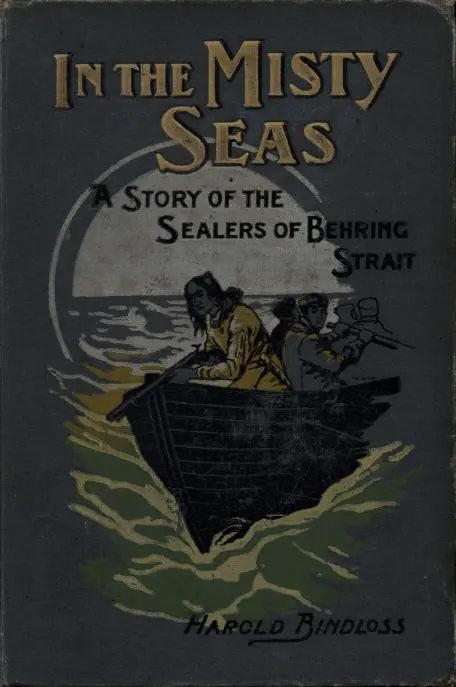
Harold Bindloss
Harold Bindloss
BEHIND THE BOOK
This eBook is for the use of anyone anywhere in the United States and most other parts of the world at no cost and with almost no restrictions whatsoever. You may copy it, give it away or re-use it under the terms of the Project Gutenberg License included with this eBook or online at www.gutenberg.org. If you are not located in the United States, you will have to check the laws of the country where you are located before using this eBook. Read the source licence.
The original source file, including credits and licence, is retained by this library. Request an original-format copy at no charge. Please include the book title and Project Gutenberg identifier #37582.
KEEP YOUR CURIOSITY GOING
Coulson Kernahan

Maurice Baring
Frances Wright
Cécile Tormay

Frederic Jesup Stimson

W. H. P. (William Henry Pope) Jarvis