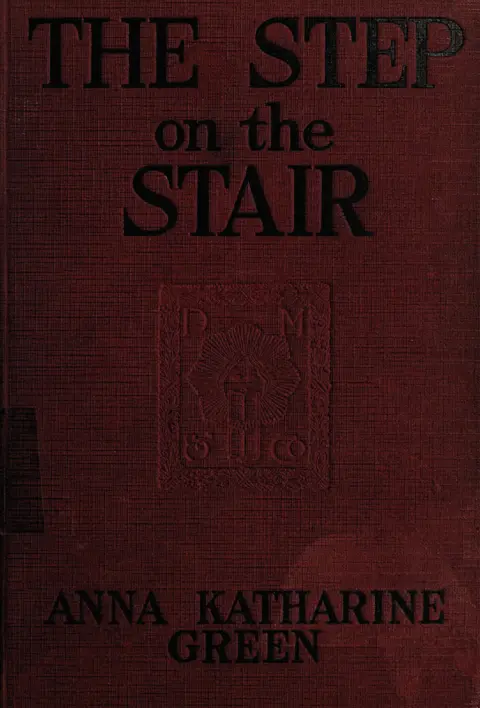
The step on the stair
Anna Katharine Green
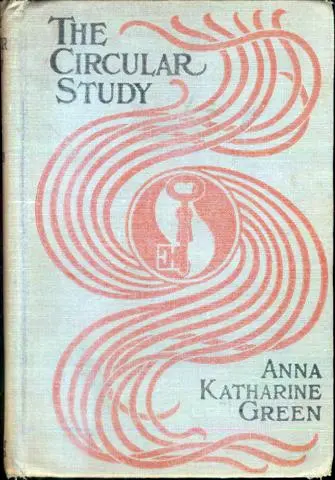
THE CLASSIC COLLECTION · 1900
"The Circular Study" by Anna Katharine Green is a novel written in the early 20th century. This intriguing mystery introduces Mr. Gryce, an elderly detective who is unexpectedly awakened from his melancholy state when he learns of a "strange crime" that has occurred in the home of a reclusive man named Mr. Adams. As Gryce investigates this mysterious case, he grapples with the tensions of the past, discovering a crime scene that promises both horror and enlightenment. At the start of the story, the old detective is called to the site of a murder after a boy delivers a chilling message about a crime committed in Mr. Adams' mansion. The narrative details Gryce's arrival at the scene, where he finds the body of Adams dramatically posed upon a bear rug with a dagger in his heart, surrounded by a peculiar atmosphere filled with rose-colored light. As Gryce inspects the room, he uncovers small clues, including the path of glittering spangles, which suggest a woman had been present. The story sets off a chain of events that draws in diverse characters, propelling the detective—and the reader—into a labyrinth of emotions, secrets, and the enduring quest for truth.
Introduction adapted from the source catalogue; source summaries may be automatically generated.
Free to read · English · 55,807 words · No account needed
MAKE TIME FOR A GOOD BOOK
On by default. Untick to stop anonymous reading totals. Each page counts after 10 seconds in view. How this works.
Anonymous counting is on unless you have switched it off.
"At the same minute another cry went up, this time from behind the bier, and John Poindexter could be seen reeling at the side of Felix Cadwalader, who alone of all present (though he was the youngest and the least) seemed to retain his self-possession at this painful moment. Meanwhile the bereaved father, throwing himself at the side of the bier, began tearing away at the pall in his desire to look upon the face of her he had left in such rosy health four years before. But he was stopped, not by Poindexter, who had vanished from the scene, but by Felix, the cold, severe-looking boy who stood like a guard behind his sister. Reaching out a hand so white it was in itself a shock, he laid it in a certain prohibitory way on the pall, as if saying no. And when his father would have continued the struggle, it was Felix who controlled him and gradually drew him into the place at his own side where a minute before the imposing figure of Poindexter had stood; after which the bearers took up their burden again and moved on.
"But the dramatic scene was not over. As they neared the churchyard another procession, similar in appearance to their own, issued from an adjoining street, and Evelyn's young lover, who had died almost simultaneously with herself, was brought in and laid at her side. But not in the same grave: this was noticed by all, though most eyes and hearts were fixed upon Cadwalader, who had escaped his loathsome prison and returned to the place of his affections for this.
"Whether he grasped then and there the full meaning of this double burial (young Kissam had shot himself upon hearing of Evelyn's death), or whether all explanations were deferred till he and Felix walked away together from the grave, has never transpired. From that minute till they both left town on the following day, no one had any word with him, save Poindexter, whom he went once to see, and young Kissam's mother, who came once to see him. Like a phantom he had risen upon the sight of the good people of Montgomery, and like a phantom he disappeared, never to be seen by any of them again, unless, as many doubt, the story is true which was told some twenty years ago by one of the little village lads. He says (it was six years after the tragic scene I have just related) that one evening as he was hurrying by the churchyard, in great anxiety to reach home before it was too dark, he came upon the figure of a man standing beside a grave, with a little child in his arms. This man was tall, long-bearded, and terrifying. His attitude, as the lad describes it, was one of defiance, if not of cursing. High in his right hand he held the child, almost as if he would hurl him at the village which lies under the hill on which the churchyard is perched; and though the moment passed quickly, the boy, now a man, never has forgotten the picture thus presented or admitted that it was anything but a real one. As the description he gave of this man answered to the appearance of Amos Cadwalader, and as the shoe of a little child was found next morning on the grave of Cadwalader's daughter, Evelyn, it has been thought by many that the boy really beheld this old soldier, who for some mysterious reason had chosen nightfall for this fleeting visit to his daughter's resting-place. But to others it was only a freak of the lad's imagination, which had been much influenced by the reading of romances. For, as these latter reasoned, had it really been Cadwalader, why did he not show himself at John Poindexter's house--that old friend who now had a little daughter and no wife and who could have made him so comfortable? Among these was Poindexter himself, though some thought he looked oddly while making this remark, as if he spoke more from custom than from the heart. Indeed, since the unfortunate death of Evelyn in his house, he had never shown the same interest in the Cadwaladers. But then he was a man much occupied with great affairs, while the Cadwaladers, except for their many griefs and misfortunes, were regarded as comparatively insignificant people, unless we except Felix, who from his earliest childhood had made himself feared even by grown people, though he never showed a harsh spirit or exceeded the bounds of decorum in speech or gesture. A year ago news came to Montgomery of Amos Cadwalader's death, but no particulars concerning his family or burial place. And that is all I have been able to glean concerning the Cadwaladers."
Your reading position is saved on this browser. Take it to another device with a library code. Reading pages adapt to text, rather than matching a printed edition.
Anna Katharine Green

Anna Katharine Green
Anna Katharine Green
Anna Katharine Green
BEHIND THE BOOK
This eBook is for the use of anyone anywhere in the United States and most other parts of the world at no cost and with almost no restrictions whatsoever. You may copy it, give it away or re-use it under the terms of the Project Gutenberg License included with this eBook or online at www.gutenberg.org. If you are not located in the United States, you will have to check the laws of the country where you are located before using this eBook. Read the source licence.
The original source file, including credits and licence, is retained by this library. Request an original-format copy at no charge. Please include the book title and Project Gutenberg identifier #18761.
KEEP YOUR CURIOSITY GOING
Coulson Kernahan

Maurice Baring
Frances Wright
Cécile Tormay

Frederic Jesup Stimson

W. H. P. (William Henry Pope) Jarvis