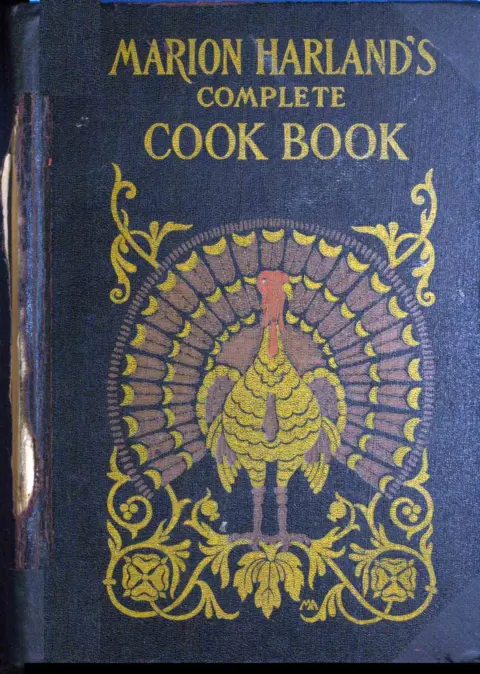
Marion Harland’s Complete Cook Book A Practical and Exhaustive Manual of Cookery and Housekeeping
Marion Harland
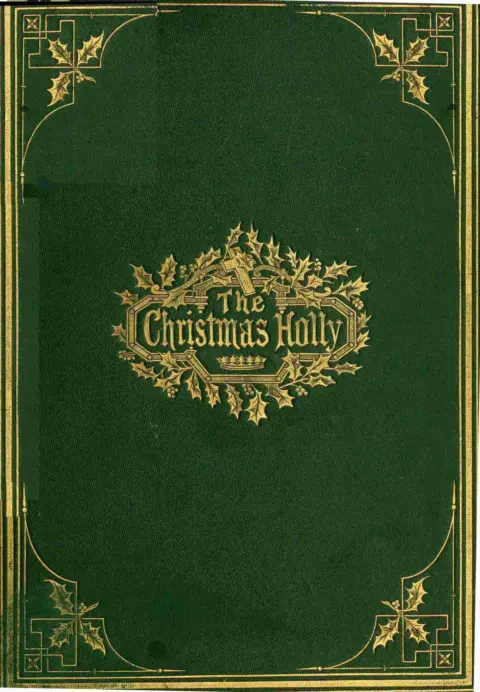
THE CLASSIC COLLECTION · 1867
"The Christmas Holly" by Marion Harland is a sentimental novel written during the late 19th century. This heartwarming tale explores themes of family life, the spirit of Christmas, and the importance of rekindling joy and love amidst daily struggles. The narrative captures the essence of holiday nostalgia while emphasizing compassion, charity, and the need for togetherness during the festive season. Set against the backdrop of a typical Christmas Eve, the story unfolds through the experiences of the Dryden family, particularly focusing on the disappointment of children Allison and Nettie, who feel neglected due to their mother's stern demeanor towards Christmas festivities. Their father's decision to secretly bring joy back into their lives leads him to impulsively shop for gifts, while the mother, too, is touched by the Christmas spirit and decides to do something special for the children. The book culminates in a joyful Christmas morning, revealing the transformative power of love and forgiveness within the family, highlighting the idea that Christmas should be a time of happiness and magical moments for children.
Introduction adapted from the source catalogue; source summaries may be automatically generated.
Free to read · English · 16,387 words · No account needed
MAKE TIME FOR A GOOD BOOK
On by default. Untick to stop anonymous reading totals. Each page counts after 10 seconds in view. How this works.
Anonymous counting is on unless you have switched it off.
“There! take him, nurse!” says the visitor, hastily. “He does not fancy new acquaintances. In a year or two, he will be just at the interesting age, and we shall be capital friends. Not a word, my dear!”--to Mamma, who stammers an apology. “All young children behave worst when we want them to show off their prettiest ways.”
This may be true, but for my part I don’t blame the babies.
Most Papas are shy or negligent of their heirs or heiresses at this epoch. It is quite common to hear ladies relate, as a proof, I suppose, of their spouses’ superiority to small matters, that they are utterly careless of their babies while they are in arms.
“Mr. C. never notices one of his until it is two years of age,” remarks Mrs. C. “Then, when he sees that it is a pretty plaything, he becomes quite fond of it, enjoys frolicking with it.”
As he would with a puppy, which, frisking about his feet, should attract his lordship’s attention to its graceful shape and winning ways!
“Mr. D. thinks young babies disgusting little animals,” laughs Mrs. D., in reply. “He says that he would not kiss one under eighteen months old, for five hundred dollars!”
My private opinion, which, of course, I do not divulge to Mrs. D., is that her husband is a Yahoo, and ought to be banished to Gulliver’s famous island, in order that he might consort with his fellows.
Even good, right-minded, affectionate Papas--like your stronger half and mine, dear reader!--do not overwhelm his very littleness with demonstrations of esteem.
“Say good-by to Baby!” you plead, as his paternal progenitor enters the nursery to take leave of you until dinner-time.
If he does not smoke, and is very amiable, he stoops and touches the little forehead with his lips--a very different salute from that bestowed upon yourself. If he has lighted a cigar, he replies: “I won’t kiss him. The tobacco might sicken him. Good-by, monkey!” tapping the velvet cheek with one finger.
Baby blinks and throws his fat arms about in a blind, senseless fashion, which you think very cunning.
“Did you ever see a child grow and improve as he does!” you ask,
delightedly.
“Oh, very!” is the good-natured, but not very pertinent response. “The fact is, wifie, I am not much of a judge of the article in its present state. Wait until he reaches the interesting age, and you will have no cause to complain of my lukewarm praise.”
Your reading position is saved on this browser. Take it to another device with a library code. Reading pages adapt to text, rather than matching a printed edition.
Marion Harland
Marion Harland
Marion Harland
Marion Harland & Virginia Terhune Van de Water
BEHIND THE BOOK
This eBook is for the use of anyone anywhere in the United States and most other parts of the world at no cost and with almost no restrictions whatsoever. You may copy it, give it away or re-use it under the terms of the Project Gutenberg License included with this eBook or online at www.gutenberg.org. If you are not located in the United States, you will have to check the laws of the country where you are located before using this eBook. Read the source licence.
The original source file, including credits and licence, is retained by this library. Request an original-format copy at no charge. Please include the book title and Project Gutenberg identifier #64117.
KEEP YOUR CURIOSITY GOING
Coulson Kernahan

Maurice Baring
Frances Wright
Cécile Tormay

Frederic Jesup Stimson

W. H. P. (William Henry Pope) Jarvis